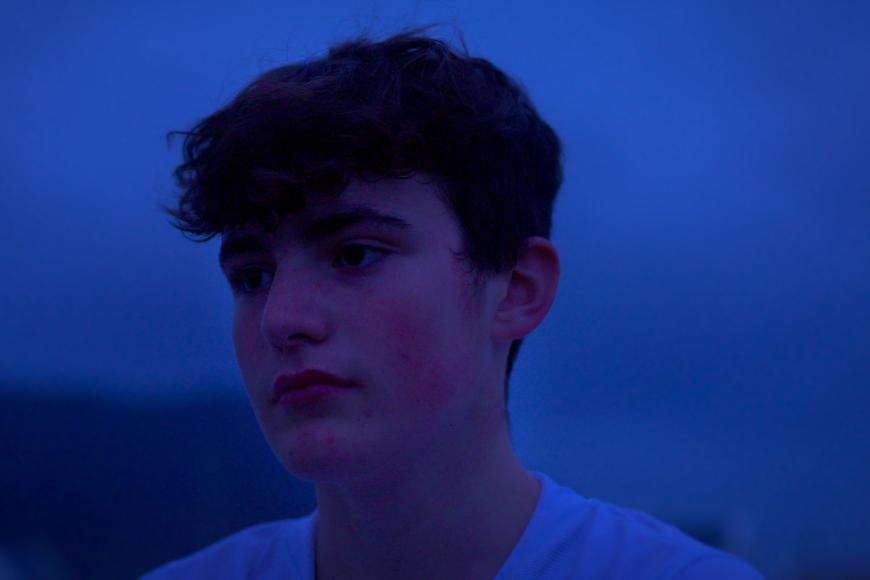
On the west coast of Ireland, under his grandfather’s critical eyes, Cian learns the challenging trade of shepherding. A sensitive coming-of-age observation.
Sixteen-year-old Cian is expected to work at his family’s sheep farm after school. Life there is as rough as the Irish west coast landscape. No time to lie in or play football. Instead, rams must be taken by the horns. In this sensitive coming-of-age study, the camera watches the lanky boy from up close as he learns the challenging craft of shepherding, under his grandfather’s patient and critical eyes.
Daniel Abma
Credits
Director
Matthias Joulaud, Lucien Roux
Cinematographer
Matthias Joulaud, Lucien Roux
Editor
Selin Dettwiler
Producer
Jaber Debzi, Jean-Guillaume Sonnier
Sound
Yatoni Roy Cantu
Score
Yatoni Roy Cantu
Winner of:
Special Mention (International Competition Short Film)
Three female artists who refused to be crushed by the GDR regime: Gabriele Stötzer, Cornelia Schleime, Tina Bara. Resisters, rebels – and, last but not least, survivors.
The rough, unkempt facades in Prenzlauer Berg – as if the skin had been peeled off the houses, says photographer Tina Bara. Having grown up in a prefabricated building, the young woman was drawn to East Berlin. She quickly got in conflict with the state, just like the artists Cornelia Schleime and Gabriele Stötzer, whom director Pamela Meyer-Arndt questions in her film about memories, traumas and creative genesis.
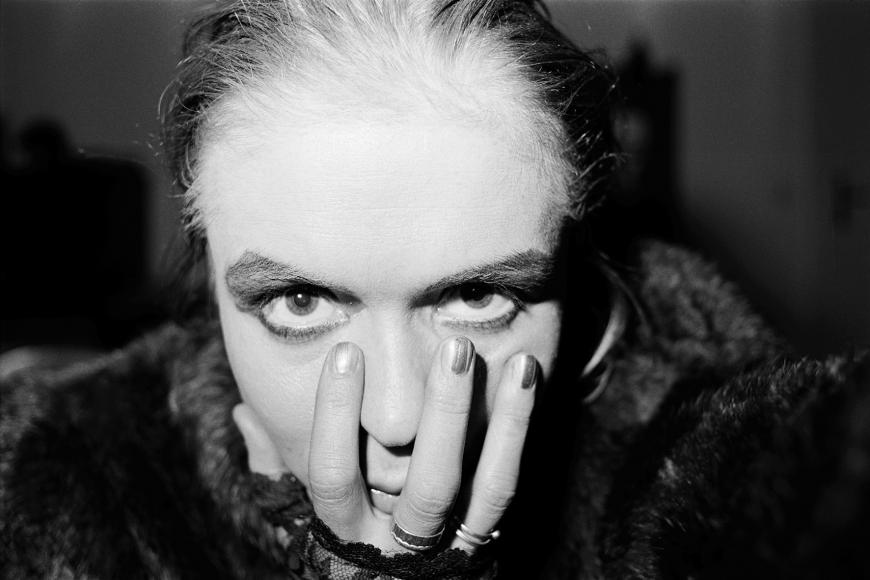
Stötzer, Schleime, Bara – none of them had it easy in the GDR. One of them ended up in prison for a petition, the other was harried by refused exit permits, all of them suffered psychologically to the point of pain. Spying, abuse and oppression are reflected in the women’s works. Tina Bara’s dark self-portraits, taken in a sparse Berlin apartment, Cornelia Schleime’s paintings denounced as “garbage art”, Gabriele Stötzer’s photo series of women in cut-up dresses and runny make up – testimonies of desperation, but also evidence of the urge for unconditional self-expression. Meyer-Arndt visits the artists, rediscovers places from the past with them and observes the creation of new works. The narratives shock and touch, and at the same time inspire awe for the vehemently chosen paths in life which more than once skirted very close to the abyss.
Carolin Weidner
Credits
Director
Pamela Meyer-Arndt
Cinematographer
Lars Barthel
Editor
Andreas Zitzmann
Producer
Andreas Schroth, Irene Höfer
Sound
Nic Nagel, Pamela Meyer-Arndt
Score
Ulrike Haage
Nominated for:
DEFA Sponsoring Prize,
Gedanken Aufschluss Prize
A thrilling and yet complex examination of “Extinction Rebellion” that doesn’t gloss over the group’s internal controversies about political strategies.
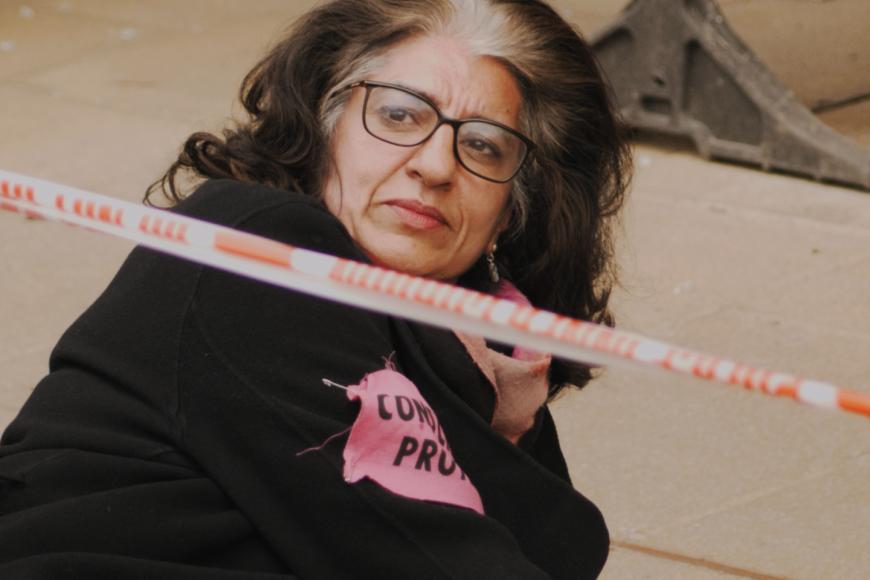
“Extinction Rebellion” (XR), known for creative civil disobedience, blockades and performances, want to put pressure on politics to finally adopt effective measures against the climate crisis. The greater the attention, the greater the effect, that’s their hope. But will this equation work? And how can such a heterogenous movement take joint decisions? “Rebellion” follows the development of the first XR group in Great Britain from up close, showing both euphoric moments and heated debates. After all, the issue is whether change is possible without questioning power structures – in society, but also within their own ranks.
Luc-Carolin Ziemann
Credits
Director
Maia Kenworthy, Elena Sánchez Bellot
Cinematographer
Amy Newstead, Maia Kenworthy, Elena Sánchez Bellot, Tom Swindell
The red house rapidly transforms into a series of fantastic images and figures. In no time at all, all kinds of brightly coloured shapes appear on the screen.
The red house dissolves and transforms into all kinds of other things. The house re-assembles, but bigger and wider than before. Quicker than the eye can see, all kinds of brightly coloured shapes appear on the screen. What was a clown a second ago suddenly becomes a wild mix of fantastic images and figures. And right in the middle, the red house keeps turning up.
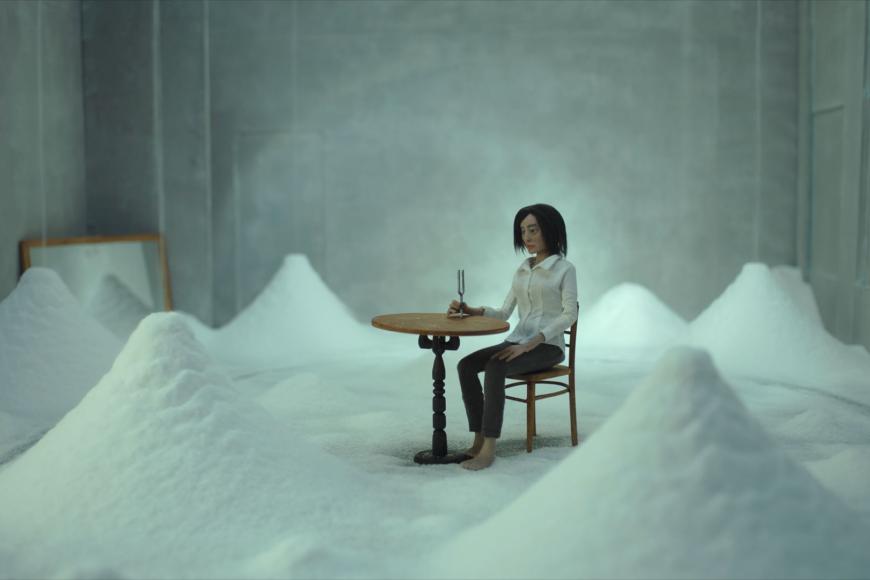
In the “White Horse” café, waitress and guests apathetically go through their routines. Meanwhile, the reality surrounding them seems to destabilise more and more: between white noise and the sound of tuning forks, between daydreams of galloping knights and ever-growing mountains of drizzling packet sugar. Ivana Bošniak Volda and Thomas Johnson Volda pile up layers of these images and sounds, until they crack – and clear the way to breathe.
Via joyfully spacy performances and intellectual controversies, the Teatr 21, which consists of acting enthusiasts with Down’s syndrome, develops an idea of the autonomy they long for.
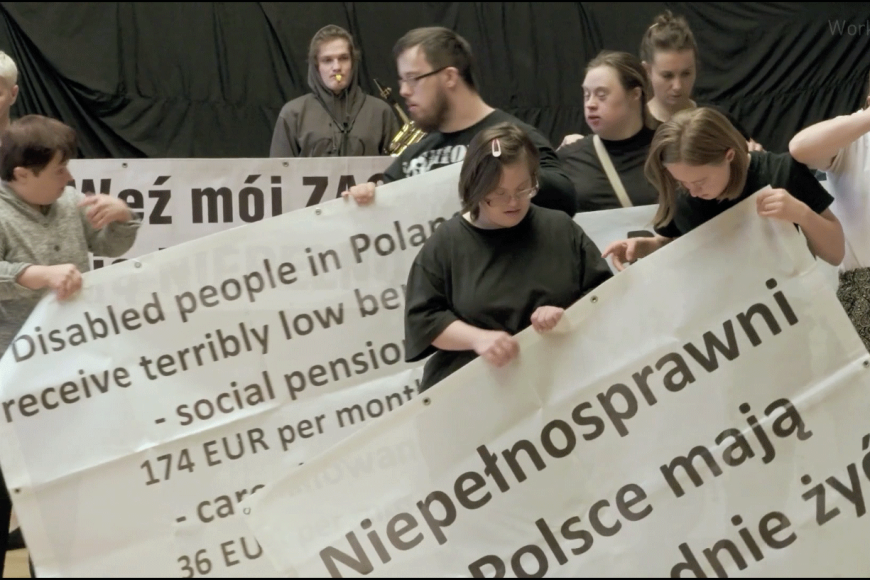
Inspired by a political protest movement, the Teatr 21 – a theatre company of acting enthusiasts with Down’s syndrome – develops a play in which the participants articulate their wishes and demands and at the same time get to abandon themselves with great joy to creative development. Martyna Peszko attentively follows the creation process as it unfolds in a productively bustling rehearsal atmosphere, with musical accents provided by the improvisations of a free jazz trio.
In 2018, people with handicaps occupied the government building in Warsaw for forty days to demonstrate for more support and recognition. The protest had almost no political consequences, and yet: The revolutionary spark ignited the public. The Teatr 21 project takes up the events, draws strength from the disappointment about the failed insurgence. That leads to discussions about their artistic craft: What does professional acting mean? What has nudity to do with revolution? And why do you always have to understand the lyrics to songs? In exploring the relationship between performance and politics, they reclaim an autonomy they are often denied in life: over their own body, their own stories. The stage direction and dramaturgy provide an unobtrusive and intelligent framework, which is extended by Peszko’s judiciously observant workshop report.
Carolin Weidner
Credits
Director
Martyna Peszko
Script
Martyna Peszko
Cinematographer
Magda Mosiewicz
Editor
Olga Kalagate
Producer
Justyna Sobczyk
Co-Producer
Katarzyna Tymusz
Sound
Adam Buka, Martyna Peszko, Konrad Wosik
Score
Zespol Pokusa
World Sales
Katarzyna Wilk
Nominated for:
Young Eyes Film Award,
MDR Film Prize,
Leipziger Ring
Having a child is a heavy new responsibility. When Ethan Barrett becomes a stay-at-home dad and suddenly finds himself in charge of the welfare of his little daughter, he realises abruptly that his every action will influence her life – whether he wants it or not. Charming, ironical and witty, he explores how to be least in the way of her perfect development. The next little masterpiece of tongue-in-cheek humour after “Burp” (DOK Leipzig 2020).