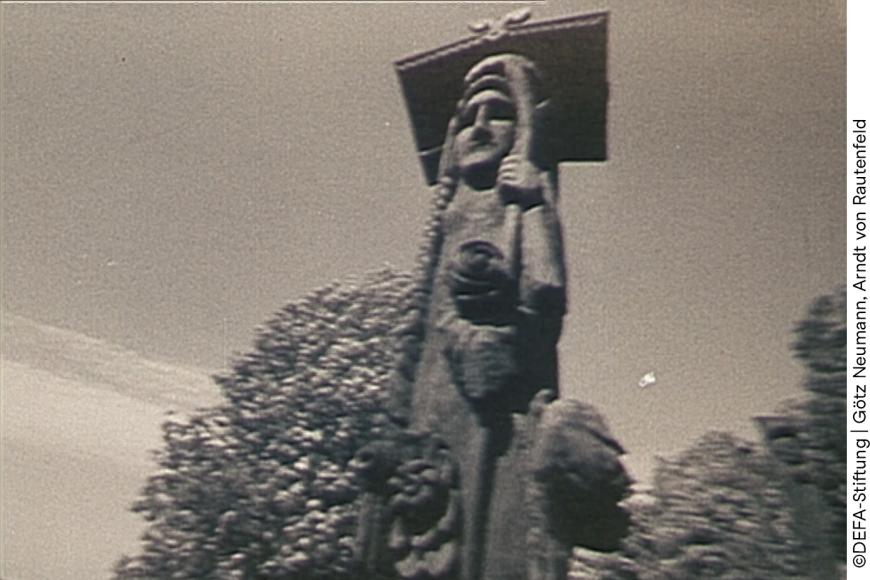
A Lithuanian village destroyed by the Wehrmacht is reborn as a forest of sculptures. This film poem commemorates the murdered ones and calls for peace.
Nothing is left of the Lithuanian village of Ablinga. Destroyed by Wehrmacht soldiers in 1941, a forest of sculptures was erected in 1972 to commemorate those who once lived here. Larger than life, the carved wooden monuments rise to the sky. In national poet Justinas Marcinkevičius’s poem they wake up again, share some last secrets and become connecting links on a timeline that knows violence and dreams of peace. Dagnija Osite-Krüger’s montage is bold, playful and sometimes brutal, her concern credible and strong. Within a few minutes, “Ablinga” puts a spell on us, becoming a monument to German guilt and the memory of the murdered ones.
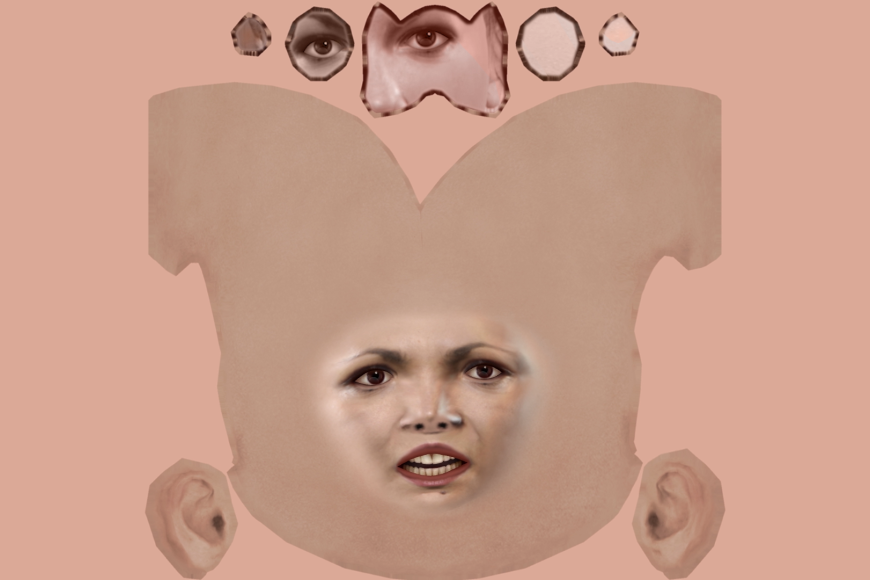
Who is the clever mind behind “AIVA”, the absolutely incredible AI novelty everyone talks about? An avatar with a female voice introduces themselves as the inventor.
Who is the clever mind behind “AIVA”, the absolutely incredible AI novelty that everyone talks about and wants to have? An avatar with a female voice, unfolding in two dimensions like a pattern, praises their successful multi-million-pound project. Answers are not provided, just another ghastly feedback loop of artificiality.
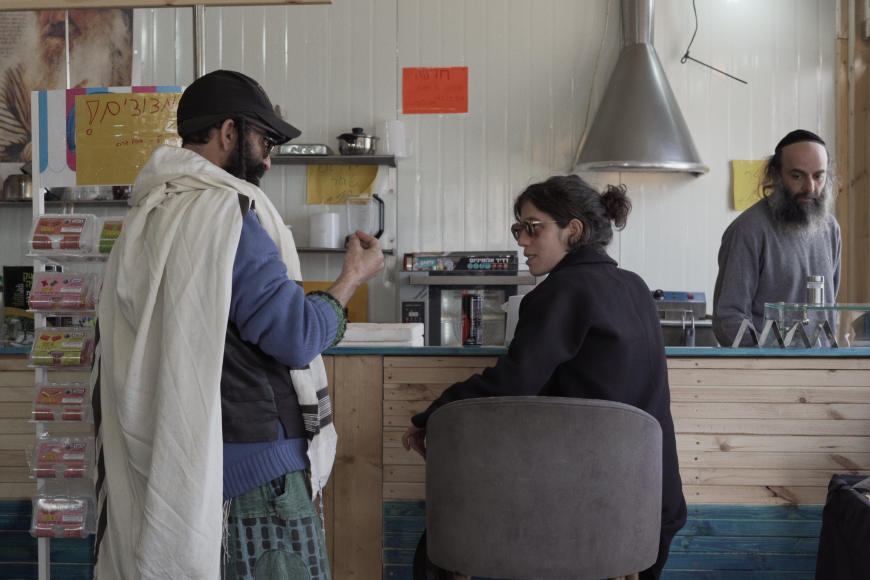
Maya Steinberg is a secular Israeli. Her father, however, had a late religious awakening. He will not appear in her film. Instead, the young director approaches his faith and her lack of understanding for it through a visit to the gravesite of rabbi Shimon bar Yochai in Galilee, where she spends a few weeks, observing believers, Orthodox and ultra-Orthodox, and wondering: Is there a place here for women? And can there be a place for queer women?
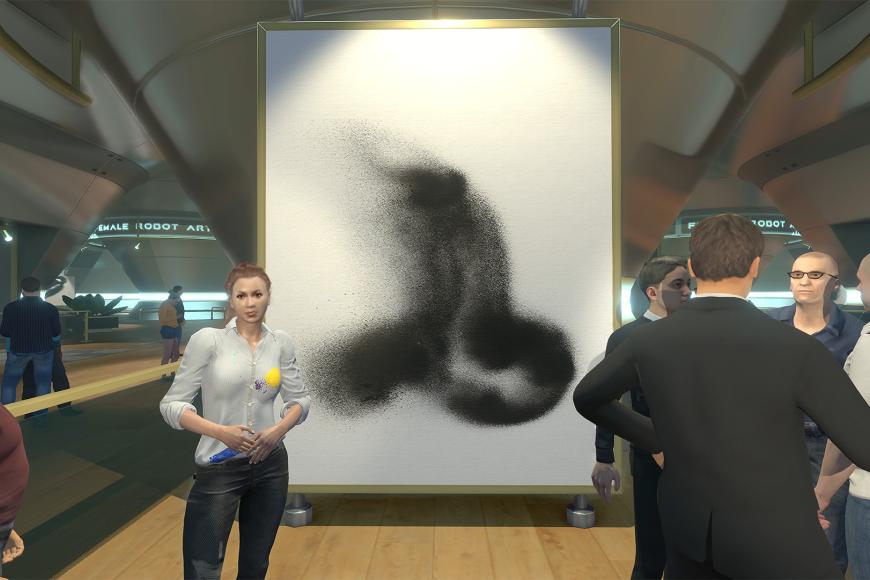
AIVA is an artist animated by algorithms. But first and foremost, she is the chillingly limited male tech vision of what more diversity in the arts could look like.
AIVA is an artist animated by algorithms. But first and foremost, she is the tech vision of male IT commitment to more diversity in the arts. Which is why AIVA prefers the “portrait” format in her paintings. An “art documentary” lets us share her creative process and fulfils every stereotype at hand. With unerring wit, Veneta Androva mirrors actual conditions in her computer animated science fiction.
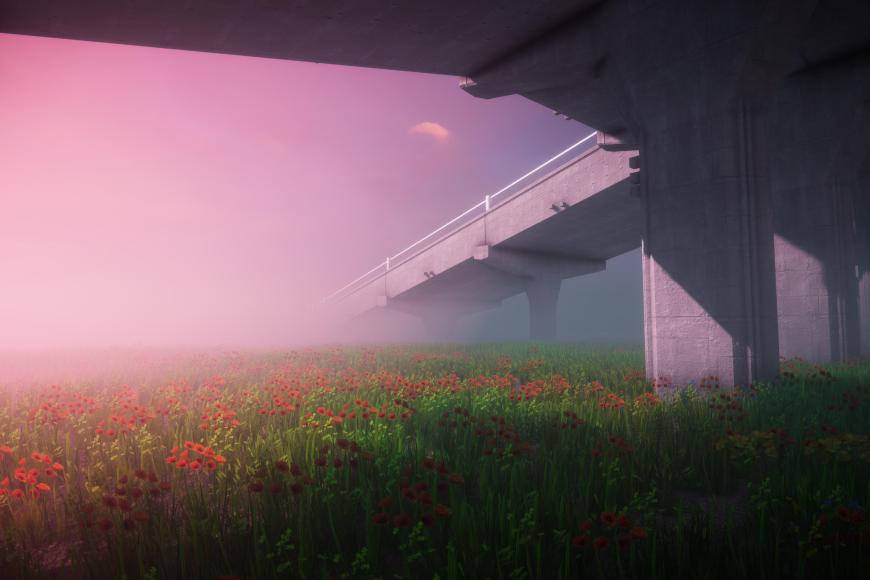
In the middle of a deserted city of concrete and fog, text fragments float over a sea of flowers. This is the story of a woman who refused to leave her home after a disaster. The game of tension and ignorance, suggestion and concreteness leaves room for projections: We are confronted with our own fears before the plot is resolved.
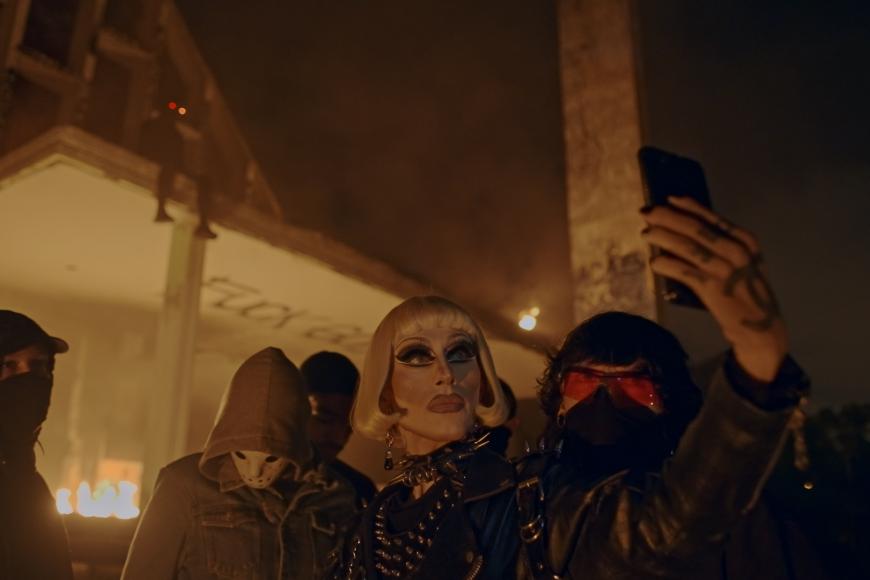
The portrait of a young, queer generation in a Colombia marked by violence and repression, told as a real-life ghost story in atmospheric and morbid images.
Theo Montoya draws on casting outtakes, melancholy observations of daily life and decadent party impressions from his friends to create a morbid and yet tender portrait of a young, queer generation in Colombia. In a country marked by violence and repression they can hardly imagine their future, but maintain a close, almost loving relationship with death.
This was meant to be a fiction film: a ghost story in which the dead no longer find cemetery space and consequently coexist with the living, including having sexual relationships – which the state rigorously forbids and persecutes. A clandestine nocturnal subculture emerges where erotic desires for which daylight means annihilation can be acted out. A week after Montoya found his leading actor for the project, the latter died of a heroin overdose. More deaths among his friends follow. They are the ghosts haunting the film that was ultimately made. It retains its dystopian character, but the dangers it portrays are quite real: For these young people, they are part of everyday life in Medellín, which is still deep in the shadow of Pablo Escobar and where the search for pleasure and human warmth takes one through labyrinthine abysses.
Carolin Weidner
Credits
Director
Theo Montoya
Script
Theo Montoya
Cinematographer
Theo Montoya
Editor
Matthieu Taponier, Delia Oniga, Theo Montoya
Producer
Theo Montoya, Juan Pablo Castrillón, Bianca Oana, David Hurst
Co-Producer
Balthasar Busmann, Maximilian Haslberger
Sound
Eloisa Arcila Fernandez, Estephany Cano
Sound Design
Marius Leftărache, Victor Miu
Score
Vlad Feneșan, Marius Leftărache
Winner of:
Golden Dove (International Competition)
Competition for the Audience Award Short Film 2022
Animated Film
Switzerland
2022
3 minutes
without dialogue
Subtitles:
None
A lovingly designed mini-drama about a droll puppet with a button nose and jug ears in scary situations we all remember from our childhood. The horror on the one-metre board under which a bottomless abyss is yawning. The panic when the door of a public toilet won’t open. Every scene illustrates children’s fears, and we don’t laugh about a little man in distress but about ourselves.
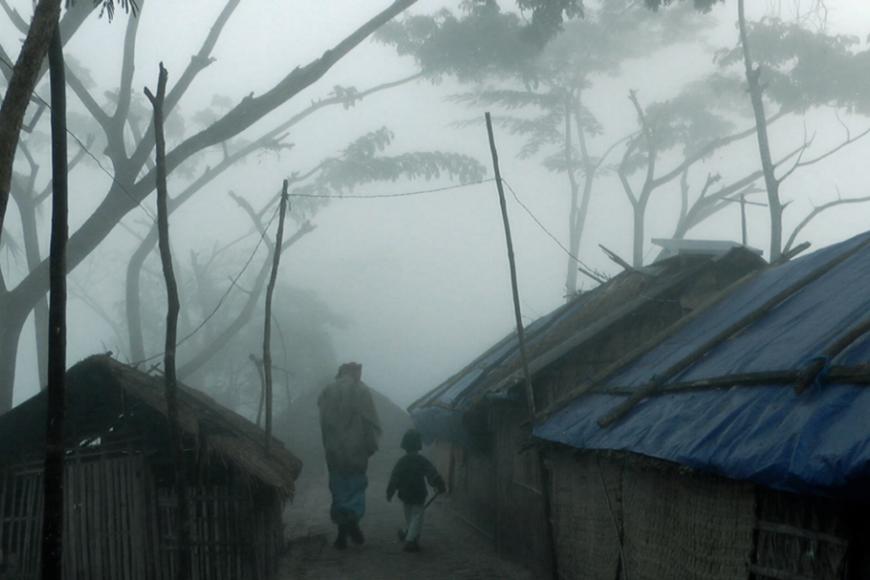
This warm-hearted portrait of a village stricken by flood in Bangladesh opened DOK Leipzig ten years ago and has lost nothing of its bitter topicality.
Ten years after its premiere, Kamar Ahmad Simon’s film has lost nothing of its bitter topicality. In 2022, too, millions of people are fleeing floods after heavy rainfall in Bangladesh, hundreds of villages are flooded or completely cut-off. On 27 May 2009, cyclone Aila hit the Bangladeshi coast. The community portrayed in “Are You Listening!” has settled in a makeshift home on an old dyke and keeps stubbornly waiting for the new one to be built. With a fine sense for absurd situations, the filmmaker documents a daily life marked by the determination to return one day against all odds.
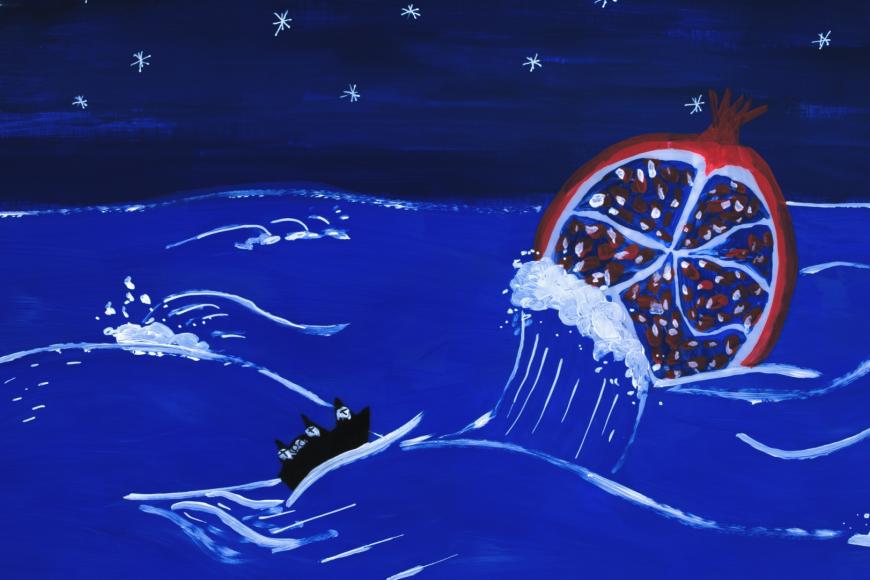
A young Swiss woman searches for her Armenian roots. A wooden wardrobe roaming through night-blue landscapes forms the leitmotif of her critical feminine family historiography.
A young Swiss woman searches for her Armenian roots. Various lovingly animated drawers of the simultaneously accumulating family archive open. This very personal examination of collective traumas of post-migrant communities finds images and words for racism and the difficulties of talking about feelings with male family members. Its leitmotif is a wardrobe roaming through night-blue landscapes which – despite the cracks – holds everything and everyone together.
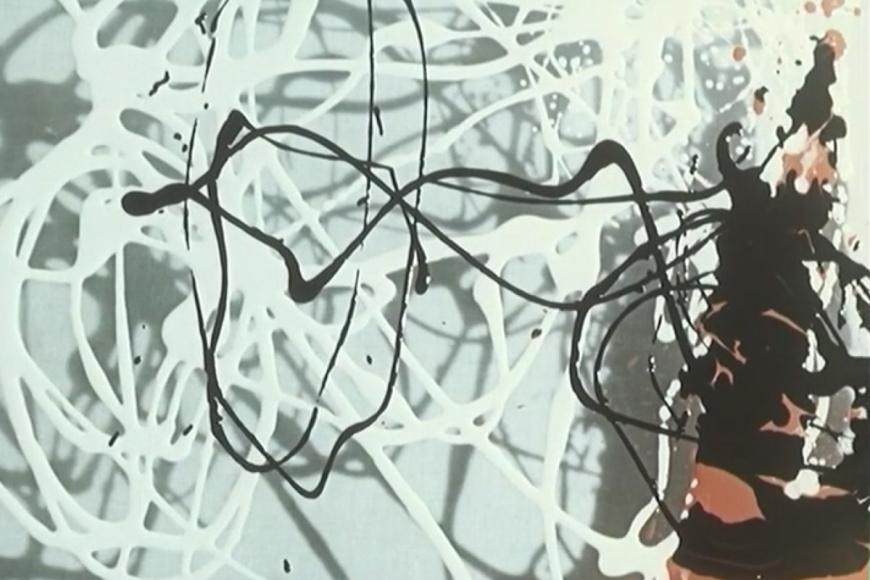
Originally intended as a documentation of Tadeusz Kantor’s “informal painting”, the film develops a life of its own: The abstract form-finding itself becomes the movie star.
Intended as a documentation of Polish artist and theatre-maker Tadeusz Kantor’s “informal painting”, Mieczysław Waśkowski’s film develops a hectic experimental life of its own. The gestural application of paint is staged on changing spatial levels by means of glass plates, camera movements and lighting, making not the painter but the abstract form-finding the movie star.
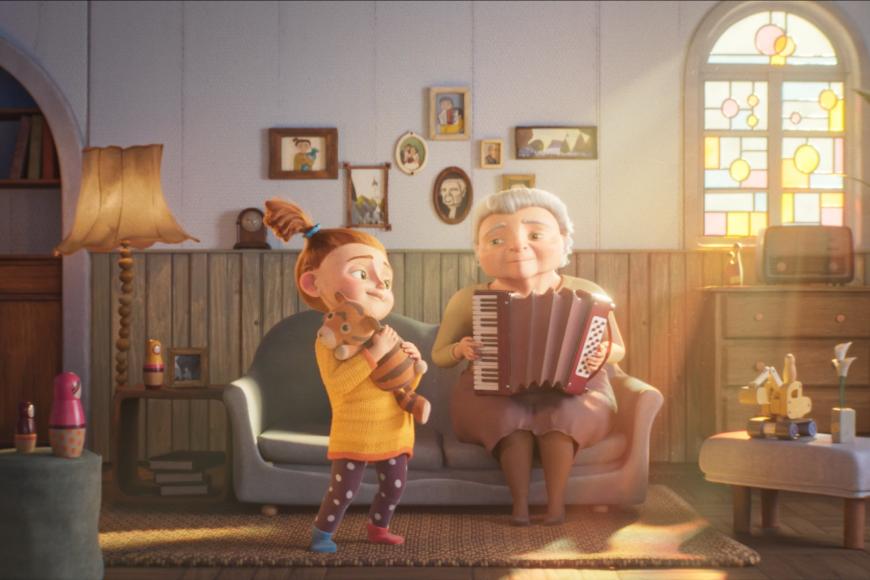
When her boring grandma takes a nap, Greta comes up with the idea of playing funeral. When grandma wakes up, they realise: For good memories, one must create beautiful moments.
Phew, it’s so boring. Nothing is allowed at grandma’s! No touching anything, no painting on anything, always being quiet. But when grandma is taking her nap, Greta comes up with the idea of playing funeral with her. The stuffed animals mourn around the sofa grave, Greta gives a speech in a trembling voice. That’s when grandma wakes up and they both realise: For good memories, one must create beautiful moments together.
Lina Dinkla
Credits
Director
Damaris Zielke
Cinematographer
Michael Throne
Editor
Damaris Zielke
Producer
Jiayan Chen
Sound
Max Hartstang, Marieke Czogalla
Sound Design
Marieke Czogalla
Score
Hannes Binder
Animation
Damaris Zielke, Lukas von Berg, Ferdinand Ehrhardt, Patrik Knittel, Sarah Schulz , Tanja Gruber, Laura Staab
To animate means to bring to life, but that’s precisely what this architectural film does by means of a machine. What happens when an AI is entrusted with the creation of art?
Her “artificial assistant” is what Claudia Larcher calls the AI that digitally analysed her analogue “Baumeister” series of collages and generated this film from them. Creator or servant spirit, the machine makes architectural sketches waft biomorphically and enlivens (i.e. animates) rigid shapes. The Japanese Metabolists who called for the fluid renewal of their buildings, the organic growth, deformation and decay of architecture, would have liked “The Artist in the Machine”.