The daily routine in the life of a young couple: getting up, eating soup, daydreaming … Surreal animated photo collages and electro-acoustic sounds turn the inside out.
The daily routine in the life of a young couple: getting up, squeezing blackheads, eating soup, daydreaming … Zbigniew Rybczyński reworks real-life images to create surreal collages in order to visually turn the inside out. He is supported by the Polish composer Eugeniusz Rudnik, whose great electro-acoustic inventiveness shifts playfully back and forth between naturalism and alienation.
“Stripsody” is based on a score of onomatopoetic elements and cartoon language quotes. The solo voice swings on a liana: past the “achoo” to the “boinnnggg”.
The musical piece “Stripsody” for solo voice was created in a collaboration between mezzo-soprano Cathy Berberian and comic book author and illustrator Roberto Zamarin. The score unites onomatopoetic elements, cartoon language and action sequences. Berberian’s magnificent voice takes up the dynamics of the images, swinging on a liana: past the “achoo” to the “boinnnggg”.
Electromagnetic waves are almost imperceptible. This animated documentary gives us an impression through decay damage to original 16mm film stock and subtle drone sounds.
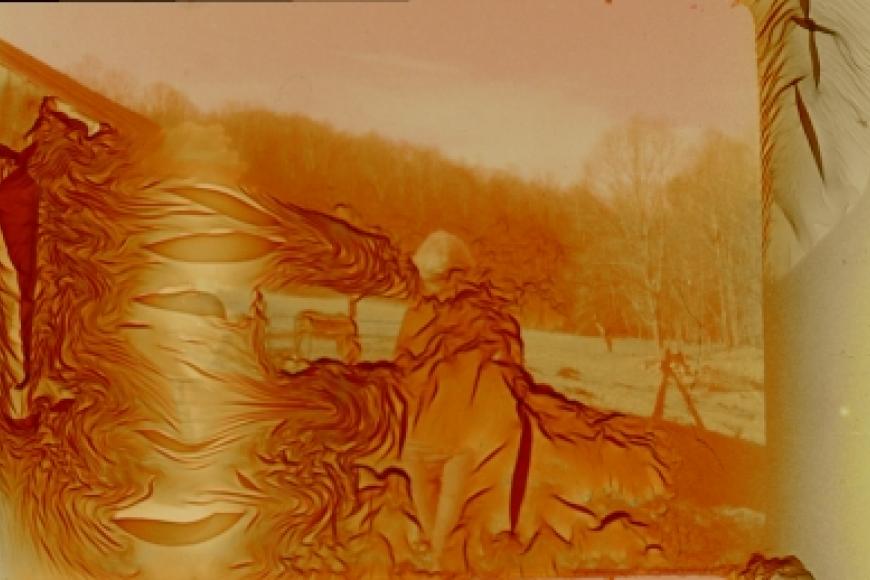
Electromagnetic waves cannot be detected by our conventional sensorium, but are perceived as stressful by electro-sensitive persons, “like a substance pouring all over you”. Karl Lemieux and David Bryant translate this invisible, inaudible threat into decay damage to original 16mm film stock. Visual wounds, wrapped in subtle drone sounds.
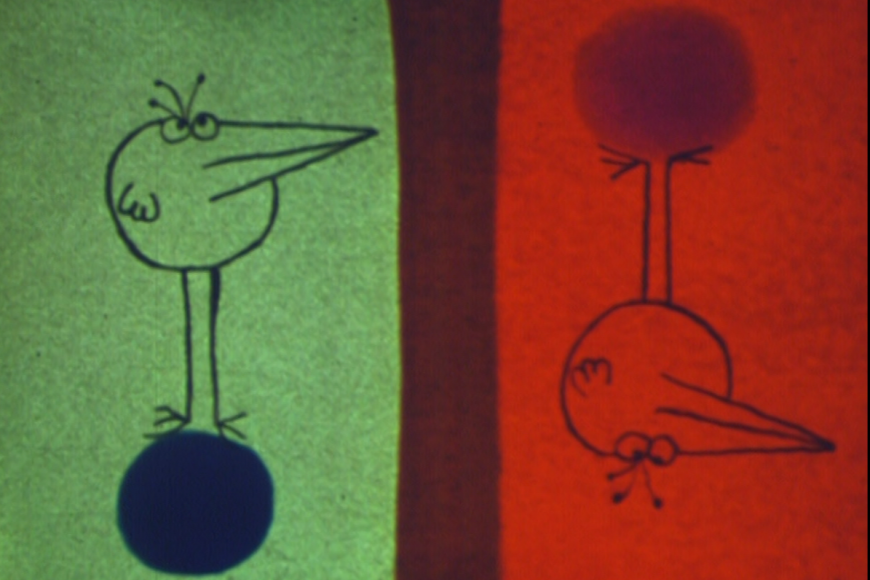
At the end of the first Space Age wave, bird-like and bowler-hatted creatures enter the TV screen. The Shadoks and the Gibis live on distant two-dimensional planets. Jacques Rouxel’s absurdly funny, minimalist animated science fiction world of drawings is spiked with the electro-acoustic, cartoon-like, extra-terrestrial sounds of the composer Robert Cohen-Solal, well-versed in musique concrète.
Patterns, profiles, letters – the photocell of the film projector translates Moholy-Nagy’s “handwriting in sound” on the optical soundtrack of the film into electronic sounds.
No sooner had optical sound been invented than it was used in other than the intended way. Geometric patterns, intertwined lines, facial profiles and letters instead of voice recordings and music – Moholy-Nagy imaginatively designs the optical soundtrack of the film. The photocell of the film projector then translates his “handwriting in sound” into electronic buzzes and beeps, along and beside the musical scale.
An elderly lady indulges in her audiophile obsession. She records the sound of her house during her absence on countless C60 cassettes to listen to it later.
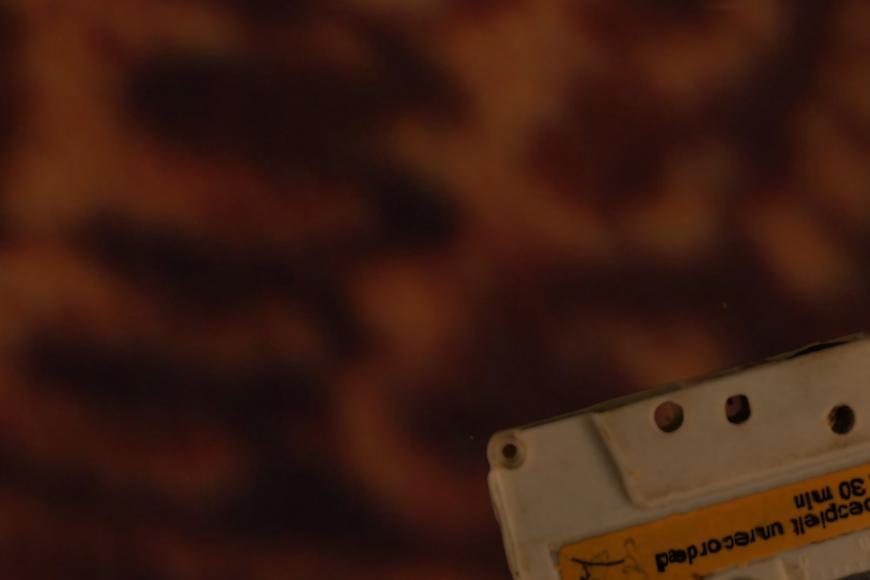
An elderly lady indulges in her audiophile obsession. She records the sound of her house during her absence to listen to it later. A life of random and environmental sound, collected on countless C60 cassettes. This poetic collage of negative film, photos, dried flowers, animation and sounds reveals a big heart for Eva Hipsey – and for quirky amateur recordings.
Daffy Duck is caught in an animation loop. Martin Arnold dissects the industrial animated film production with its extreme division of labour, where body parts of the characters are isolated on different cels and moved separately, in loops and outside their habitat, separated from the background. Daffy’s beak wiggles, his wing hands flutter in the black void. An artistic and psychological study.