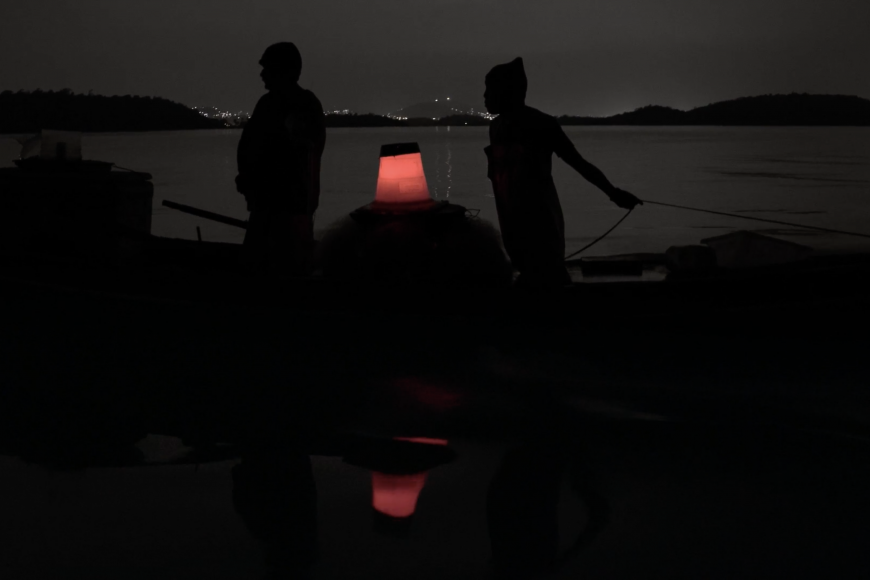
The Baía de Guanabara is not just any bay: the metropolitan area of Rio de Janeiro has sprawled around it. Its waste water threatens the rich ecosystem, planes roar along the approach corridors above. These filmic explorations on the margins of the megacity portray various environments that are all connected to the bay in a specific way. The people here are micro-wage earners making a modest living.
At night the lights of the city and the promises of capitalism shine in the distance. To the people living at the periphery, they seem out of reach. In eight chapters this documentary essay meditates on their habitats along the bay, following the repetitive and physically exhausting activities of humans and farm animals. Unusual perspectives, careful camera work and a poignant sound design elevate these observations to a commentary on the crisis in Brazil. Murilo Salles, who won a Silver Dove in Leipzig in 1978 for his debut “These Are the Weapons”, sheds light on the close link between geographical space and social inequality.
Annina Wettstein
Credits
Director
Murilo Salles
Script
Murilo Salles, Eva Randolph, Itauana Coquet
Cinematographer
Léo Bittencourt, Fabrício Mota
Editor
Eva Randolph
Producer
Murilo Salles
Sound
Felipe Luz
Score
João Jabace, Sarah Lelièvre
Nominated for:
FIPRESCI Prize,
Prize of the Interreligious Jury
Three friends explore the radiance of the Mediterranean, which connects Christian and Islamic countries and has always been and still is a site of conflicts.
English, German Subtitles for deaf and hard-of-hearing
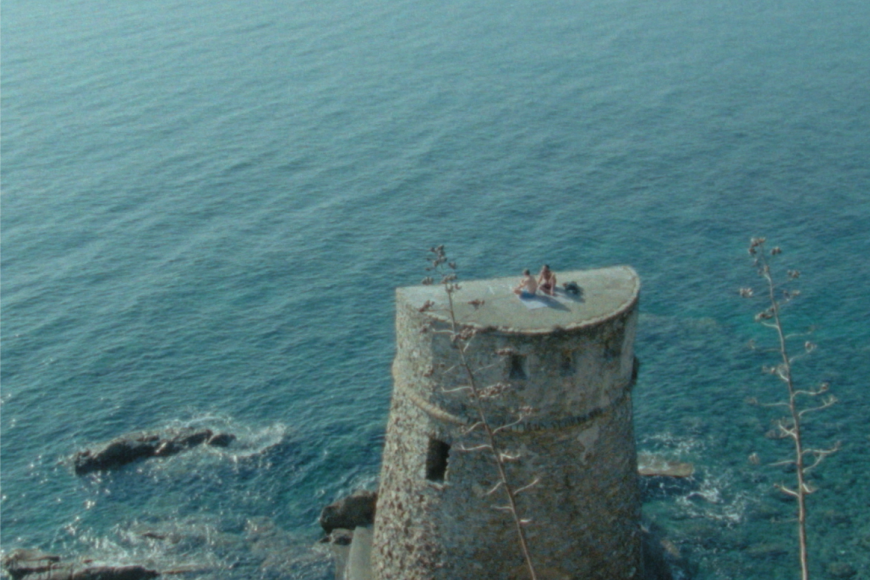
Porto Maurizio, where the director, who lives in France today, grew up, is located on the Ligurian coast. The village is the starting point for a cinematic journey into the past that spans a surprisingly wide arc to a time when Muslim pirates, the corsairs, haunted the Mediterranean and took Europeans as slaves. To this end, the film light-handedly draws from the rich fund of film history and its iconography.
Adventure films from the 1940s and historical murals depict the naval battles of the early 19th century in powerful images. The director ingeniously combines such visual finds with analogue new recordings of a journey with two friends. Their seemingly loosely told anecdotes and chance encounters combine to form a coherent whole, forming a geopolitical system of coordinates around the Mediterranean that deals with eurocentrism, colonial history and religiously motivated conflicts between Christian and Islamic countries. The subjects couldn’t be more topical.
Home birth or clinic? In the field of tension between traditional and modern midwifery, the conflicts of women in Ethiopia’s changing society come to light.
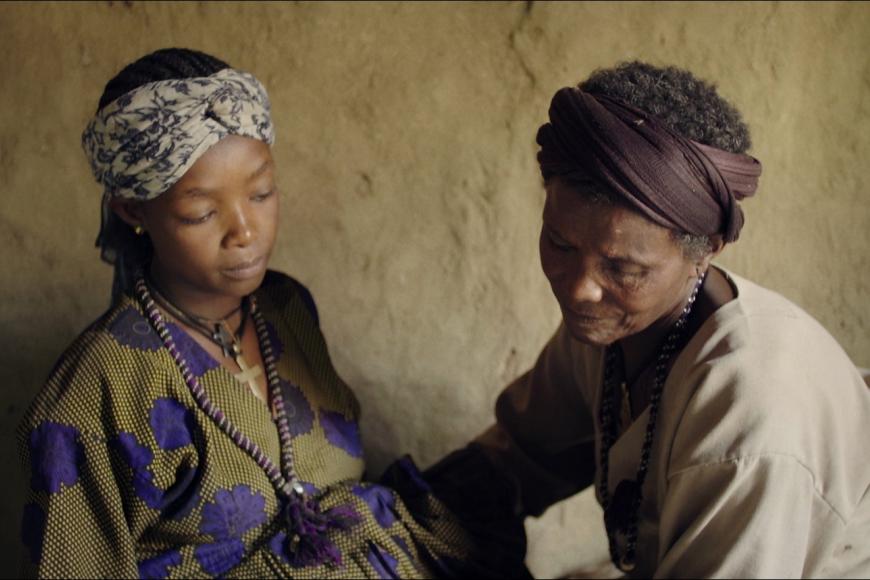
In rural Ethiopia the staff of a health centre are fighting maternal mortality. They tirelessly appeal to women to give birth in the clinic. But reservations are strong, and so are the practical obstacles. How are heavily pregnant women supposed to arrive in time when the ambulance comes hours later or not at all? Against medical advice, Hulu Ager decides to give birth at home, assisted by a traditional midwife.
With palpable familiarity, the film crew captures moments of intimate communion between Hulu Ager, the midwives and other women. On the margins of the central conflict, the many challenges they face in a patriarchal society emerge. The debates are most lively under the hood dryer at the hairdresser’s: She doesn’t enjoy sex because of her circumcision, the medical professional Welela reports. “Sometimes you have to prepare yourself for sex,” another customer advises. Sometimes it helps to get drunk. But the perky hairdresser is sure: Bad sex is grounds for divorce. The women share their desires and woes with each other, experience solidarity and gather courage for small and great acts of departure and resistance. Men are relegated to the role of extras, if at all.
Sarina Lacaf
Credits
Director
Sarah Noa Bozenhardt, Daniel Abate Tilahun
Script
Sarah Noa Bozenhardt
Cinematographer
Bernarda Cornejo Pinto
Editor
Andrea Munoz
Producer
Sonja Kilbertus
Co-Producer
Hiwot Admasu, Beza Hailu Lemma
Sound
Alex Praet
Score
Anna-Marlene Bicking
Winner of:
Honourable Mendtion (International Competition)