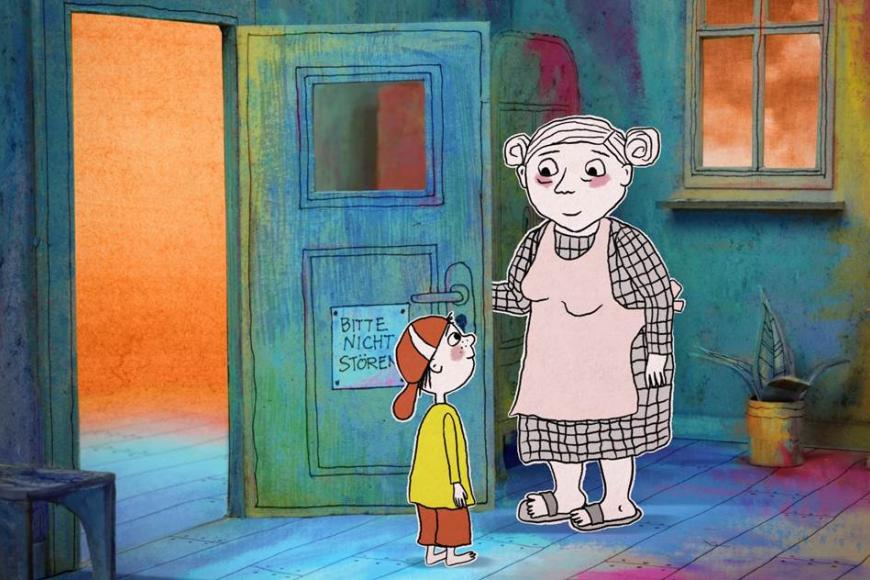
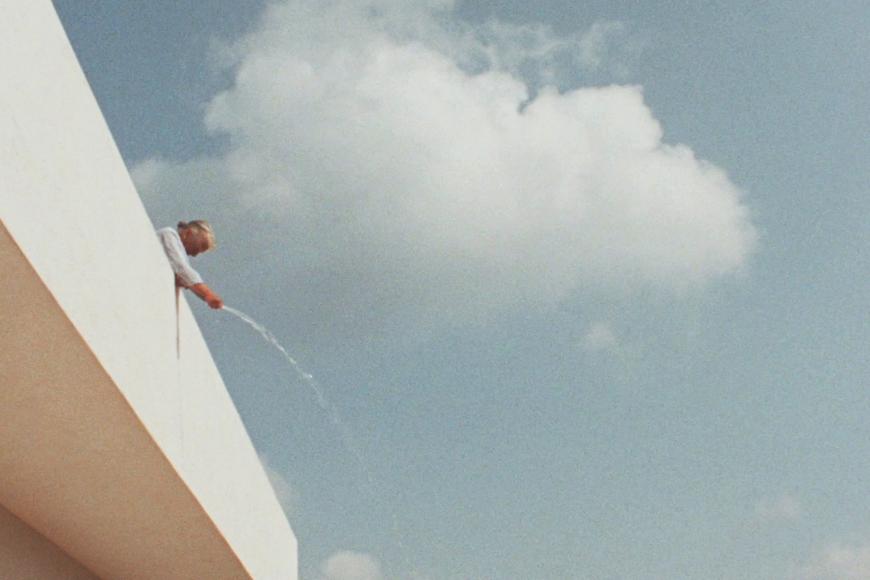
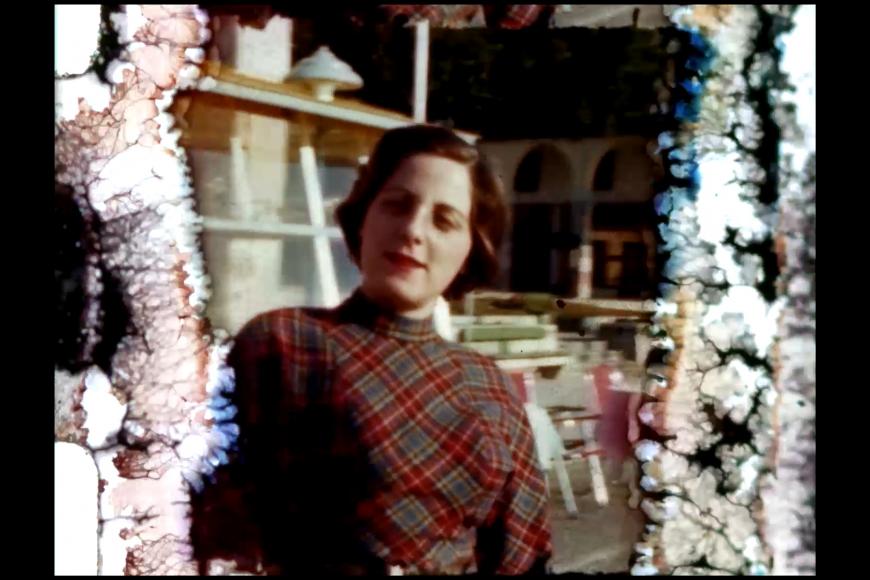
Elise is a timid woman. She’s even afraid of trees. When one day a paper plane sails through her window, she’s so agitated that she hardly sleeps a wink that night. The next morning Emil, a boy in a baseball cap, knocks on her door. He’s looking for his plane and also needs to go to the loo. Suddenly Elise’s life changes in a wonderful way.
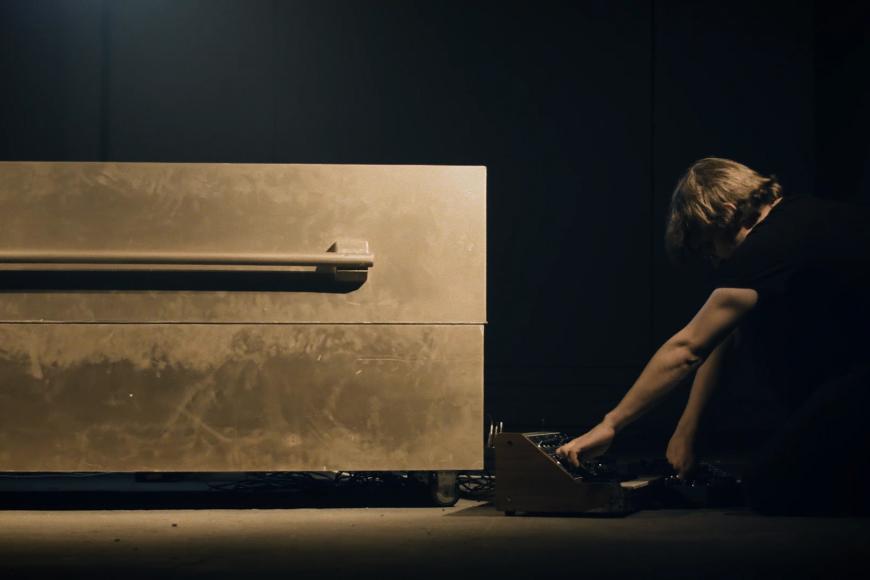
Complete darkness. Our concentration turns to the spherical sounds around us. Basses wander through our body, triggering images, emotions. The sensory overload which usually has us so firmly in its grip is turned off. Sound – improvised and modulated interactively – takes the lead. Stories emerge. And all this exclusively in our own heads.
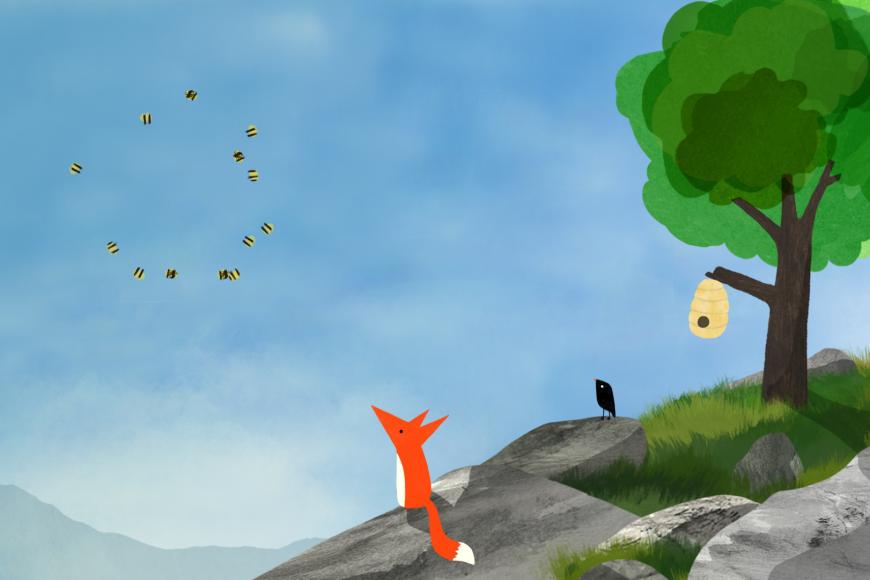
What’s this? The little bird wonders about its buzzing neighbour and stumbles after the bee across the meadows. But watch out, the fox is already lurking behind a tree!
It’s spring and the little bird discovers the first leaves on his tree. Already the buds open and the bee comes buzzing. Curious, the little bird stumbles after it and almost overlooks the fox who is growling hungrily again. After the farting caterpillar last year, the bird can now be happy about a new companion.
England, mid-19th century: children keep the flow of air going in narrow, sooty chimney flues. The report of a chimney sweep of the time is brought to life by pencil drawings.
In the mid-19th century, a massive fireplace was the centrepiece of every stately home in England. Children are agile enough to keep the flow of air going in the narrow and dark flues. Their young skin is scraped raw by the sooty stone walls. Their fear of falling is as strong as their fear of the master’s punishment. Black-brown-red cross hatching and unusual camera perspectives bring to life the report of a chimney sweep of the time.
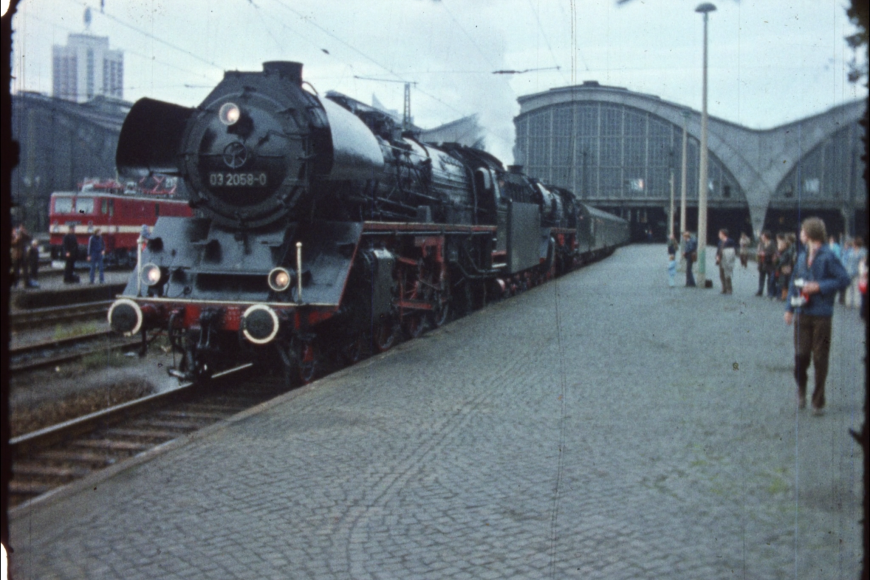
Pointedly sober and factual, the speaker explains the necessary preparations for the last departure of an express steam train headed for Berlin from Leipzig Central Station on 30 September 1978. Numerous amateur filmmakers and photographers accompany the steam engine as it departs on its final mission. Unlike the speaker, they were probably quite moved.
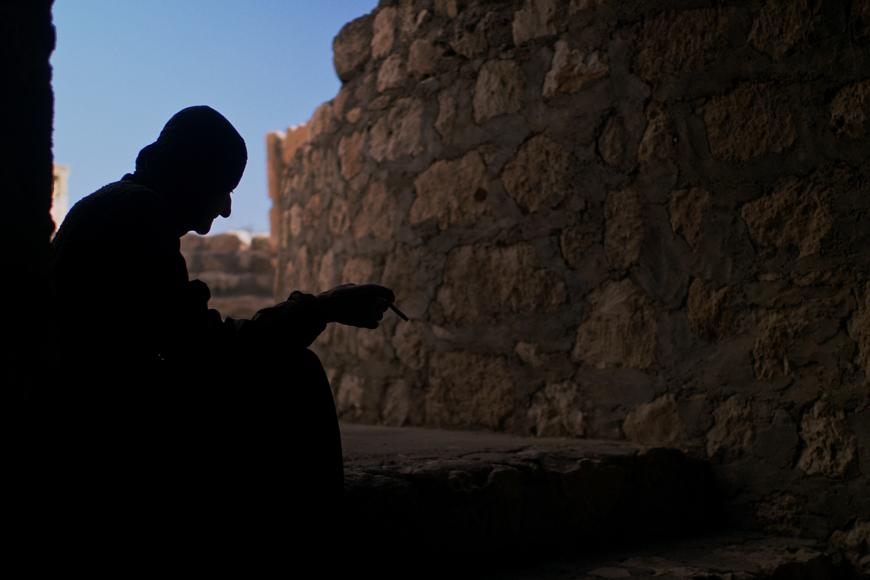
A Syrian Orthodox nun lives in an abandoned estate in south-eastern Turkey. Despite hostilities from the Muslim neighbourhood: she won’t be driven out.
In a dilapidated village in south-eastern Turkey, a Syrian Orthodox nun endures alone with her animals. However strong the hostility of her predominantly Muslim neighbourhood may be: she won’t be driven out, for she has sworn to protect the church and not to leave the sacred place. This quietly filmed observation of everyday life focuses on an isolated woman who carries the pain of a whole community inside her.
The population of the village was tortured and driven away in the 1990s. The nun Dayrayto came here only afterwards. Today she rarely receives visits from passing believers. She usually spends her days doing maintenance work on the church and taking care of the animals. Right now she is worried about her old dog. Has he been poisoned? What to make of the provocations and threats she talks about? Dayrayto is always vigilant, even when she’s resting. From her elevated dwelling she looks far across the landscape, registering every vehicle, however distant. But she is in no way distracted by the presence of the film crew. The unobtrusive camera follows the nun – not at every turn, but as a constant, protective companion as she endures on her “bastion”. Loneliness, worries and fear shape this sparse life. They made her suspicious, but also fearless.
A virtuoso filmic reflection on automatisms in art and an encounter with Margaret Raspé on a Greek island, where the artist and filmmaker spends part of the year. Considered to be a pioneer of feminist German film, “I know where I am” is how she sums up her feeling on the island. Orientation in space, control and letting go are all central categories in her artistic practice.
Competition for the Audience Award Short Film 2020
Animated Film
Germany
2019
4 minutes
English,
German
Subtitles:
English
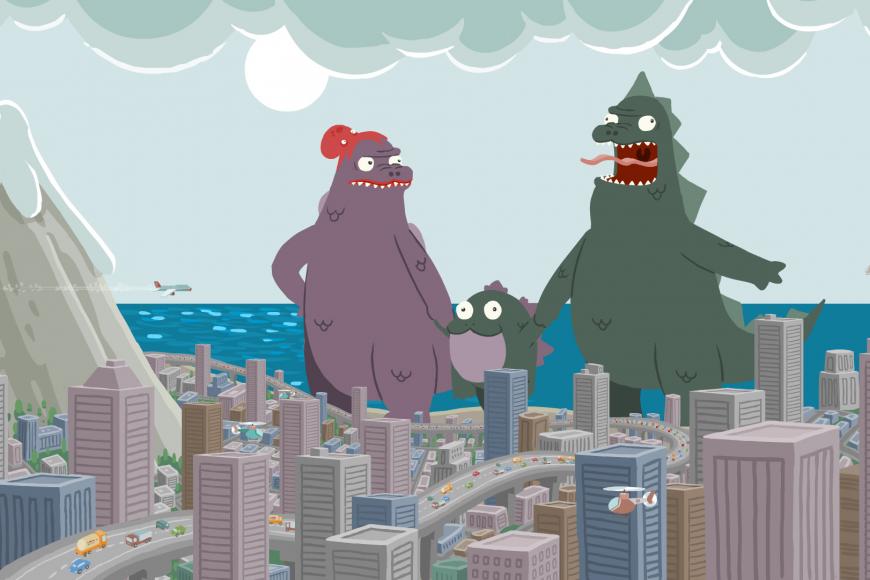
A cosy family picnic at the place they have been visiting since the Cretaceous period is what Mom, Dad and Go Zilla want. But first the big city that has annoyingly sprung up there must be flattened. In the father’s opinion, the performance of his offspring unfortunately leaves a lot to be desired: Too dreamy and still sucking on a pacifier, the little one just doesn’t wreak enough havoc. It’s an entertaining story in the almost normal everyday life of a family.
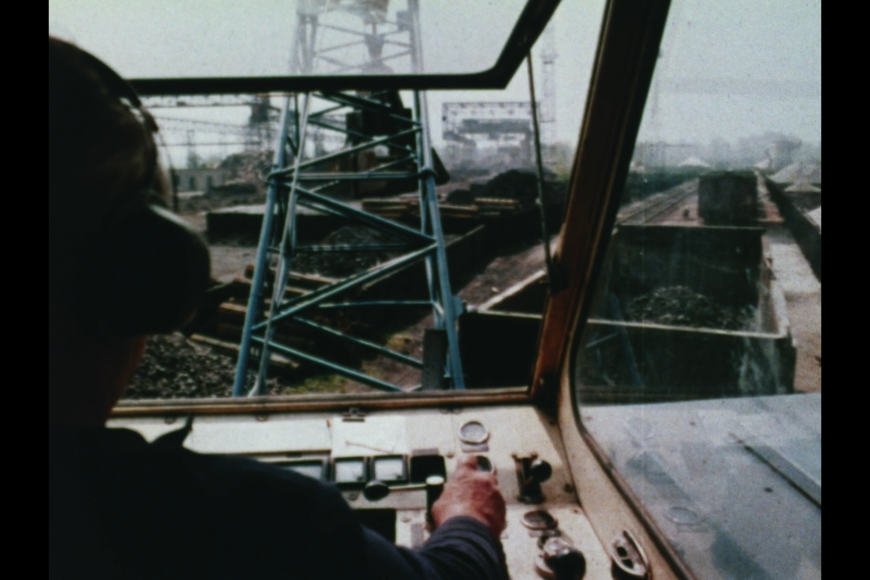
A commercial for the railway slewing cranes of the TAKRAF Combine: Its successor company is still the world market leader today and operates in Leipzig-Lindenau under the name “Kirow”.
Railway slewing cranes by TAKRAF in global use: salvaging derailed trains, assembling bridges, moving goods. The company, now operating again under the name “Kirow” and based in Leipzig-Lindenau, has been able to maintain its standing on the global market until the present day. Constantly improved operating comfort and increased maximum loads represent 100 years of the art of engineering.
Numerous films deal with the American Civil War, which raged between the northern Union States and the southern Confederate States from 1861 to 1865. One general who rose to become a war icon and the 18th president of the United States was Ulysses S. Grant. Director Jim Finn uses board games to reconstruct the battles and documents a divided nation full of rebellious factions.
“Bloody Pond” or “The Flaming Forest” are the names given to places below the Mason-Dixon Line where many cruel and confusing clashes took place within a few years. Today only cemeteries, memorial plaques, wax museums and obelisks bear witness to episodes of the war that was to be of such vital importance for the shape of the USA today. Jim Finn’s 16mm shots are a detailed inspection of various stations to which he adds macabre anecdotes and trenchant descriptions. Statesmen, ideologists and warlords haunt the forests, ruins and riverbanks here – like the incidences of light which make the footage light up time and again. There is beauty in these images, in the trickling synthesizer melodies, too, or in the stop motion animations of complicated board games. This beauty has little in common with the dark underpinning of this conflict: deep-seated racism and an adamant belief in the right to own slaves.
Carolin Weidner
Credits
Director
Jim Finn
Script
Jim Finn
Cinematographer
Jim Finn
Editor
Dean De Matteis, Jim Finn
Producer
Cat Mazza
Sound
Alexander Panos, Jesse Stiles
Score
Colleen Burke
Animation
Jim Finn
Nominated for:
Prize of the Interreligious Jury,
FIPRESCI Prize
Cinematic genealogy: A grandson sets out to document his grandparents’ boundless love but upon closer inspection of the myth is unable to overlook the family rifts.
A young man meets a young woman and both fall for each other. A house is built, children are born, the fairy tale story of boundless love takes its course. A grandson sets out to explore the myth of his grandparents’ romance and tries to honour his deceased grandfather on film, assisted by all the surviving relatives. Not an easy undertaking when things may not have been exactly as the family tradition would have it …
In his search Rocco Di Mento unearths old 8mm home movies, an unpublished novel, various love letters and a whole host of long-suppressed feelings. It’s hardly surprising that this mixture begins to develop a dynamic of its own. Suddenly the issue is no longer only the search for the love of one’s life but also the questions of what holds people together above and beyond their relationship status and degree of kinship and how forgiveness is possible even though you have long since lost faith in it. An ingeniously constructed family constellation full of Italian temperament, in which tension, emotion and truthfulness are inextricably linked. Because: “Even if you leave you will always be part of your family.”
Luc-Carolin Ziemann
Credits
Director
Rocco Di Mento
Cinematographer
Sabine Panossian
Editor
Antonella Sarubbi, Valentina Cicogna, Rocco Di Mento
The riots that were to spread across the whole of France in 2005 began in Clichy-sous-Bois outside the gates of Paris: young men on the barricades, burning suburbs. The division of society became painfully tangible. What has happened since then? This complex, finely woven documentary look at the Banlieue shows how consciously young people today deal with discrimination. The age of machismo seems over – at the school theatre workshop or while playing soccer. Women rule the world …
Luc-Carolin Ziemann
Credits
Director
Rémi Brachet
Cinematographer
Zoe Bota, Anna Sauvage, Evgenia Alexandrova, Eva Sehet
These fucking doubts! And isn’t a 100-kilo massif of a man who recites tender poetry on stage a contradiction in terms anyway? He almost fell silent. But then he defeated the booming silence and made his own fears the subject of his slam poetry performances. One small step for mankind, one big leap for a shy giant.
Ralph Eue
Credits
Director
Marcin Podolec
Script
Marcin Podolec
Cinematographer
Marcin Gierbisz
Editor
Marcin Podolec
Producer
Państwowa Wyższa Szkoła Filmowa, Telewizyjna i Teatralna, Fumi Studio
Drawings of fragile girls’ bodies from which the silhouettes of massive men emerge devouring each other – forever unerasable innermost images of a rape.
Emanations of a nightmare. Drawings of fragile girls’ bodies from which the silhouettes of massive men emerge devouring each other. Obsessive images from the inner perspective of a nude dancer during her performance. Shreds of acoustic memories of sexual abuse. And always recurring: the rapist in a hat, the forever unerasable unreal reality.
The day is dwindling, and the world is exhausted. The hour of the great sandman has come. He enchants his clients with grains of slumber while busy helpers fluff up pillows so that everyone who is sleepy may lie softly. At some point, almost everybody is likely to sense that there are more things between night and day than are dreamt of in our philosophy.
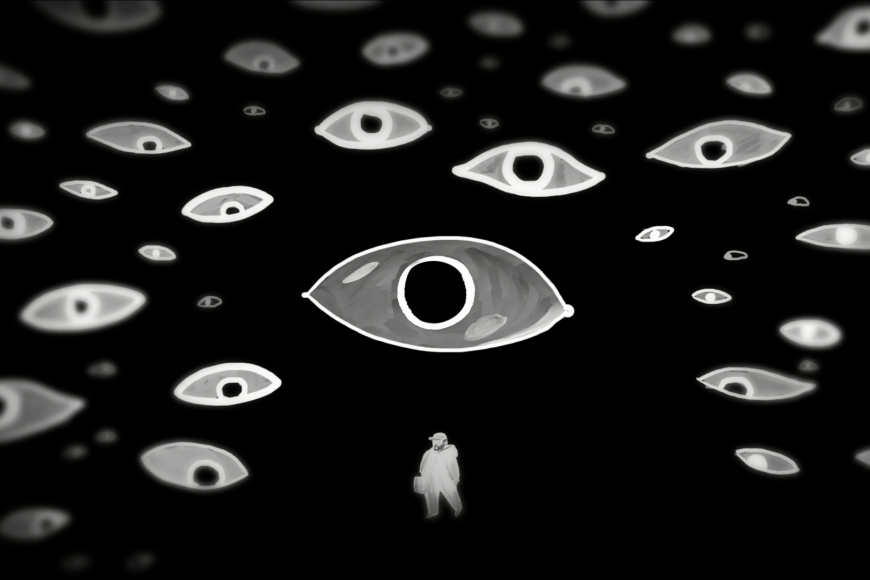
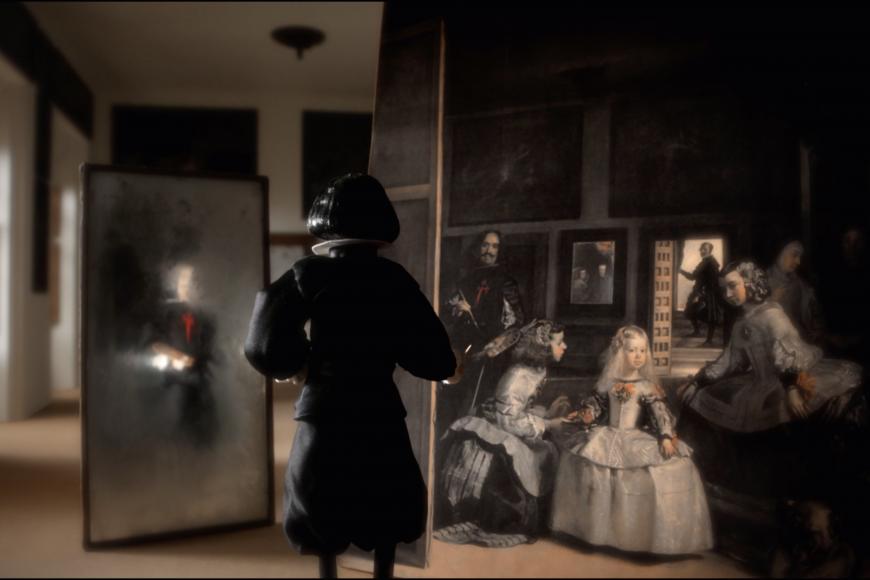
Are we looking at a painting or is it looking back at us? Velázquez’s larger-than-life painting “Las Meninas” sparks captivating digressions about curiosity and penetrating gazes.
It has been said that the baroque artist Diego Velázquez didn’t paint figures, but the air and light between them. And one could say about this film that it is not Velázquez’s larger-than-life painting “Las Meninas” that is the subject, but the penetrating gaze with which it looks back at his viewers. Among the many clever minds that discuss the artist and the intricate structure of this painting’s composition, it is curiosity itself that somnambulates here.
“Paintings aren’t movies, they’re paintings”, insists art critic and historian Svetlana Alpers. She’s right, of course – and then again, she isn’t. She’s one of the renowned talking heads interrogated by director Andrés Sanz Vicente to solve a crime. But who or what actually died? Perhaps our ability to see, as Alpers claims? For around 400 years, Diego Velázquez’ painting has been exposed to the eyes of its public, the analyses of its scientifically advanced critics who have racked their brains over who on the canvas enters through which door and why. “The Painting” is a continuation of this painting-eye-encounter with the means of cinema. The air and the light between the concrete thing and its passionately glowing aura are captured. In this, but only in this, a painting can be a movie after all.