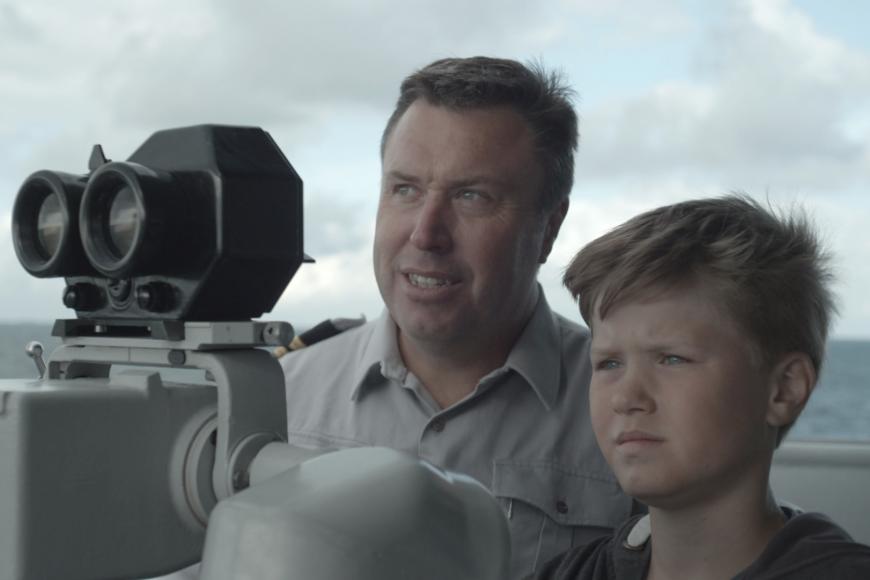
When Kwinten’s Dad has to go on a naval mission for three months it’s hard. Kwinten plays in nature, counts the days and tries to get used to missing him.
Kwinten is proud of his Dad who is the commander of a naval ship. But a new mission takes his Dad to sea again for three months. Kwinten waits for postcards and counts the days. His best friend now lives in another town, but fortunately comes to visit. Coping with missing his father isn’t easy for Kwinten. Seeing him again is all the more wonderful, though.
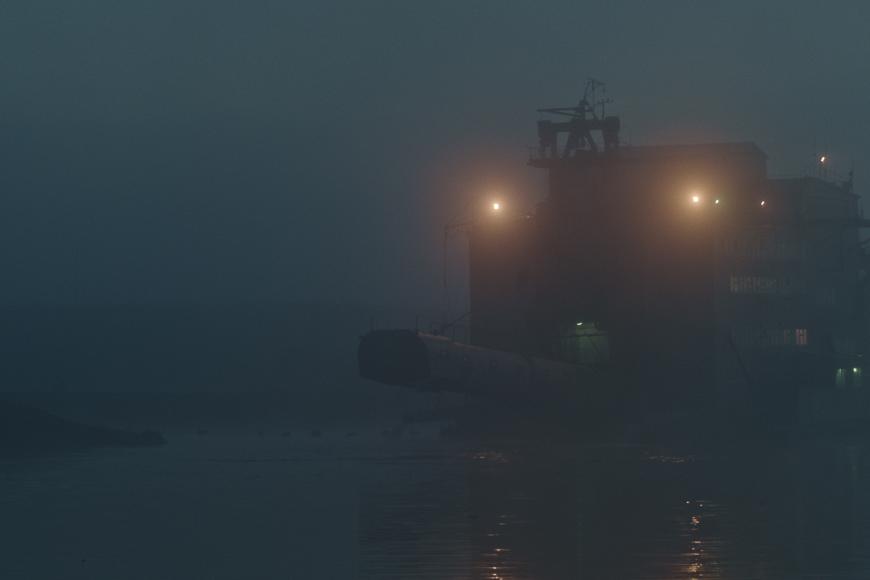
The technological and ideological traces of humans have transformed the earth from dark matter to a dark affair which despite everything brings forth new forms.
Quiet, dark shots of nocturnal fog, of a mine, a dump truck or a wreck, of huge earth craters and new surface contours created by excavation. Raw material extraction, economisation and exploitation of nature are the themes of this visual study. It’s accompanied by an unobtrusive, but threatening and assertive sound that underlines the mystic quality of the images. Post-industrial landscapes become post-apocalyptic.
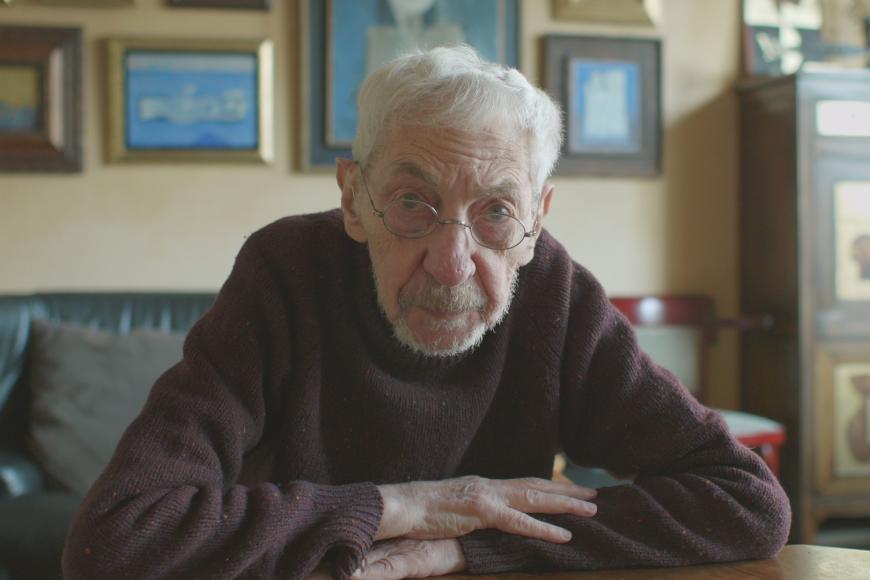
An experimental filmic arrangement that makes the past perceptible through the combination of oral history and archive material. Yesterday is inextricably linked to today.
How can we visualise the past without perceiving it too much as a historical fact? This film uses a clever combination of archival material and oral history to bring memories of a transgenerative trauma and the associated pain to the surface. What seems to be the past becomes visible in countless points of contact with the present. It’s a simple, touching treatment of the incomprehensible consequences of a historical crime.
Due to Legal Reasons This Film Is Called Breaking Bert
Anne Isensee
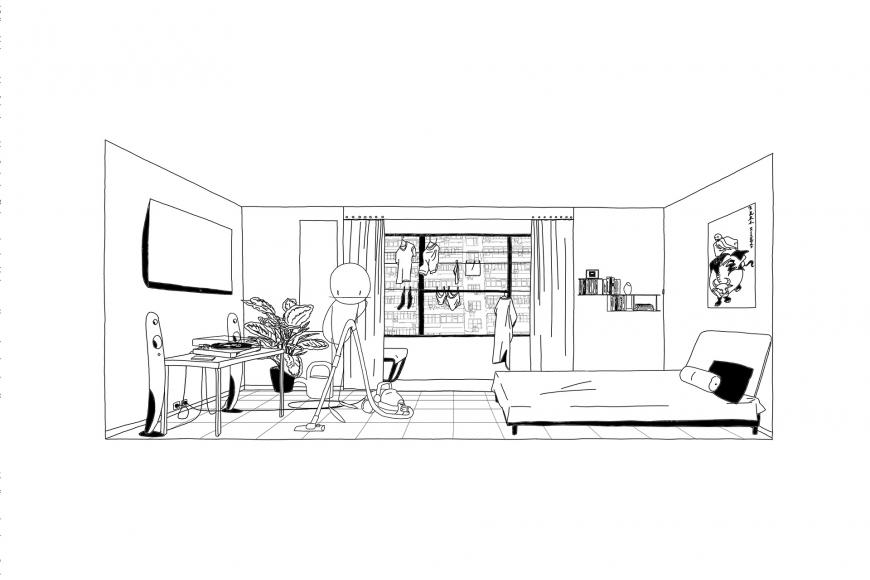
Most accidents happen at home. Thus the appeal to one’s personal political responsibility comes as a surprise. Randomly reading a Brecht text inspires to take action.
Due to Legal Reasons This Film Is Called Breaking Bert
Dieser Film heißt aus rechtlichen Gründen Breaking Bert
Anne Isensee
German Competition Short Film 2020
Animated Film
Germany
2020
5 minutes
German
Subtitles:
English
Most accidents happen at home. Thus a likeable, jazz-loving drawn figure is unprepared for an appeal to his own political responsibility. A random Brecht reading spurs her to do something – at the very least so as not to end up on the wrong track or wrong side of things. Pointed, tidy, and full of humour and affection for human dithering, Anne Isensee questions the illusion of a permanent contradiction in reality.
André Eckardt
Credits
Director
Anne Isensee
Script
Anne Isensee
Editor
Anne Isensee
Producer
Filmuniversität Babelsberg KONRAD WOLF, Lorena Junghans
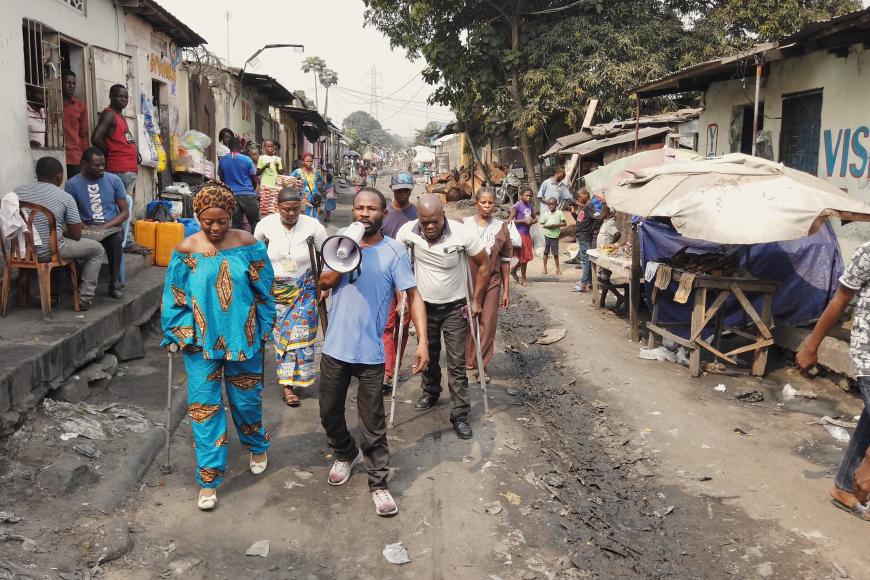
For years the victims of the Six-Day War in Kisangani have been waiting in vain for promised compensation. A march of the wounded, heading to Kinshasa, is to give voice to their cause.
In the summer of 2000 Ugandan and Rwandan troops fought a devastating battle in Kisangani. The International Court of Justice sentenced Uganda to pay one billion U.S. dollars to the civilian victims. After almost twenty years of waiting in vain, some of them set out for Kinshasa to enforce their legal claim. The physical and theatrical power of their mission both drives and radiates from this film.
Dieudo Hamadi has given the women and men he is about to follow down the Congo a visually confident and assured exposition. Gathered on an inky black stage, they look at us and sing: of blood spilled, of money forgotten. Then the march of the maimed sets itself in motion, on crutches, with prostheses, past the nearby pits of the dead and out into the country. Every metre covered is an act of rebellion. When the procession of beggars, who rightly won’t tolerate this designation, finally climbs the stairs of the National Parliament, iconic scenes of Soviet revolutionary cinema seem to shine through. But the crowd that is moving here is different. Its individual bodies push back with all their weight both against the casual shrug of the shoulders of political routine and the carelessly rounded calculations of loss and equivalent value of the arithmetic of war.
Sylvia Görke
Credits
Director
Dieudo Hamadi
Cinematographer
Dieudo Hamadi
Editor
Hélène Ballis, Catherine Catella
Producer
Quentin Laurent, Frédéric Féraud, Dieudo Hamadi
Co-Producer
Aurelien Bodinaux
Sound
Sylvain Aketi, Dieudo Hamadi
Score
Les Zombies de Kisangani
World Sales
Stephan Riguet
Winner of:
Golden Dove (International Competition),
Prize of the Interreligious Jury