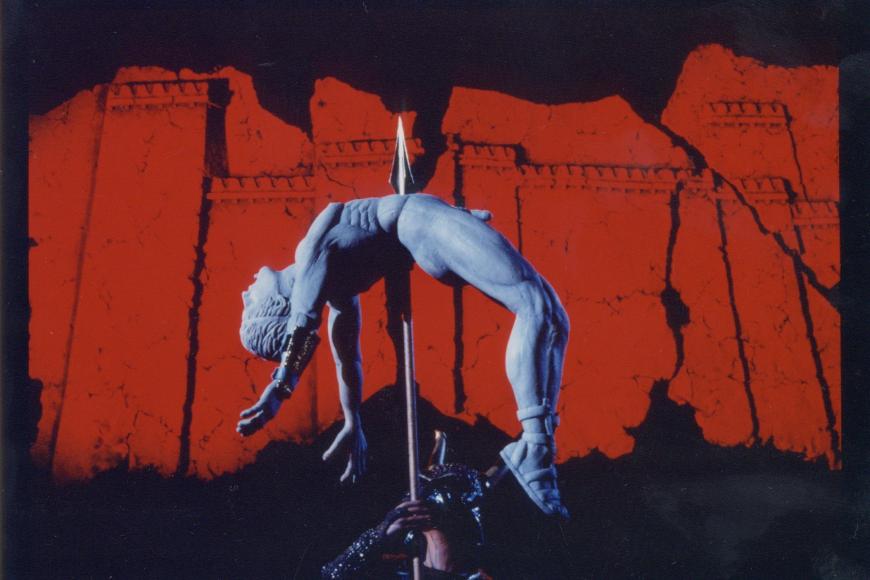
Trench warfare around Troy, the heroes are well-known. This adaptation of a classical myth, inspired by antique designs, dares to show explicit images for adults.
The winner of the first golden “Animation Dove”: nine years of war between Greeks and Trojans have gone past. The impulsive Patroclus, comrade in arms and bed mate of the rather battle-weary Achilles, thinks that victory can be achieved by other means. The tragedy takes its course – just as it was passed down in the classical myths but supplemented by what they left unspoken.
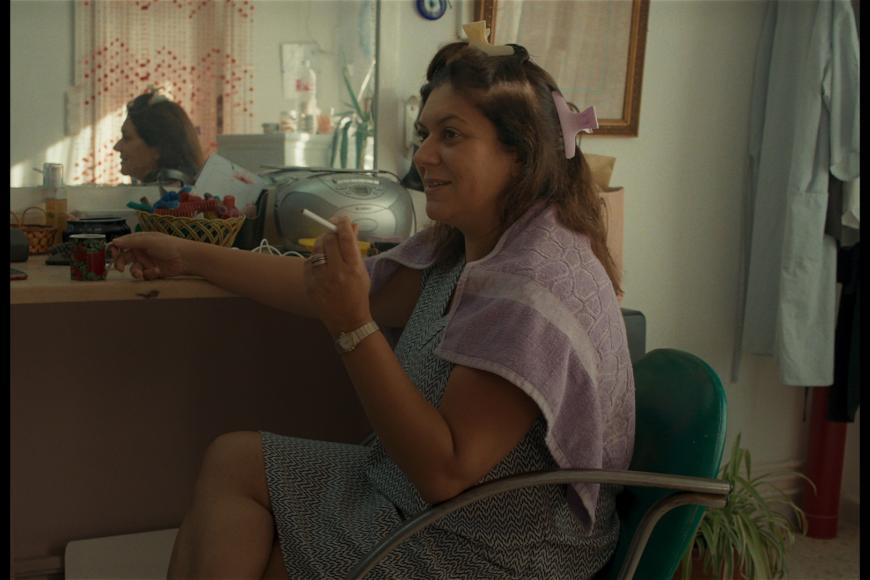
A Tunisian ladies’ hairdressing salon becomes an arena for political debate during the presidential election campaign. Sharp blades and sharp remarks – wonderful!
The hairdressing salon “Saïda” is a space where people speak openly, laugh and argue. The subject rarely is hair. In the run-up to the presidential elections in Tunisia the shop turns into a political arena where the women – young or old, conservative or with a modern outlook – indulge in discussions about the pros and cons of the candidates. Their clever and witty statements reflect a young democracy with all its rifts and fault lines.
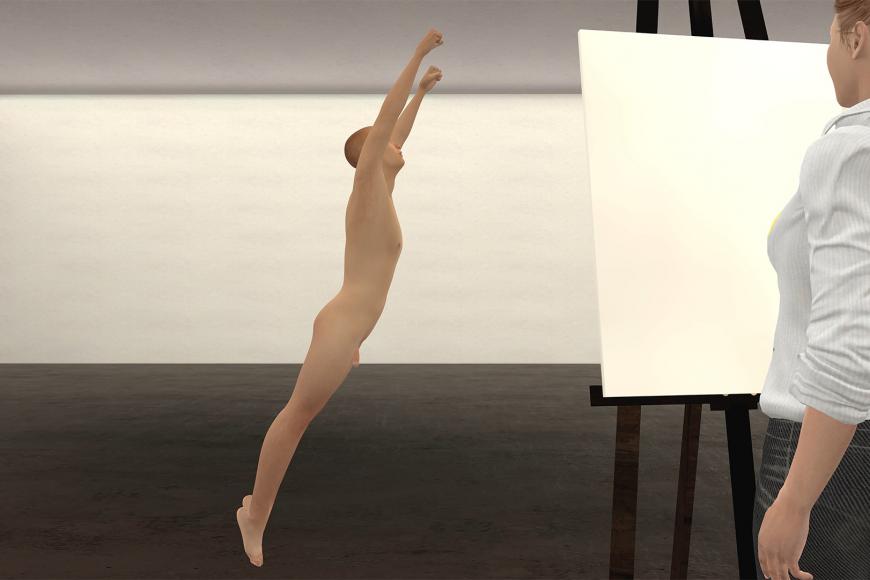
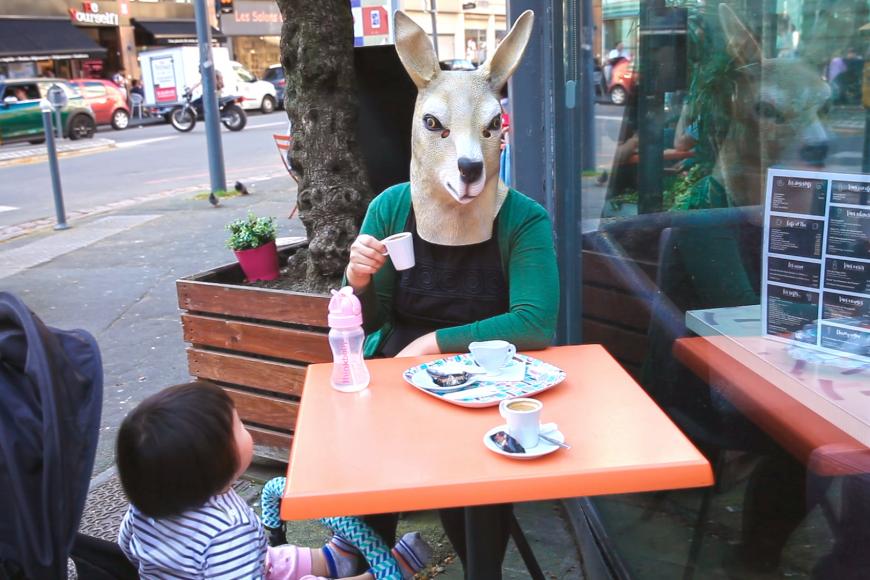
AIVA is an artist, animated by algorithms. But above all she is the soberingly limited male tech vision of what more diversity in the arts could look like.
AIVA is an artist, animated by algorithms. But above all she is the soberingly limited male tech vision of what more diversity in the arts could look like. In her paintings AIVA prefers the vertical, to some acclaim. A naive and cliché-ridden “art documentary” lets us participate in her work. Precisely observed, with sparse gestures and trenchant wit, Veneta Androva reflects a current status quo in her computer-animated future fiction.
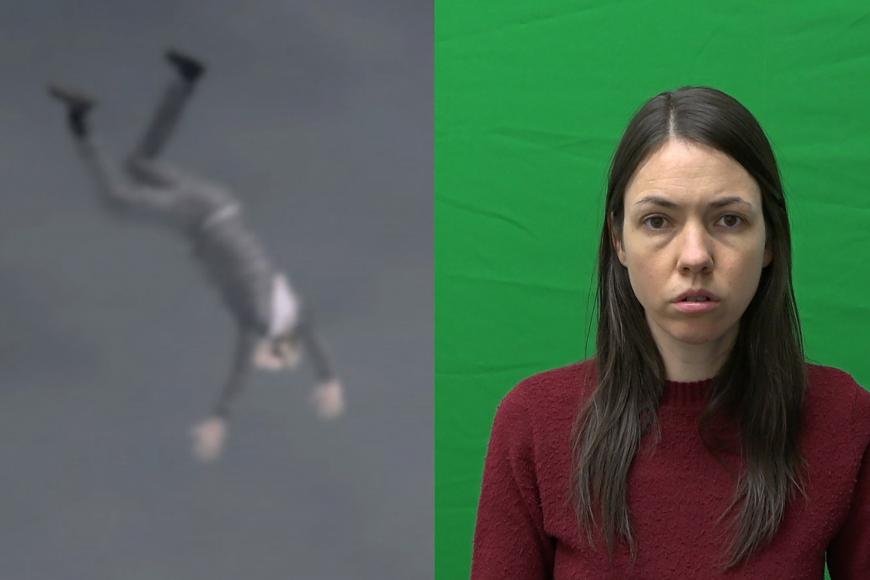
Alice’s memories are the occasion for an ambiguous examination of the representation of traumatic events, with collective and individual representations of perception.
Testimony versus “prosthetic memory”: The director dubs the sound recordings of her grandmother, collected over a period of ten years, in which the old lady recaps her encounter with a tornado as a child, in front of a green screen. While the details of her memories change through repeated narration over time, the found footage from feature and disaster films, weather reports and landscape images suggests a mediatised participation in the events.
A media-historical interrogation of the German fascination with the colonialist construct of “Red Indians” which leads right up to its instrumentalization by the “New Right”.
Partly rhetorical, partly ironic and partly profound, the film deals with the Germans’ strange, three-hundred-year-old relationship to their stereotypical ideas of America’s native population. This includes the question of how the audience themselves feel about this ominous object of fascination. The backdrop and starting point of a floating journey through the history of various stereotypes are the ruins of the former U.S. embassy in East Berlin, where an exhibition on the subject took place in 1986.
Areum Parkkang is now married and presents part two of her autobiographical film project. Private life as the subject of a film in which all battles are fought out in the open.
A few years after her marriage to Seongman, Areum decides to go to France to study and finally make the kind of films that are not possible in Korea. Seongman, however, has nothing to do in France and, as he doesn’t understand French, is sliding into depression. A joint project is to help against homesickness. They open the one-table restaurant “Oegil” to provide South Korean expats with culinary memories of home.
Of course, this means that Areum has no time left for filmmaking. When she gets pregnant, massive chaos is looming. After the birth she finally focuses on her studies and Seongman takes over as house husband – a role that overwhelms him so much that he goes on strike. In this challenging everyday life, she must assert herself as a woman, artist, mother and spouse. The feminist narrative determines the point of view from which Areum Parkkang, in this second part of her autobiographical film project, examines her own life, its comedy, tragedy and planning uncertainty. The tone is charming throughout, and the energy of her reflective self-observation is infectious. Areum lets us participate head-on in her back and forth as an independent filmmaker between festival pitchings, homesickness and the baby change unit.
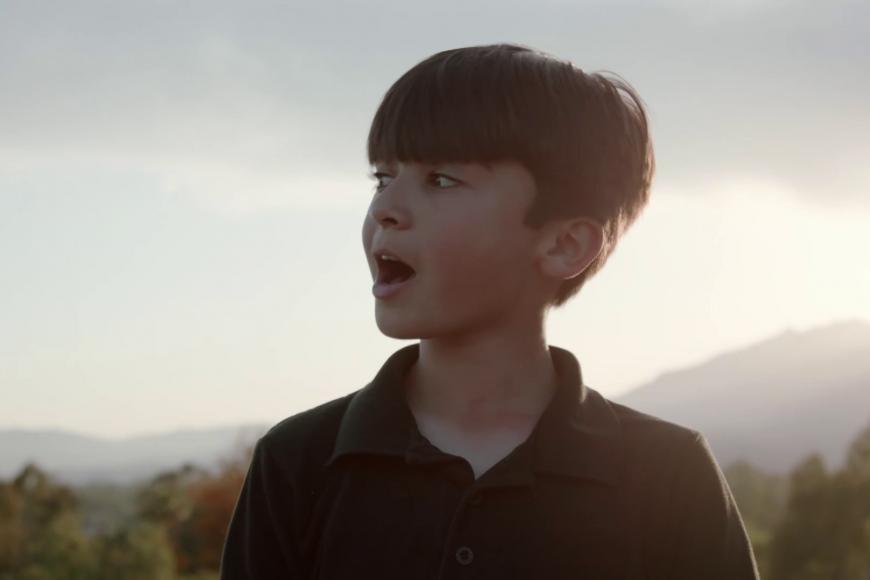
Arshan is ten years old and dreams of becoming an opera singer. When rehearsals for an opera production start in his town, he anxiously goes to the casting.
Classical music is great, says ten-year-old Arshan. He lives with his family on a ranch in California, helps to feed the cows and does household chores. But he uses every spare minute to train his voice. Arshan’s big dream is to become an opera singer. When performers for an opera production are sought in town, he anxiously goes to the casting.
A visually stunning and at the same time sober reckoning of the zero sum game between climate change and nuclear disaster: no dramatisation at all and yet deeply disturbing.
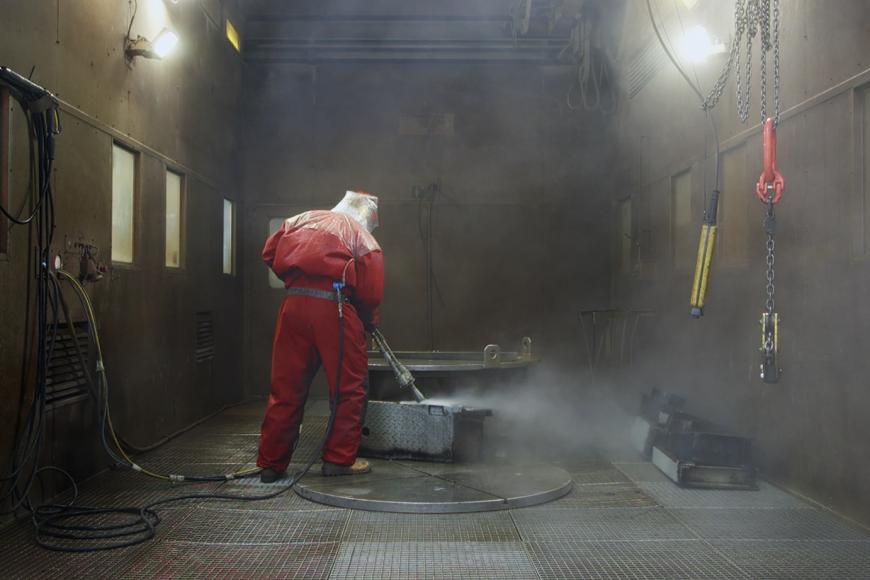
This detailed and sober look at the issue of nuclear power begins where Germany is currently standing: with shutting it off. It’s precisely because the film is anything but alarmist that the alarming aspect of the situation becomes clear. The nuclear nightmare is not over; a safe final nuclear waste repository is not in sight. And yet, boosted by the coal phase-out, many people seem to see “clean” nuclear energy as an option again. The terror of climate change trumps the terror of the nuclear worst case scenario. A zero sum game.
Carsten Rau succeeds masterfully in calmly probing the heated controversy. He talks to people who live with and off nuclear power. Engineer, scientist or innkeeper, he very deliberately frames them all with the same mixture of seriousness and nonchalance. The story is told without dramatisation, but with stunningly “beautiful” images that make the fascination with this technology quite comprehensible. When hip French nuclear engineers finally try to join the front line of climate protesters, we realise how false the talk of an “unavoidable option” is and always has been. The portrait of a society emerges that walked into a blind alley with open eyes and is slowly coming to realise that with every step it takes it is moving further away from the exit.
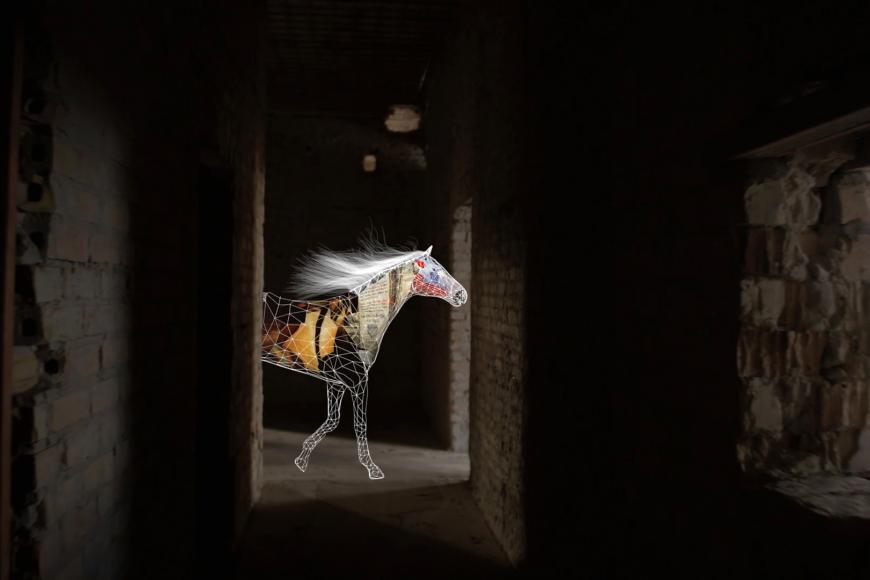
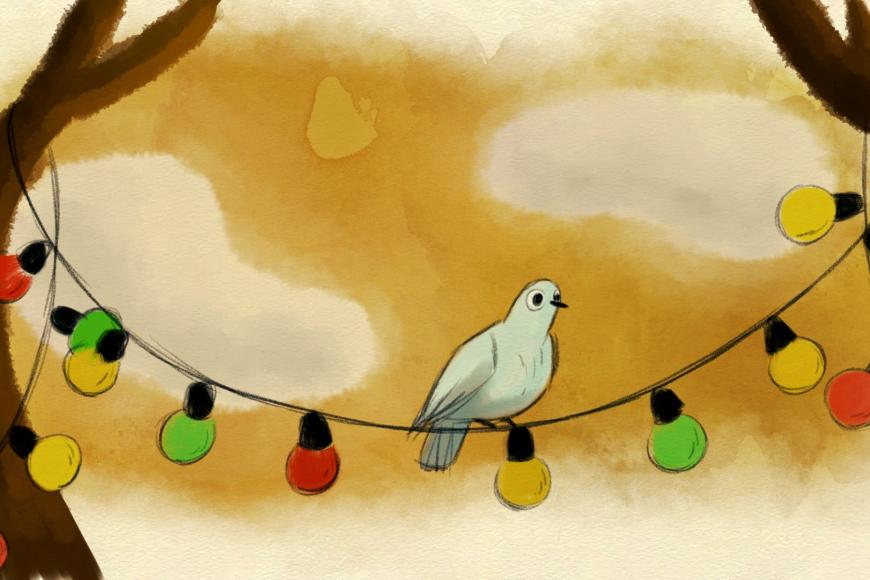
A poetic journey based on an Iranian children’s book. A boy and a girl are far apart and miss each other. He wants to go to her by ship, but the autumn storm upsets everything. The dove doesn’t wait until spring and helps the boy and girl find each other. The horse also tries to reunite the two.
Looking for the truth in the past: Thunska Pansittivorakul confronts the explicitly sexual film footage once produced by his twenty years younger lover.
Perth has broken off contact with Poon. What’s left are images showing the two men’s sex life. Perth was Poon’s twenty years younger cinematographer. His images, as impressive as they are intimate, contain the beginning and end of a relationship which Thunska Pansittivorakul confronts again for “Avalon”. A painful look back that raises existential questions and is immediately affecting.
“In Thailand, sex is considered shameful, sinful, disgusting, and not to be spoken of in public. Sex is a personal and private mystery, revealed only to those who engage in it together”, Thunska Pansittivorakul comments his film in which he liberally subverts precisely this taboo. It shows not only two men who meet and unite in explicit poses – Adolf Hitler and King Rama VII, too, show up at a Berlin airport, the tender serenade of a Thai prince (said to be an expression of his unrequited love for a foreign princess) enters into a dialogue with the exuberant electronic compositions of the Thai musician Space360. And time and again the planes denoting distance and leave-taking fly by on the horizon. “You used to like my cock more. Don’t you remember?”
Numerous films deal with the American Civil War, which raged between the northern Union States and the southern Confederate States from 1861 to 1865. One general who rose to become a war icon and the 18th president of the United States was Ulysses S. Grant. Director Jim Finn uses board games to reconstruct the battles and documents a divided nation full of rebellious factions.
“Bloody Pond” or “The Flaming Forest” are the names given to places below the Mason-Dixon Line where many cruel and confusing clashes took place within a few years. Today only cemeteries, memorial plaques, wax museums and obelisks bear witness to episodes of the war that was to be of such vital importance for the shape of the USA today. Jim Finn’s 16mm shots are a detailed inspection of various stations to which he adds macabre anecdotes and trenchant descriptions. Statesmen, ideologists and warlords haunt the forests, ruins and riverbanks here – like the incidences of light which make the footage light up time and again. There is beauty in these images, in the trickling synthesizer melodies, too, or in the stop motion animations of complicated board games. This beauty has little in common with the dark underpinning of this conflict: deep-seated racism and an adamant belief in the right to own slaves.
Carolin Weidner
Credits
Director
Jim Finn
Script
Jim Finn
Cinematographer
Jim Finn
Editor
Dean De Matteis, Jim Finn
Producer
Cat Mazza
Sound
Alexander Panos, Jesse Stiles
Score
Colleen Burke
Animation
Jim Finn
Nominated for:
Prize of the Interreligious Jury,
FIPRESCI Prize