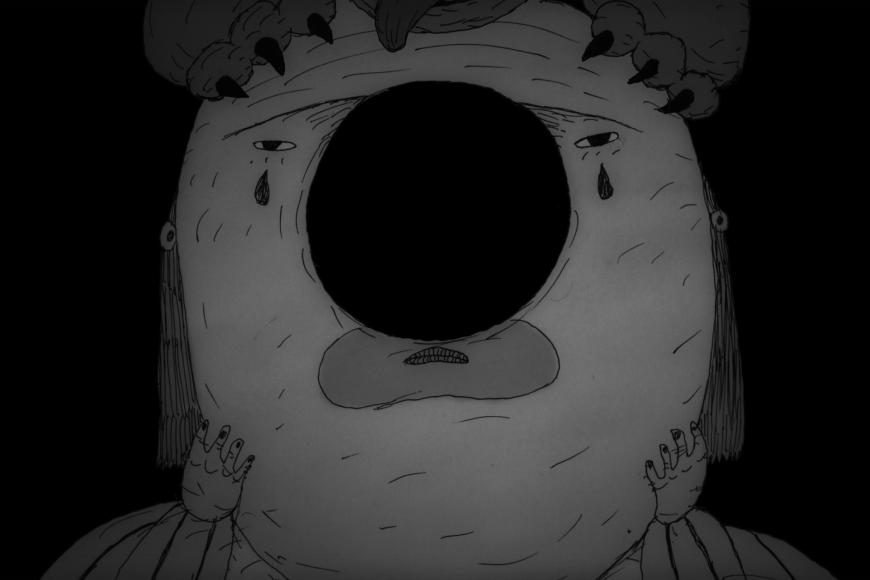
The mocking transvestite, the raging dog, the prophetic clown and the little girl, all united inside the desperate protagonist. A crisis full of poetic dignity.
The mocking transvestite, the raging dog, the prophetic clown and the little girl are united inside the desperate protagonist. The longing to break free rises forcefully – like a pistol pressed against his chest. In humorous metaphors, Hakhyun Kim takes a crisis of disorientation to extremes, while his extraordinary stylistics lend it poetic dignity.
Over three decades, Uwe Walter from Gelsenkirchen has become part of the Japanese village community of Miyama. This moves him at last to say goodbye to the past.
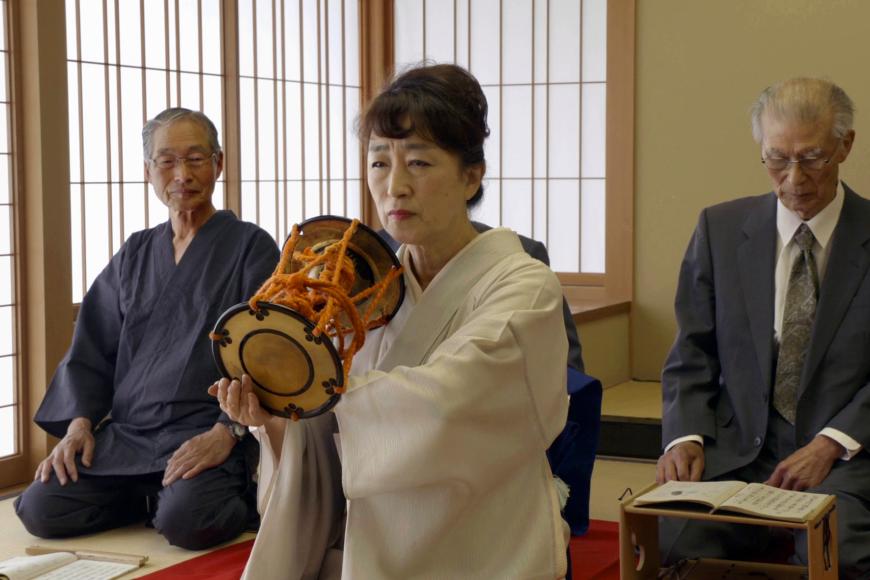
There’s probably no other citizen of Gelsenkirchen who has ever mastered Nō singing and playing the Shakuhachi flute as authentically as Uwe Walter. He has lived in the mountain village of Miyama north of Kyoto for three decades and emulates the local residents, whether they earn their living on the fields, breeding cattle or hunting. People tend their gardens, repair fences to keep away the macaques and grow their own rice. Uwe has become perfectly Japanese, at one with his environment.
However well-suited his Ruhr area wit makes him as a figure of identification, the camera keeps a respectful distance, more reserved than Uwe himself. Only at one point does it come touchingly close: When he is forced to say goodbye to an essential part of his past in the interest of the village community. But the real subject of this film is not the German with his greyish blonde curls but rather that very community, portrayed by Rainer Komers in bittersweet polyphony. It emerges in the children’s games, the adults’ pursuits and the old people’s tales, in the summer downpours of the rainy season, the white moon over the nocturnal village and the blood-red leaves of autumn.
Christoph Terhechte
Credits
Director
Rainer Komers
Script
Gregor Bartsch
Cinematographer
Rainer Komers
Editor
Gregor Bartsch
Producer
Rainer Komers
Sound
Uwe Walter, Yuki Morimoto, Michel Klöfkorn, Oscar Stiebitz
Score
Uwe Walter, Yuki Morimoto
World Sales
Joachim Kühn
Broadcaster
Doris Hepp
Key Collaborator
Hiroko Inoue
Nominated for:
VER.DI Prize for Solidarity, Humanity and Fairness