What’s this? The little bird wonders about its buzzing neighbour and stumbles after the bee across the meadows. But watch out, the fox is already lurking behind a tree!
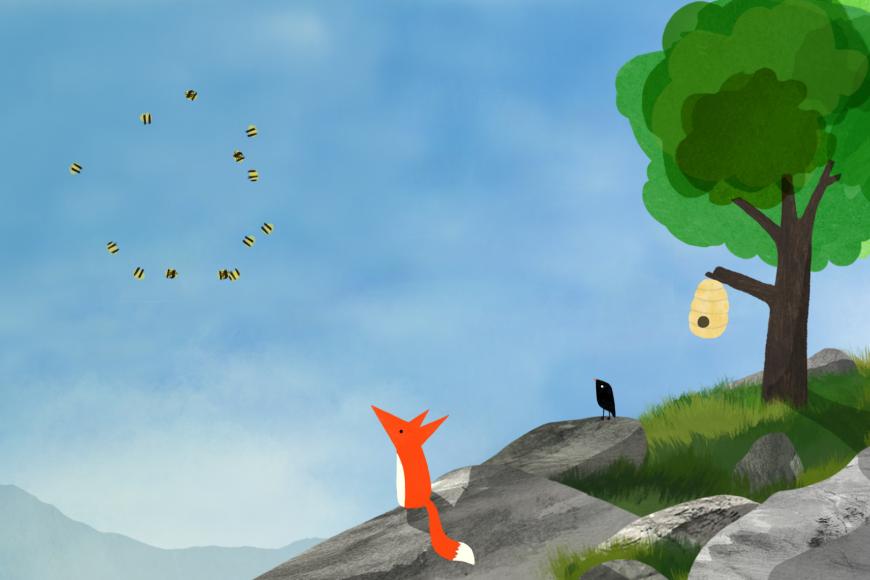
It’s spring and the little bird discovers the first leaves on his tree. Already the buds open and the bee comes buzzing. Curious, the little bird stumbles after it and almost overlooks the fox who is growling hungrily again. After the farting caterpillar last year, the bird can now be happy about a new companion.
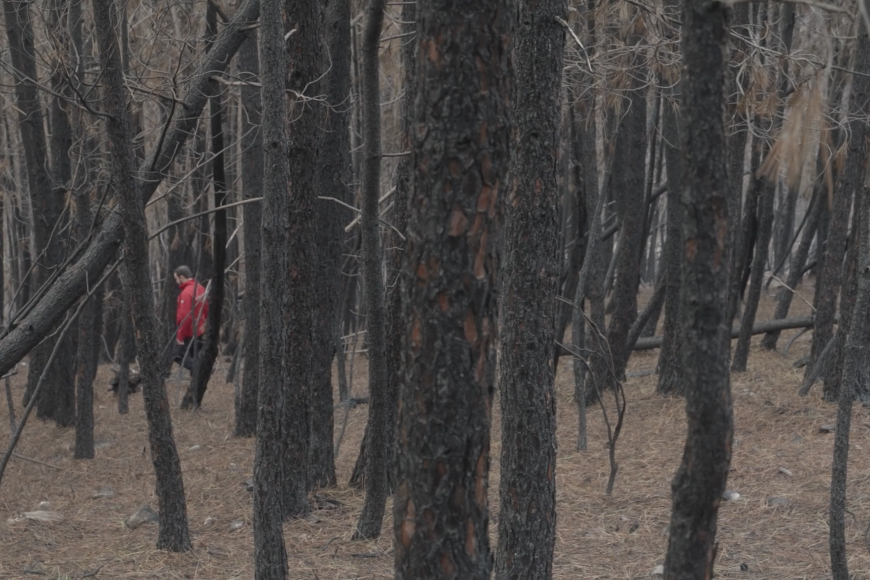
Cleaning up after a forest fire in the mountains of Portugal: New trees are planted, nature begins to sprout again. But will the fire devour everything one day?
“See you next year!” a Portuguese fire warden says as he dismantles his control equipment at the end of the season. Humans and nature in southern Europe may be used to forest fires, but that does not change the facts: The ever more massive conflagrations are caused by climate change. We have long been living in the age of fire.
In the Portuguese interior, a forest fire has just devastated a large area. Wounded nature is silent, not a single bird is heard, only the wind that makes the charred tree trunks rustle. But the vegetation recovers astonishingly fast. Where all life seemed to be gone, greenery soon sprouts from the ruined trees. The residents of the affected region are engaged in the reconstruction with great respect for their natural environment. Because plants, too, are sentient creatures. In quiet, almost melancholic, but also hopeful images, the film pays tribute to the strength of the trees and illustrates how essential it would be for humanity to learn to live in harmony with nature again.
Annina Wettstein
Credits
Director
Juliette Menthonnex
Cinematographer
Ilona Szekeres, Sergio da Costa
Editor
Antoine Flahaut, Juliette Menthonnex
Producer
Véronique Vergari, Victor Candeias, Agnès Boutruche
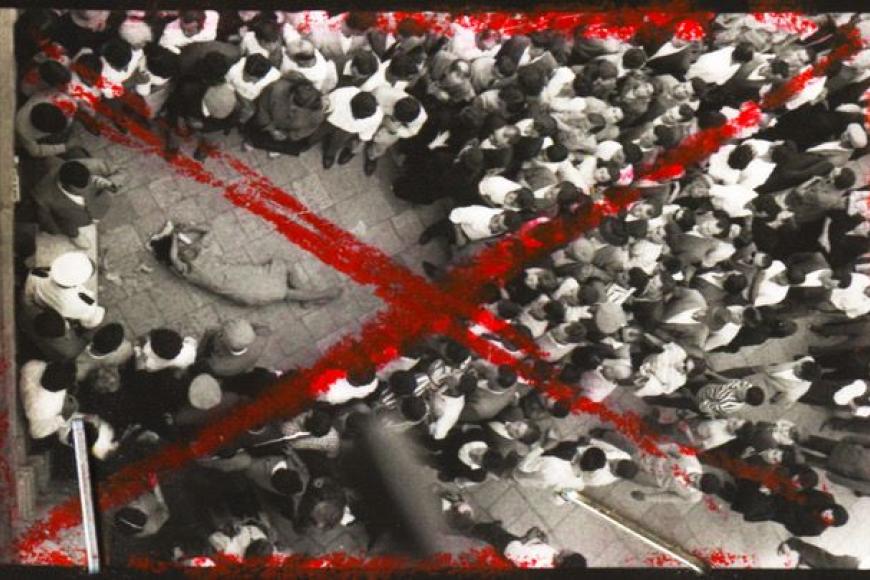
Apulia, 1959: ecstatic dancing in a chapel. These women are said to have been bitten by a spider. Today, “tarantism” has been tamed as folklore and become a tourist attraction.
Apulia, 1959: Women in white dresses dance ecstatically in a small chapel. They jump around, roll on the ground, some even climb the altar. They are said to have been bitten by a spider. Their dancing mania requires a ritual exorcism with music. Pictures like these inspired Italian anthropologists to travel to southern Italy. Equipped with tape recorders, film and photo cameras, they tracked down the phenomenon of tarantism. This essayistic documentary follows the wealth of multi-media archive material produced on this research trip. It brings out the voices of the affected women, who turn out to be experts of their own performances. A special relationship developed between the scientist Annabella Rossi and the “tarantata” Michela Margiotta, with their correspondence at the centre of the film. Even today, these images of female frenzy are disturbing, revealing the loss of control of husbands, families, science and the church. In today’s Apulia, the film discovers living forms of tarantism, tamed as folklore, a tourist attraction. There are new poisons that have infested the system. They, too, must be danced out.
Jan Künemund
Credits
Director
Anja Dreschke, Michaela Schäuble
Script
Anja Dreschke, Michaela Schäuble
Cinematographer
Anja Dreschke
Editor
Anja Dreschke
Producer
Anja Dreschke, Michaela Schäuble
Sound
Birgit Minichmayr
Sound Design
Carlo Peters
Score
Carlo Peters
Nominated for:
DEFA Sponsoring Prize,
VER.DI Prize for Solidarity, Humanity and Fairness
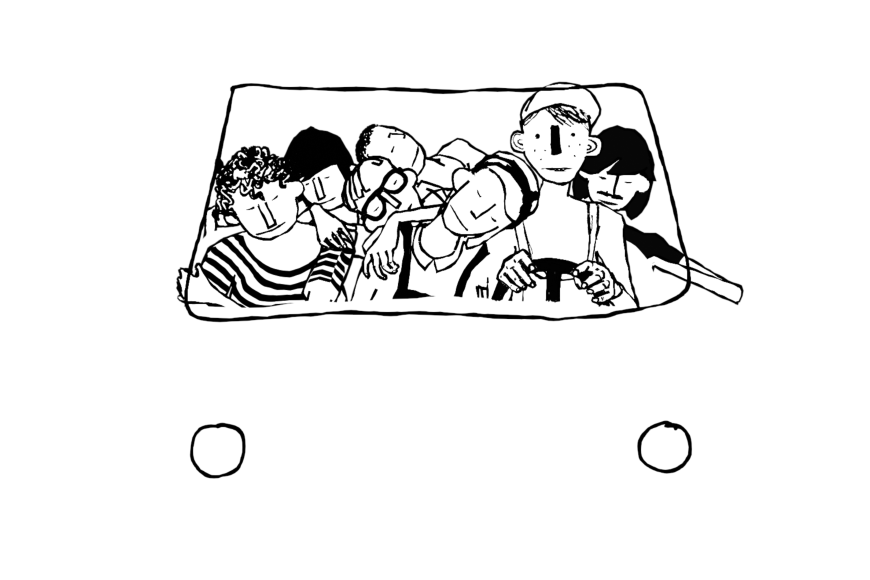
Poland, 1981. There is hardly any food, no fuel, only limited freedom. Six friends squeeze into an old car and set out for the Baltic Coast – and perhaps beyond.
Poland, 1981. Six friends squeeze into an old car that is far too small and set out for the Polish Baltic coast, fuelled by their longing for freedom. The further they come, the clearer the decrepit state of their country emerges. The pension where they spend the night has nothing that could be served for breakfast. Food and fuel are also in short supply elsewhere. There is a shortage of everything. The only thing one can buy anytime and anywhere is booze, which is plentiful. Just like the country, the car also falls apart piece by piece. But the trip continues, past demonstrating crowds, tanks, barricades and armed policemen. Singing, laughing and carefree, Leszek and his companions finally make it to the sea. Is this the end of their journey? Or should they join the hundreds of thousands who have already left Poland? The borders of the frame, at least, are open. The sparse, fragmented graphic elements on the empty white background hardly seem an incentive to stay. There is no obstacle that could keep the friends from setting off for new shores.
Franka Sachse
Credits
Director
Jadwiga Kowalska
Editor
Fee Liechti Seigner
Producer
Jadwiga Kowalska
Sound
Thomas Gassmann
Score
Christian Aregger, Roland Bucher
Animation
Jadwiga Kowalska, Marco Ellensohn, Jérémie Dupraz, Laure Clemansaud
On the Bosnian-Croatian border, many mines from the war have not been cleared yet, traumas are still virulent. This is where the paths of migrants and locals cross.
Somewhere on the Bosnian-Croatian border. Green hills, forests, fields, a few houses and sheds scattered along the roads. If the territory of the European Union did not end here, it would be a rather unspectacular, interchangeable region. But the seemingly untouched landscape is deceptive – many mines from the Bosnian war have not been cleared yet; war traumas are far from over. Today the paths of migrants and locals cross here, refugees from Afghanistan, Syria and Iraq trudge through the area, braving rain and snow in search of protection and a better life. At night you hear their cries from the forests when they are brutally chased across the border. The villagers on the Bosnian side open the old school building to allow their exhausted bodies a moment of rest. But everyday life continues. Wood is chopped, corn harvested, school kids recite poems. The imam calls to prayer. Everything normal, everything as usual. As a reporter, Nicole Vögele spent several years researching this border region, reporting on the illegal pushbacks of the Croatian police for the “Der Spiegel” news magazine and others. In her film essay, she now takes the time to observe. She does not ask direct questions, giving as much space to the seasons, the weather and the forest as she does to the people.
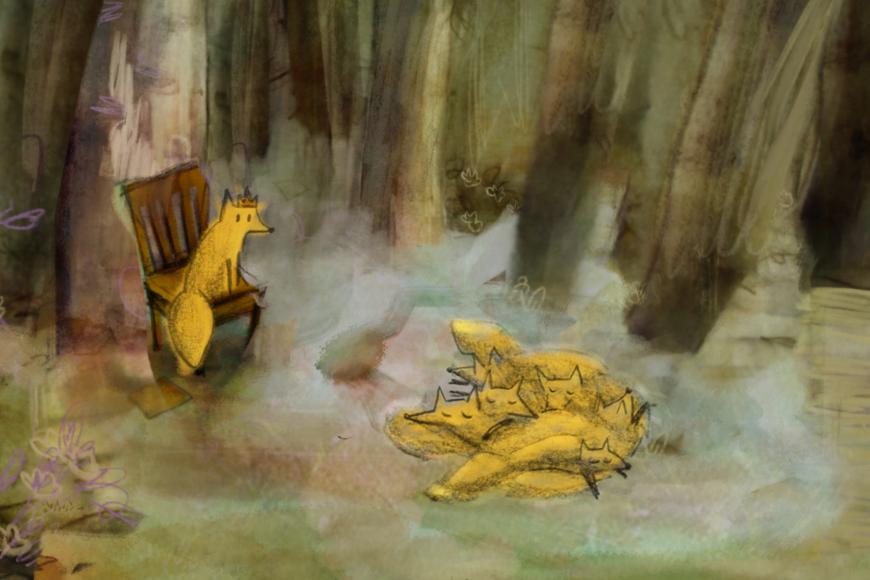
The queen of the foxes is sad. To cheer her up, the other foxes look for discarded human love letters. But there’s nothing about beautiful red fur in them …
The foxes of the pack roam through the city every night to cheer up their sad queen. They search the people’s rubbish for unsent love letters. But those ignoramuses write nothing rapturous about furry ears and bushy red coats! The queen stays sad and the foxes must think of something else.
The Smortlybacks are peaceful, fantastic-looking creatures, riding through the desert with the leader of their pack: no water, no shrub, no tree in sight! They are all desperate because their water supplies are running out. After a while they reach the shore of a vast sea. A mysterious creature and their magic fish help them cross the ocean.
Director Lina Soualem’s gentle investigation is an approach to the biographical and emotional condition of her grandparents, who emigrated from Algeria to France.
After 62 years of marriage Aïcha Soualem is on her own again. Mabrouk, whom she has left, is nevertheless supplied by her daily with food and sugar cubes. Director Lina Soualem is interested in the relationship between her grandparents, who, as the last remaining Algerians in Thiers, France, look back on an eventful past. An empathic investigation all the way back to their native village of Laaouamer which leaves room for ambiguous emotions.
“Soualem” is the password which not only enables Lina Soualem to unlock the tiny, snow-covered village full of cousins in Algeria, which her grandparents left a long time ago. In a sense, “Soualem” is also the title of this gentle investigation of a granddaughter. And Laaouamer, that little place in Algeria, is only the final destination of a long journey which may be narrated via geographical coordinates but interweaves them closely with biographical and emotional ones. Aïcha and Mabrouk rarely talk about themselves. Instead, self-affixed wall badges speak: “The world’s best mom lives here” or “Welcome to the world’s best grandma’s”. To learn more about the couple, whose lives were shaped by French colonialism, Lina Soualem uses private photos and videos. Her investigation is full of love: persistent, but never prying.
Carolin Weidner
Credits
Director
Lina Soualem
Editor
Gladys Joujou
Producer
Marie Balducchi
Co-Producer
Karima Chouikh, Palmyre Badinier
Score
Julie Tribout, Rémi Durel
World Sales
Anna Berthollet
Nominated for:
Prize of the Interreligious Jury,
FIPRESCI Prize
Yvann is the descendant of Palestinian migrants. His Jewish childhood friend moves away to a settlement in the West Bank. Thus begins the story of a failed reunion.
Director Yvann Yagchi, the son of Palestinian migrants, and his Jewish best friend spend a carefree childhood far away from politics on the neutral ground of Switzerland. As adults, both long for religious and ethnic affiliation. Yvann wants to visit Palestine at last and break generations of silence about the fate of his family. His friend moves to a Jewish settlement in the West Bank. Thus begins the story of a failed reunion. With frankness and patience, Yvann’s film, addressed directly at his former closest confidant, documents his own emotional development: Initial optimism and diplomatic reserve soon give way to an underlying unease. When a Palestinian refugee challenges him to give up the platitudes about striving for truth and formulate his opinion clearly, we realise that there can be only one standpoint for Yvann. There is a rift between the friends, vividly illustrated by animated doodles. Reflections on a lost friendship turn into a search for identity, made immeasurably harder by the ongoing destruction of Palestinian existence.
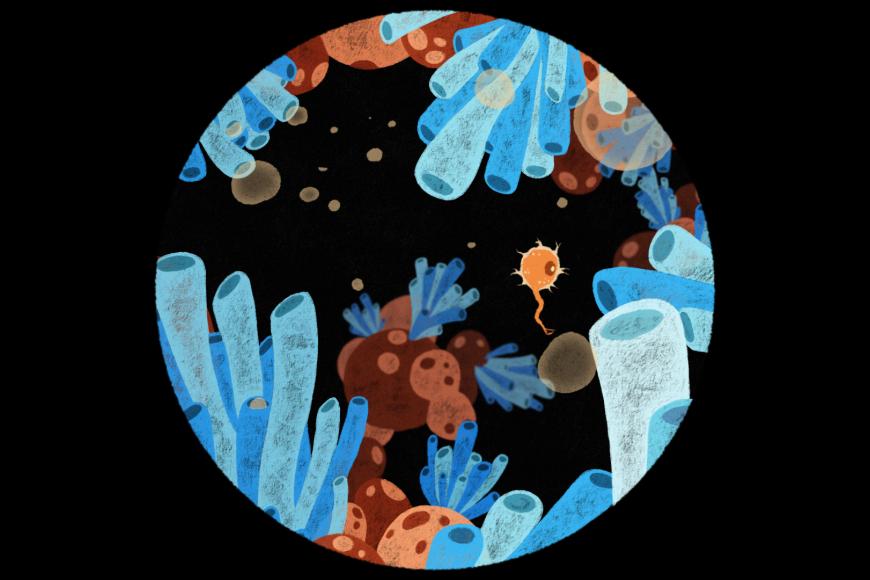
Two friendly cells explore the organism they live in. They grow up together, meet other creatures, until they are separated by an accident. From now on, they will each go their own way.
Two cells observed under the microscope. They grow up together and meet many different creatures on their outings. One day they are separated by an accident and it takes a long time before they find each other again. After the first outburst of joy, they realise that they have changed and no longer fit together. A colourful and profound animation.
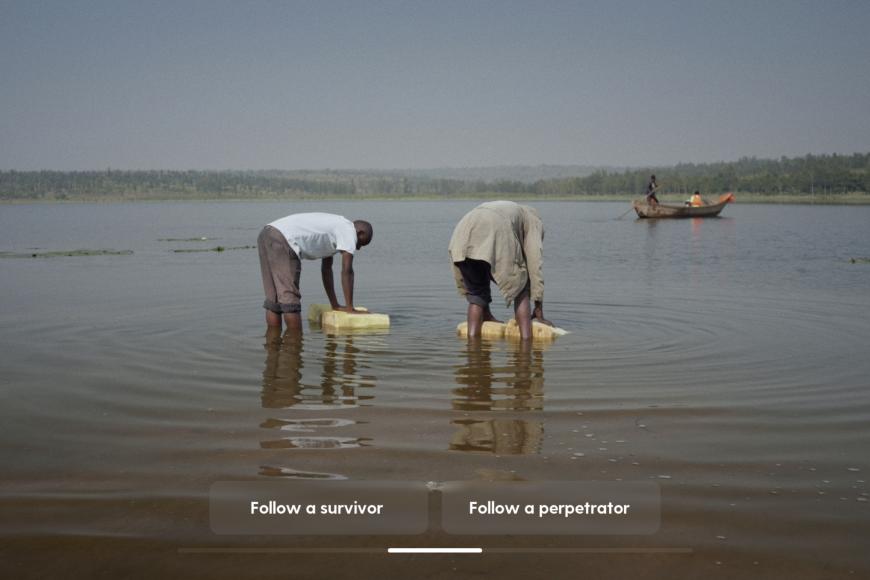
Rwanda, 30 years after the genocide. Using an app, viewers vote what happens next, democratically electing the following scene. Every voice matters, both in the cinema and on the screen.
Peeling away layers of pain, layers of perspectives, passing by both trauma and hope, this film dives into Rwanda thirty years after the genocide. Covering such a topic has always presented itself as a challenge to documentarians. While Claude Lanzmann’s “Shoa” (1985) is over nine hours long, “Traces of Responsibility” unfolds its eight potential hours as innumerable 85 to 110-minute screenings. In allowing different viewing experiences, this film does not commit to a single version of Rwanda, but rather accentuates its multifaceted, and, yes, complex history. The audience may vote to visit genocide memorials and hear survivor testimonies or to follow a theatre troupe educating children about tolerance. They might choose to visit a market or an art museum, to go to a karaoke bar or to just go home. “You could a write a 1,000-page book just from our [two] stories,” says Semana Jumapili, a survivor we might encounter. When one considers this, even this film of many paths seems limited. There are countless stories to be told. The genocide in Rwanda was horrifying, and yet there is so much solace in the people we encounter throughout the film. They inspire us to fight injustice and heal wounds which seem too big to overcome.
After securing your ticket, please make sure you download the CtrlMovie app in advance. If you require assistance, please arrive 15 minutes early to the screening. Our team and volunteers will be happy to assist you.