Film Archive

Sections (Film Archive)

Retrospective 2024

[Opening speech for the retrospective “Cuban Documentary Film”] [excerpt]

Santiago Álvarez
Cuban documentarist Santiago Álvarez speaks to GDR cultural officials and the “fighting” youth of Leipzig: about documentary film as a weapon against imperialism and colonialism.
Filmstill [Opening speech for the retrospective “Cuban Documentary Film”] [excerpt]

[Opening speech for the retrospective “Cuban Documentary Film”] [excerpt]

[Eröffnungsrede zur Retrospektive „Kubanischer Dokumentarfilm“] [Ausschnitt]
Santiago Álvarez
Retrospective 2024
Acoustical Film
GDR
1974
15 minutes
German,
Spanish
Subtitles: 
German (Overvoice)
In 1974, the GDR and the Leipzig festival celebrated the 25th anniversary of the Cuban Revolution with the “Cuban Documentary Film” retrospective. Santiago Álvarez, vigorous propagandist of documentary film as an art of war against imperialist cinema entertainment, spoke at soporific length at the opening.
One wonders whether, in addition to the invited officials, the “fighting” youth of Leipzig addressed by Álvarez were present at the event. The speech has survived only as an audio document, the images must be imagined. The recording was commissioned by the State Film Documentation, a government agency that was to preserve GDR reality for the future. In 1974, no one in the room could have imagined that this future would one day take place without the GDR.
Sylvia Görke

Credits DOK Leipzig Logo

Director
Santiago Álvarez
Producer
Staatliche Filmdokumentation
Matinee Saxon State Archive 2024

[Sierra Leone]

unknown
Young people from the GDR and Sierra Leone meet away from well-rehearsed gestures and diplomatic protocols. The guests preserve their independence in both senses of the word.
Filmstill [Sierra Leone]

[Sierra Leone]

[Sierra Leone]
unknown
Matinee Saxon State Archive 2024
Documentary Film
GDR
1968
10 minutes
without dialogue
Subtitles: 
None
A mysterious film reel from the “Regional Film Studio Leipzig” holdings: labelled “Sierra Leone”, passed down without sound. After some official speeches, an ensemble from Sierra Leone perform a danced symbolic fight for their GDR hosts. Later, local and international couples sway on the dance floor to live music – non-protocol encounters with independent guests, in both senses of the word.
Konstantin Wiesinger

Credits DOK Leipzig Logo

Director
unknown
Retrospective 2024

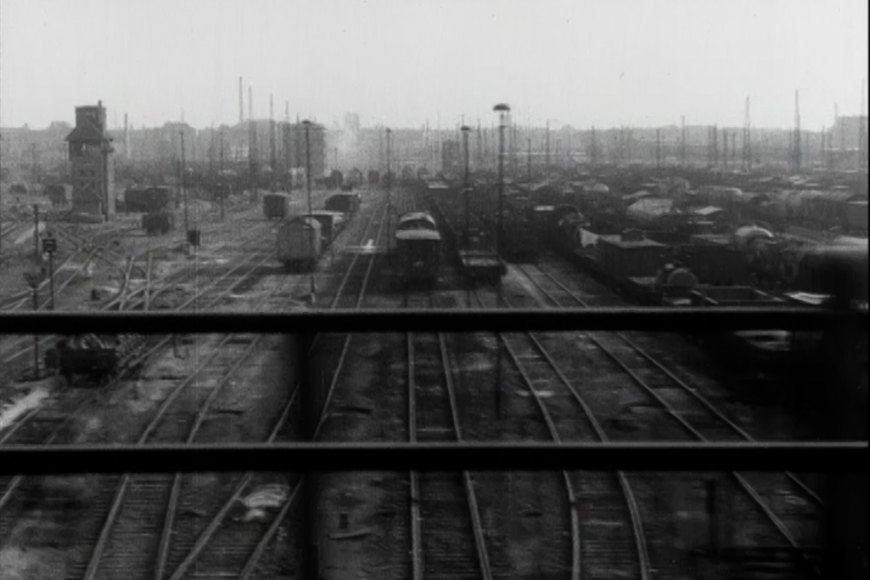
15.000 Volt

Karlheinz Mund
On the overhead wire 15,000 volts, underneath everyday working life on an electric locomotive. On the soundtrack a passenger who the GDR will throw overboard in 1976: Wolf Biermann.
Filmstill 15.000 Volt

15.000 Volt

15.000 Volt
Karlheinz Mund
Retrospective 2024
Documentary Film
GDR
1963
18 minutes
German
Subtitles: 
None
This graduation film by future DEFA documentarian Karlheinz Mund presents a piece of GDR working worlds in the best poetic and earthy Babelsberg school tradition: the everyday life of railway workers – with two women in the electric locomotive driver’s cab.
In 1963, Leipzig audiences were able to get to know Mund’s study in the festival’s university film presentation. At the end, the “Spring Song of the Railwaywoman” can be heard off-screen, sung by Wolf Biermann. The GDR still tolerated the rebellious tormentor. Those who heard him in this film at the time probably only found out later that the authorities had long had him in their sights. In 1963, East Berlin’s Humboldt University refused to grant him a degree in philosophy despite passing his exams. Listening to Biermann’s song today, the words become charged: spring storm, great rain, a land waiting …
Sylvia Görke

Credits DOK Leipzig Logo

Director
Karlheinz Mund
Cinematographer
Hans-Jürgen Reinecke, Gerhard Gläser, Werner Kohlert, Eberhard Teich-Grüber
Editor
Gisela Hoffmann
Producer
Roland Paul
Sound
Günter Grossmann
Score
Gerhard Rosenfeld
Narrator
Dorothea Richter
Retrospective 2024

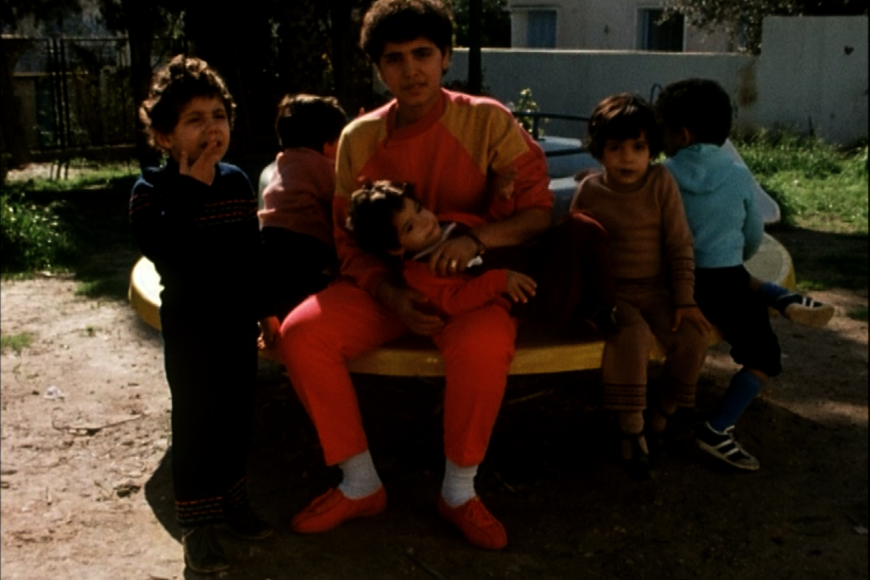
Aida

Marwan Salamah
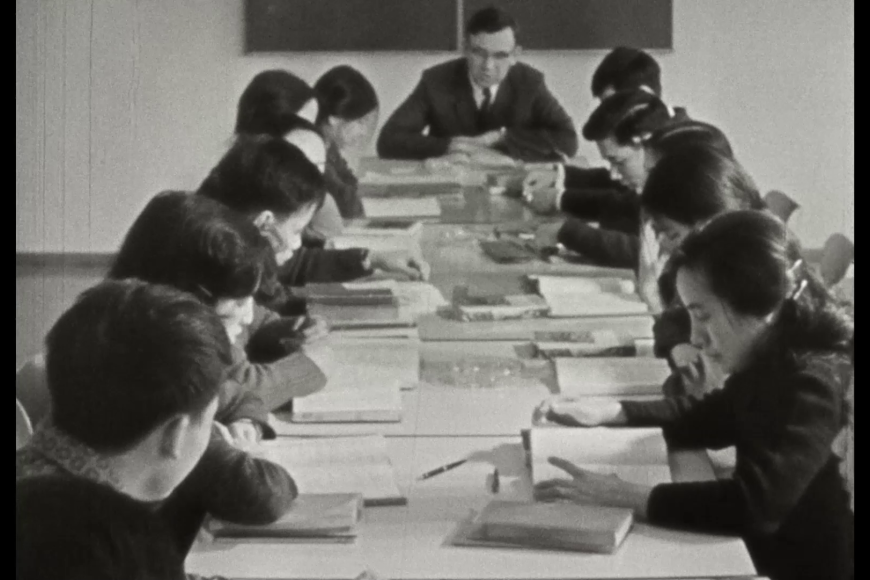
Marwan Salamah was delegated by the Palestine Liberation Organization to study in Babelsberg. As a one-man team, he realised this portrait of a young educator in a PLO orphanage in Tunis.
Filmstill Aida
Filmstill Aida

Aida

Aida
Marwan Salamah
Retrospective 2024
Documentary Film
GDR
1985
22 minutes
Arabic
Subtitles: 
German (Overvoice)
Words of the poet Mahmoud Darwish float through this film: “Tell me. Perhaps I will remember my home whose perfume is only on my lips.” A 17-year-old Palestinian introduces herself: Aida, the returning one. When her father was killed in battle, her mother was already dead, killed by a bomb. When she was eight, she was sent to a PLO orphanage in Beirut, then to an orphanage in Damascus, then to an orphanage in Tunis. Here she takes care of new orphans. The portrait of a girl expands: countless children who will forget their homeland and origin. There is nothing but war left in their drawings. The PLO had assigned its collaborator Marwan Salamah to study cinematography at Babelsberg. Here, he is also the director. In 1985, “Aida” won the Prize of the World Federation of Democratic Youth in Leipzig.
Sylvia Görke

Credits DOK Leipzig Logo

Director
Marwan Salamah
Script
Marwan Salamah, Elke Schieber
Editor
Karin Geiß
Producer
Hochschule für Film und Fernsehen der DDR
Retrospective 2024

Chile

Juan Forch, Jörg Herrmann
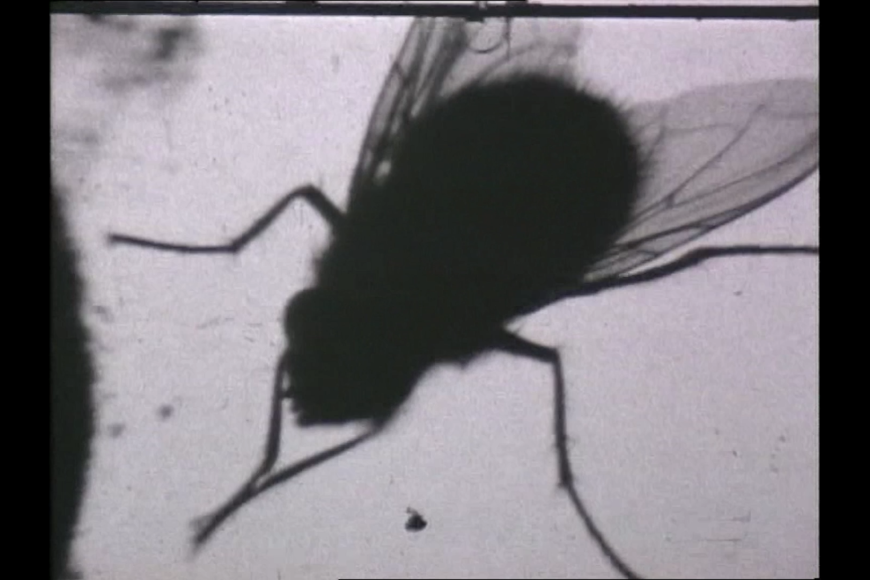
Exiled Chilean Juan Forch and Dresden-based silhouette film specialist Jörg Herrmann call for battle against Pinochet and his imperialist allies: with singing and organ music.
Filmstill Chile
Filmstill Chile
Filmstill Chile

Chile

Chile
Juan Forch, Jörg Herrmann
Retrospective 2024
Animated Film
GDR
1975
2 minutes
German,
Spanish
Subtitles: 
English
In 1973, General Pinochet, with the support of the US secret service, staged a coup against the democratically elected Marxist-Socialist President of Chile, Salvador Allende. Pinochet’s military junta murdered and tortured their way across the country. Juan Forch, Santiago-born journalist and filmmaker, managed to escape the terror via Mexico to the GDR and continued his opposition work from here until his return in 1979: as a director at the DEFA Studio for Animation Film in Dresden. With silhouette film specialist Jörg Herrmann he realised this animated agitation miniature, in which the dictator and his allies dance to the caustic artist’s tune – and to organ music.
Sylvia Görke

Credits DOK Leipzig Logo

Director
Juan Forch, Jörg Herrmann
Script
Juan Forch
Cinematographer
Peter Pohler
Editor
Heidrun Sünderhauf
Producer
DEFA-Studio für Trickfilme
Sound
Horst Philipp
Score
Addy Kurth
Animation
Juan Forch
Matinee Saxon State Archive 2024

The New President

collective
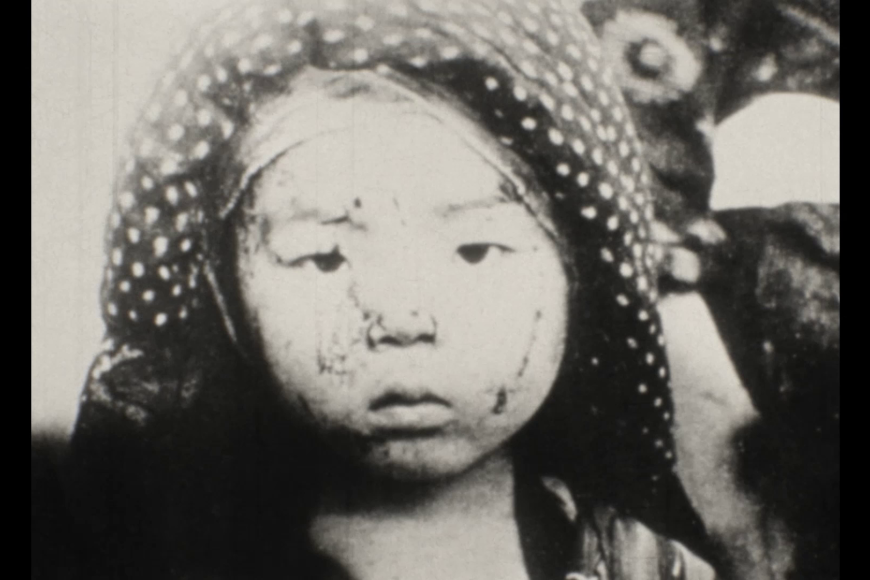
In 1945, US President Harry S. Truman authorised the dropping of two nuclear bombs on Japan. In 1969, this amateur movie recalls this decision in a drastic montage of contrasts.
Filmstill The New President

The New President

Der neue Präsident
collective
Matinee Saxon State Archive 2024
Documentary Film
GDR
1969
4 minutes
without dialogue
Subtitles: 
None
This pointed montage of contrasts recalls the dropping of atomic bombs on Hiroshima and Nagasaki in 1945, authorised by US President Harry S. Truman, and the devastating consequences: images of Harry in a warm embrace with a girl, images of wounded children in Japan. In September 1945, the island state in the Far East surrendered and the Second World War was officially over.
Konstantin Wiesinger

Credits DOK Leipzig Logo

Director
collective
Producer
Amateurfilmstudio Bezirkskabinett für Kulturarbeit Potsdam
Matinee Saxon State Archive 2024

The Womb He Crawled from Still Is Going Strong

Josef Hovorka
Even after 1945, the Jewish resistance against the persecution and murder of the Jews in Europe by the Germans during the Second World War is not present in the collective memory.
Filmstill The Womb He Crawled from Still Is Going Strong

The Womb He Crawled from Still Is Going Strong

Der Schoß ist fruchtbar noch, aus dem das kroch
Josef Hovorka
Matinee Saxon State Archive 2024
Fictional Film
GDR,
Czechoslovakia
1973
10 minutes
without dialogue
Subtitles: 
None
After the Wehrmacht invaded Czechoslovakia in 1939, the Jewish population was disenfranchised and killed, as this etude, staged at the Terezín Memorial, recalls. The fact that there was successful Jewish resistance even in extermination camps like Sobibór did not fit in with the traditional image of the passive victims that is melodramatically re-enforced by this film.
Konstantin Wiesinger

Credits DOK Leipzig Logo

Director
Josef Hovorka
Script
Josef Hovorka
Cinematographer
Rainer Hässelbarth
Producer
AmateurFilmClub “Energie” VEB Energiekombinat Berlin, Filmové Studio Odborový dům kultury pracujících Ústí nad Labem
Matinee Saxon State Archive 2024

The Festival Was Everywhere

collective
With the participation of several company and amateur film associations, the film accompanies a trip to Leipzig by delegations from 40 countries on the occasion of the 10thWorld Youth Games in Berlin.
Filmstill The Festival Was Everywhere

The Festival Was Everywhere

Festival war überall
collective
Matinee Saxon State Archive 2024
Documentary Film
GDR
1973
12 minutes
German
Subtitles: 
None
East Berlin plays host to the world at the 10th World Youth Festival. The secret capital of the GDR, Leipzig, also gets some reflected glory. On 3 August 1973, festival delegations from forty countries take a special train to the trade fair city. Between the official events there is room for ambiguous side glances, captured in this report of the day made by several Leipzig company and amateur film groups.
Konstantin Wiesinger

Credits DOK Leipzig Logo

Director
collective
Producer
Pionierfilmstudio Haus der Jungen Pioniere “Georg Schwarz” Leipzig, Ensemble “Deutsch-Sowjetische Freundschaft” Leipzig, Club Leipziger Filmamateure, VEB Verlade- und Transportanlagen Leipzig, VEB Spezialbaukombinat Leipzig
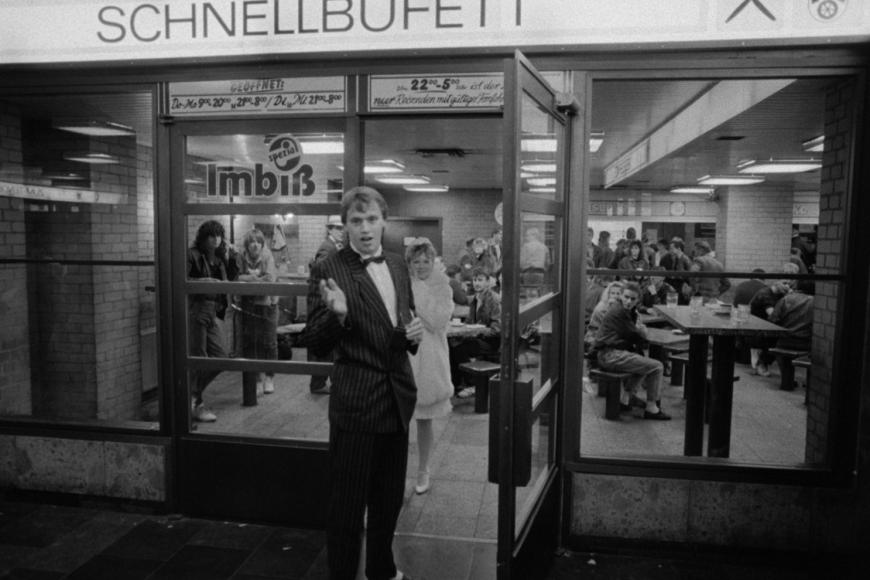
Filmstill Snack Bar Special

Snack Bar Special

Imbiß Spezial
Thomas Heise
DEFA Matinee 2024
Documentary Film
GDR
1990
27 minutes
German
Director Thomas Heise’s brother worked for Mitropa at the Berlin-Lichtenberg railway station for a while. Heise knew that all doors would be open for him there, that he could shoot his graduation film as a master student of the Academy of Arts there. In addition, the 40th anniversary of the GDR on 7 October 1989 was coming up, a holiday on which riots were to be expected. Thomas Heise wanted to bring these two things together: the employees at work between the counter and the kitchen, on the backdrop of the events of October 1989. A sound collage contrasts the statements of the employees in an end-of-time mood with the jubilant reporting of the festivities – a filmic image of the beginnings of the dissolution of the state.
Linda Söffker

Credits DOK Leipzig Logo

Director
Thomas Heise
Script
Thomas Heise
Cinematographer
Sebastian Richter
Editor
Karin Wudtke
Producer
DEFA-Studio für Dokumentarfilme
Sound
Wolfgang Heise, Ulrich Fengler, Gerd Kroske
Matinee Saxon State Archive 2024

Moscow Mosaic [excerpt]

Alfred Dorn
In the summer of 1957, the talented amateur filmmaker Alfred Dorn travelled to Moscow for the 6thWorld Youth Games and wandered the Soviet metropolis with his camera in amazement.
Filmstill Moscow Mosaic [excerpt]

Moscow Mosaic [excerpt]

Moskauer Mosaik [Ausschnitt]
Alfred Dorn
Matinee Saxon State Archive 2024
Documentary Film
GDR
1957
10 minutes
without dialogue
Subtitles: 
None
Moscow, summer 1957: The famous amateur filmmaker Alfred Dorn takes us to the 6th World Festival of Youth and Students, which was intended to promote encounters and exchange between young people from all over the world as a reaction to the Second World War. Curious and amazed, the camera explores the metropolis Moscow with its iconic buildings and squares, complete with numerous festival visitors.
Konstantin Wiesinger

Credits DOK Leipzig Logo

Director
Alfred Dorn
Cinematographer
Alfred Dorn
Retrospective 2024

Report

Volker “Via” Lewandowsky
A collage about the lascivious inertia of power, full of allusions to the rotting Roman Empire. In 1987, the decay of the world-organising systems could already be smelled from the GDR underground.
Filmstill Report
Filmstill Report

Report

Report
Volker “Via” Lewandowsky
Retrospective 2024
Experimental Film
GDR
1987
7 minutes
without dialogue
Subtitles: 
None
The GDR formed an image of its citizens, hardy in everyday life and firm in principles, that it wished to see reflected in “their” art. Dresden-based artist Volker, called Via Lewandowsky, avoided the vanity of the GDR art scene and reflected something else back to his superior state: the indolence of the flesh, the gluttony of the systems that allegedly ordered the world. This Super 8 film from the late German Democratic subculture rubs against Heiner Müller’s stage text “Anatomy Titus Fall of Rome A Shakespeare Commentary”. The manuscript was (half) published in 1986 by the East Berlin Henschelverlag with the following proviso: “If the play is not accepted for production, this book must be returned immediately […].” Lewandowsky emigrated to West Berlin in 1989 before the fall of the Wall.
Sylvia Görke

Credits DOK Leipzig Logo

Director
Volker “Via” Lewandowsky
Matinee Saxon State Archive 2024

Solidarity in Action

collective
In the Israeli-Palestinian conflict, the GDR explicitly supported the UN Partition Plan at first, only to adopt an increasingly one-sided position from 1965 onwards.
Filmstill Solidarity in Action

Solidarity in Action

Solidarität in Aktion
collective
Matinee Saxon State Archive 2024
Documentary Film
GDR
1970
5 minutes
German
Subtitles: 
None
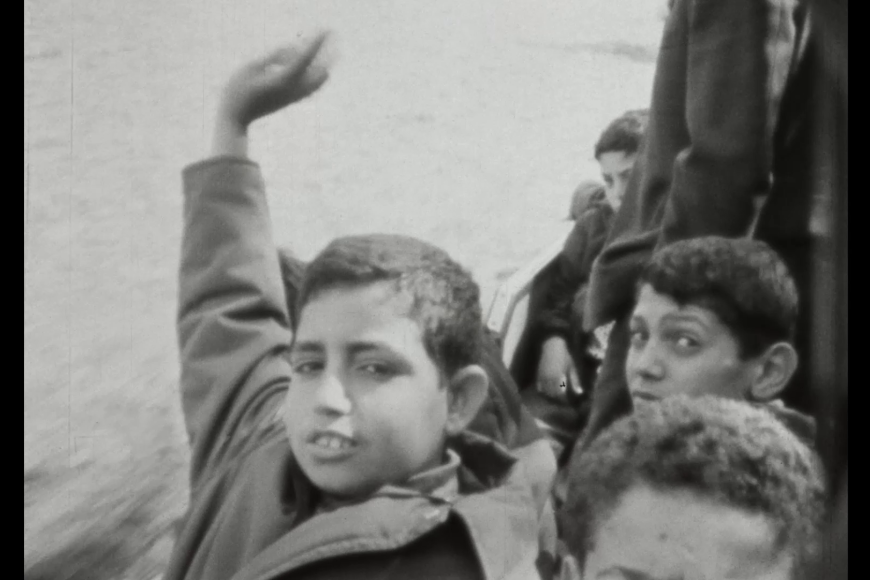
Under the banner of international solidarity, Arab children from refugee camps in Jordan are spending a holiday in the GDR in 1970. This political gesture ties in with the recently redefined position of the GDR in the Israeli-Palestinian conflict. At the World Youth Festival in 1973, Yasser Arafat was already seen standing next to Erich Honecker on camera.
Konstantin Wiesinger

Credits DOK Leipzig Logo

Director
collective
Producer
Amateurfilmcentrum Frankfurt an der Oder
Retrospective 2024

Staßfurt – Windhoek

Lilly Grote, Julia Kunert
In August 1990, the still-GDR sends 425 Namibian refugee children back to their liberated “homeland”. Suddenly, after eleven years of hospitality, things had to move quickly. Beginnings and departures coincide.
Filmstill Staßfurt – Windhoek

Staßfurt – Windhoek

Staßfurt – Windhoek
Lilly Grote, Julia Kunert
Retrospective 2024
Documentary Film
GDR
1990
52 minutes
German
Subtitles: 
None
History in a hurry: Namibia becomes independent in March 1990, in July the Publicly Owned Enterprise DEFA becomes a GmbH, in October GDR becomes FRG East, in August a West and an East German filmmaker record one of the last GDR inconsistencies for DEFA. The state in pre-retirement sends 425 Namibian children, whom it had rescued from Angolan camps eleven years earlier, “home.” Hastily. But why? When Grote, Kunert and the children arrive, a Namibian minister explains that the East German supporters of these colonial war victims are now out of power. The new powers had no interest … In the Leipzig festival selection in 1990, and again in 1991, this film about German-Namibian foreignness and alienation cannot be found. The Retrospective 2024 makes up for this strange omission.
Sylvia Görke

Credits DOK Leipzig Logo

Director
Lilly Grote, Julia Kunert
Script
Lilly Grote, Julia Kunert
Cinematographer
Lilly Grote, Julia Kunert
Editor
Ingeborg Marszalek
Producer
DEFA-Studio für Dokumentarfilme GmbH
Sound
Lilly Grote, Julia Kunert
Matinee Saxon State Archive 2024

Tania in Berlin [excerpt]

Heinz Thomas
After the military coup against Salvador Allende’s socialist government in September 1973, around 2,000 selected Chileans fled to the GDR where they were granted political asylum.
Filmstill Tania in Berlin [excerpt]

Tania in Berlin [excerpt]

Tania in Berlin [Ausschnitt]
Heinz Thomas
Matinee Saxon State Archive 2024
Documentary Film
GDR
1977
10 minutes
German
Subtitles: 
None
After the military coup in Chile and the death of Salvador Allende in 1973, tens of thousands of opposition members were persecuted and murdered. The GDR took in about 2,000 refugees, including nine-year-old Tania and her family. The fact that the GDR was initially sceptical about Allende’s politics and granted political asylum only to selected Chileans is part of the logic of a bipolar world order.
Konstantin Wiesinger

Credits DOK Leipzig Logo

Director
Heinz Thomas
Cinematographer
Peter Scharf, Olaf Ullmann
Producer
Amateurfilmcentrum Frankfurt an der Oder
Sound
Jörg Wendlandt, Jorg Peter Langsch
Filmstill Vietnam Is Not Alone

Vietnam Is Not Alone

Vietnam ist nicht allein
collective
Matinee Saxon State Archive 2024
Documentary Film
GDR
1968
8 minutes
without dialogue
Subtitles: 
None
Pensioner Lehmann, folk artist Köppe, engineer Krahnstöver and the famous painter Willi Sitte: Four GDR citizens explain their motives and actions for solidarity with Vietnam. The emphasis is on the global nature of the protests against the war in the Far East, also and especially in Western countries, and therefore the system-spanning character of the movement. An appeal to the audience to get involved.
Konstantin Wiesinger

Credits DOK Leipzig Logo

Director
collective
Producer
Filmkollektiv VEB Elektrochemisches Kombinat Bitterfeld
DEFA Matinee 2024

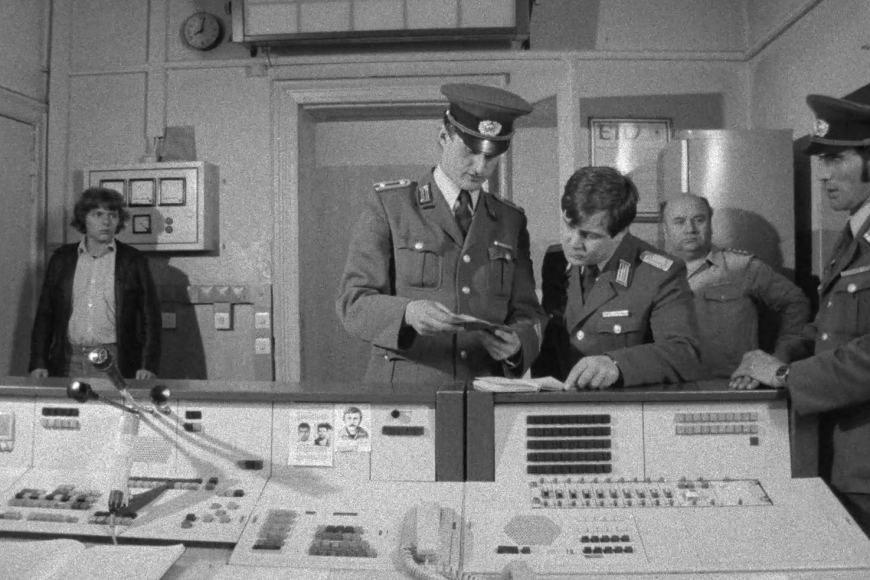
Volkspolizei / 1985

Thomas Heise
A typical workday at the East Berlin precinct 14, near the Wall, at the “interface to imperialism,” as one of the officers puts it. But soon the shooting is stopped.
Filmstill Volkspolizei / 1985

Volkspolizei / 1985

Volkspolizei / 1985
Thomas Heise
DEFA Matinee 2024
Documentary Film
GDR
1985
61 minutes
German
Subtitles: 
None
A typical workday at the East Berlin precinct 14, Brunnenstraße, near the Wall, at the “interface to imperialism,” as one of the officers puts it. At first, Heise and Badel are free to film unhindered: car patrols, deployments to escalating disputes, criminal charges of “decadent appearance,” missing person reports. The director and cameraman appear to be authorised by the Ministry of the Interior and are allowed to shoot without restrictions. When they are eventually required to show their papers, which turn out to be nothing more than ordinary identity cards, the misdirection is noticed: Shooting is stopped, the footage disappears in locked cabinets. The film premiered at the 25th Duisburger Filmwoche in 2001.
Linda Söffker

Credits DOK Leipzig Logo

Director
Thomas Heise
Cinematographer
Peter Badel
Producer
Staatliche Filmdokumentation