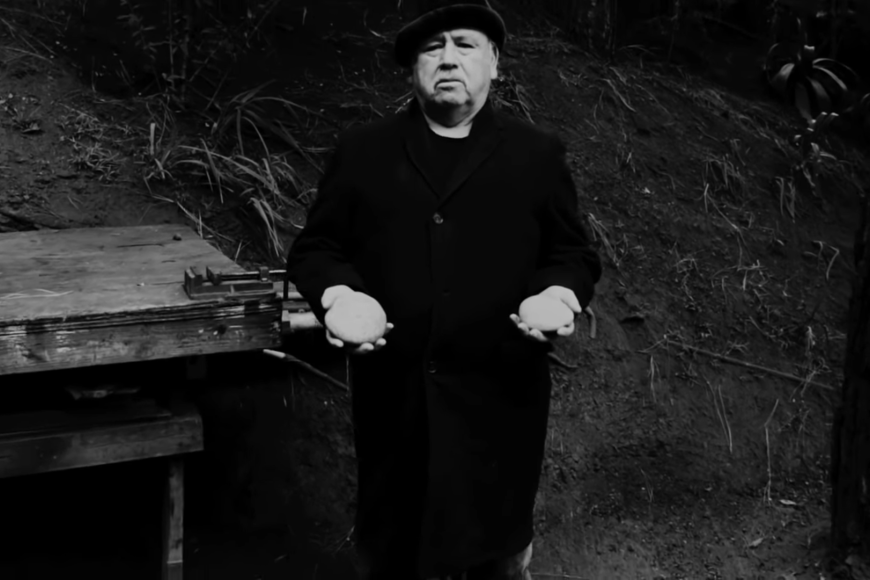
A nervously vibrating camera, a rubber duck being beheaded by algebra. Short and with a vengeance, David Lynch lights a beacon against the school-inculcated view of the world.
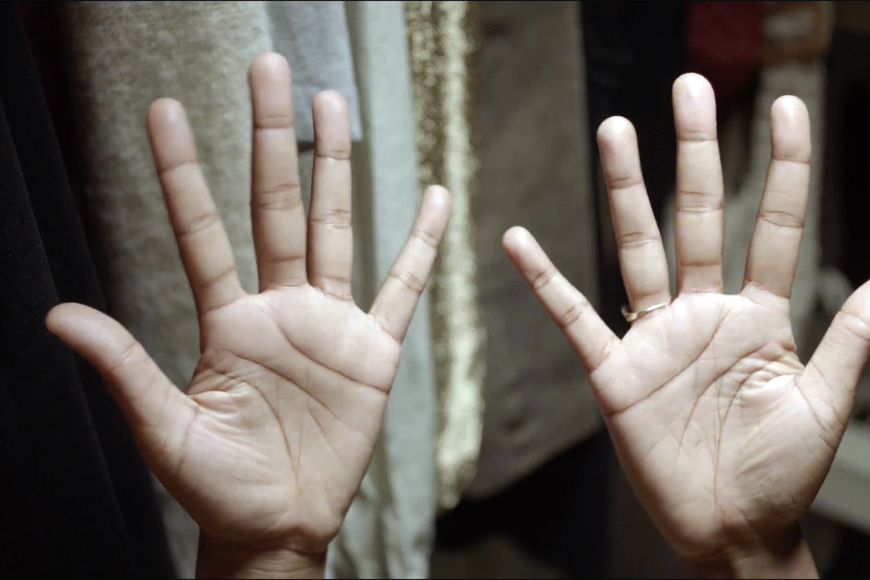
A nervously vibrating camera, a rubber duck being beheaded by algebra. In only one minute and with a vengeance, David Lynch lights a beacon against the school-inculcated view of the world. Reading, wRiting, aRithmetic – the three basic cultural techniques “drilled” into us turn out to be childhood traumas and opponents of the immeasurable, the mysterious and the indescribable.
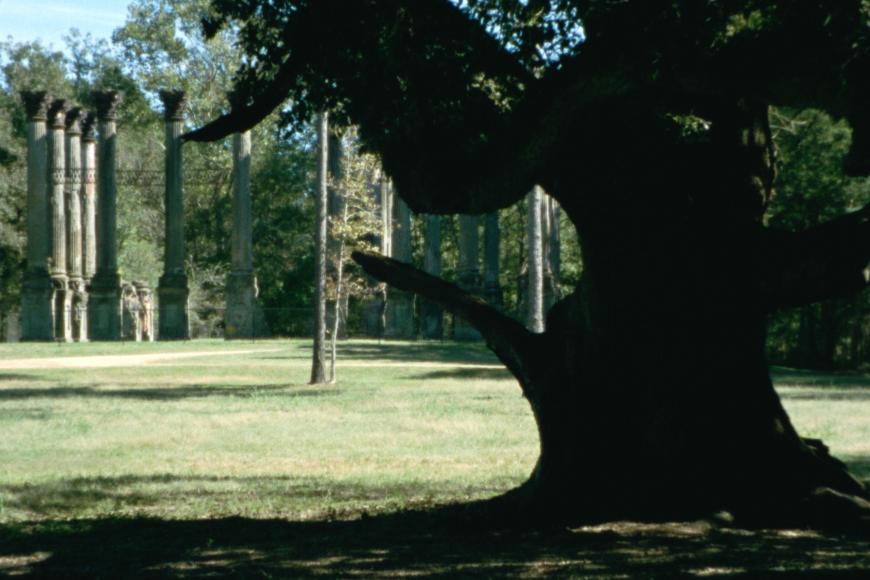
Numerous films deal with the American Civil War, which raged between the northern Union States and the southern Confederate States from 1861 to 1865. One general who rose to become a war icon and the 18th president of the United States was Ulysses S. Grant. Director Jim Finn uses board games to reconstruct the battles and documents a divided nation full of rebellious factions.
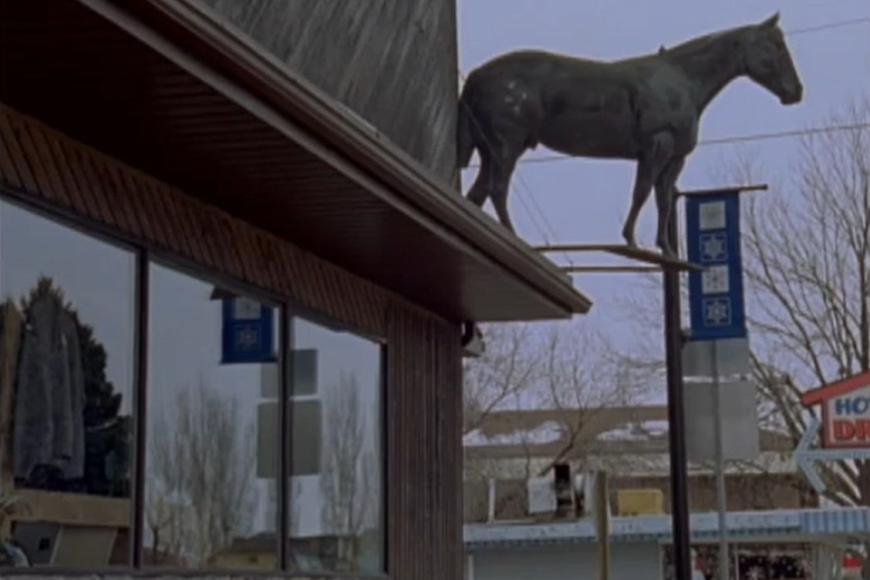
“Bloody Pond” or “The Flaming Forest” are the names given to places below the Mason-Dixon Line where many cruel and confusing clashes took place within a few years. Today only cemeteries, memorial plaques, wax museums and obelisks bear witness to episodes of the war that was to be of such vital importance for the shape of the USA today. Jim Finn’s 16mm shots are a detailed inspection of various stations to which he adds macabre anecdotes and trenchant descriptions. Statesmen, ideologists and warlords haunt the forests, ruins and riverbanks here – like the incidences of light which make the footage light up time and again. There is beauty in these images, in the trickling synthesizer melodies, too, or in the stop motion animations of complicated board games. This beauty has little in common with the dark underpinning of this conflict: deep-seated racism and an adamant belief in the right to own slaves.
Carolin Weidner
Credits
Director
Jim Finn
Script
Jim Finn
Cinematographer
Jim Finn
Editor
Dean De Matteis, Jim Finn
Producer
Cat Mazza
Sound
Alexander Panos, Jesse Stiles
Score
Colleen Burke
Animation
Jim Finn
Nominated for:
Prize of the Interreligious Jury,
FIPRESCI Prize
The Apocalyptic Is the Mother of All Christian Theology
Jim Finn
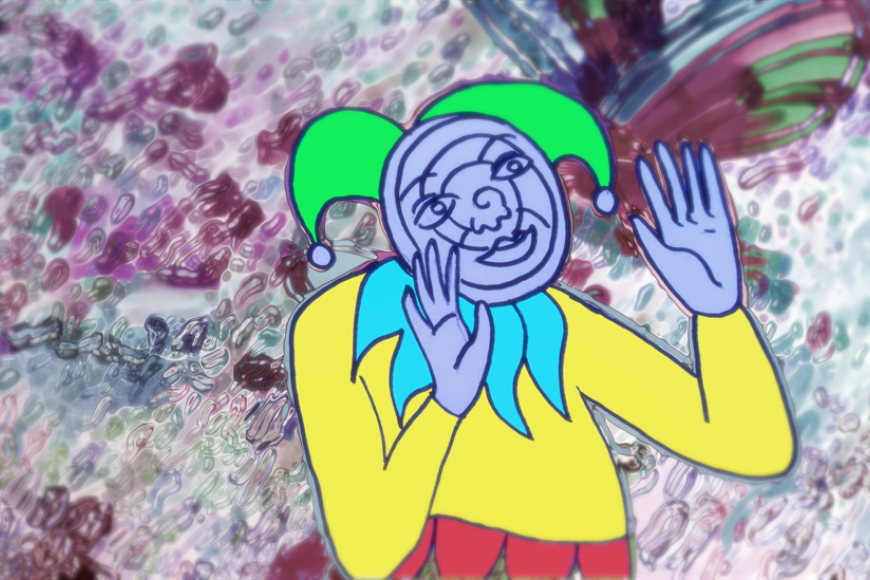
Though consumed with antisemitism and fascism, historically the Apostle Paul was a revolutionary. A psychedelic montage, a wild ride through 2000 years of rabid propaganda.
The Apocalyptic Is the Mother of All Christian Theology
The Apocalyptic Is the Mother of All Christian Theology
Jim Finn
Camera Lucida 2023
Documentary Film
USA
2023
64 minutes
English
Subtitles:
None
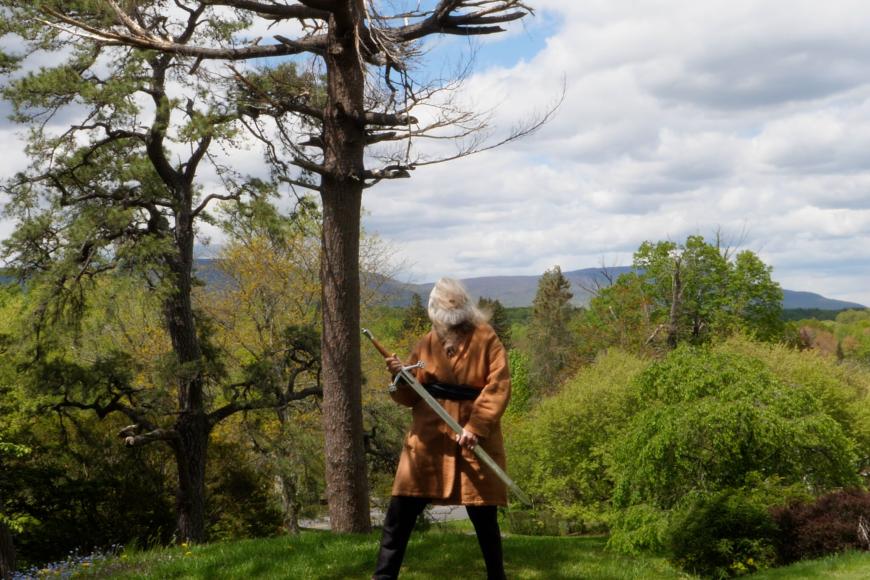
After Ulysses S. Grant, the victorious commander of the American Civil War, maverick Jim Finn has now tackled the Apostle Paul. Eighteen centuries lie between the two and yet those historical super-figures have a lot in common. The acts of both were epoch-making, both had to undertake prolonged expeditions to achieve them, and both have inspired a host of propaganda, including numerous board games that also serve as a visual framework for Finn’s latest film. Above all, both remain controversial to this day, though Paul’s actions, due to the thin factual basis, provided and still provide better groundwork for substantially more outlandish interpretations. The films quotes some of the more outrageous ones in an eclectic montage of red-tinged excerpts from biblical epics, Christian fundamentalist talk shows, cartoons, children’s books, dioramas, theme parks and performances by magicians and rapturous choirs.
The curious title refers to a paper of the German theologist Ernst Käsemann, whose research snatched Paul from the grasp of the Antisemites who had usurped him and placed him back in the tradition of Jewish mysticism. That is also the objective of Jim Finn’s film as it gleefully dissects two thousand years of appropriation and propaganda in a wild ride through history.
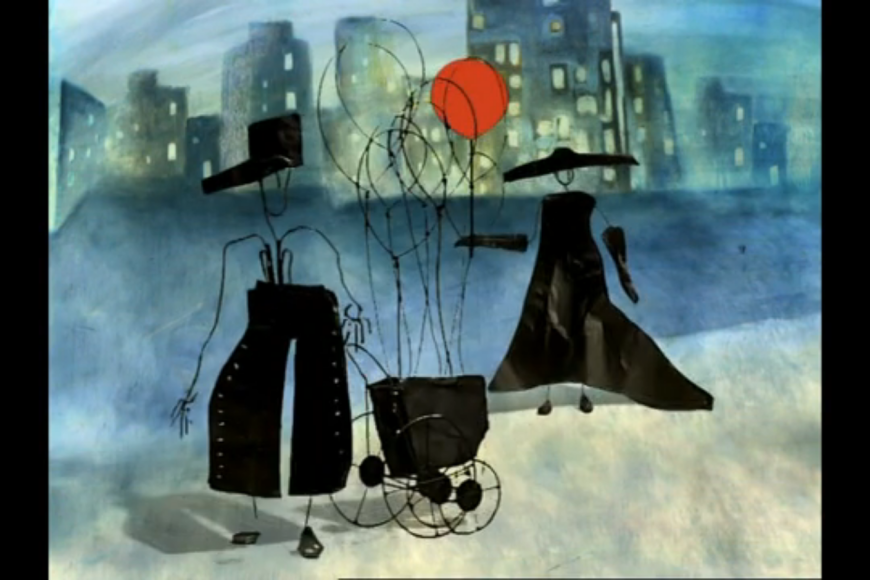
A girl, a passion: everything that flies high. The swing, the balloon. But then she falls into the clutches of a bird dealer. The only way out is through the window.
A film about a child with a passion: The little girl loves everything that flies high. She lets herself being pushed on the swing until she is almost out of the frame, and she loves her new balloon. But then she gets caught in the clutches of a bird dealer who locks her up in his flat on the top floor of a high-rise. The only way out is through the window.
In Laikipia, Kenya, indigenous shepherds and white ranch owners live in a fragile balance. But climate change and unresolved colonial tensions are increasingly calling this into question.
“It is places like Laikipia that make some Kenyans begin to ask: Are we really independent?” For centuries, this region in the central Kenyan highlands has been a grazing area for the Samburus’ animals. With colonialisation, white people began to settle there, built ranches and farmed cattle. After Kenya’s independence in 1963, they stayed on. So far, relations between them and the locals have been alright, albeit distant. Climate change, however, increases the potential for conflict in the country and intensifies the competition for resources. Laikipia has been suffering from the effects of global warming for several decades. Long periods of drought destroy the grassland the Samburu and their herds depend on. The white cattle farmers’ ranches and not least the privately managed and strictly guarded nature reserves cut through their traditional migration routes and block off the paths with electric fences. When elections are near, the disputes threaten to escalate. Daphne Matziaraki and Peter Murimi followed Kenyans of all parties over a period of five years and give them a chance to tell their stories in this film.
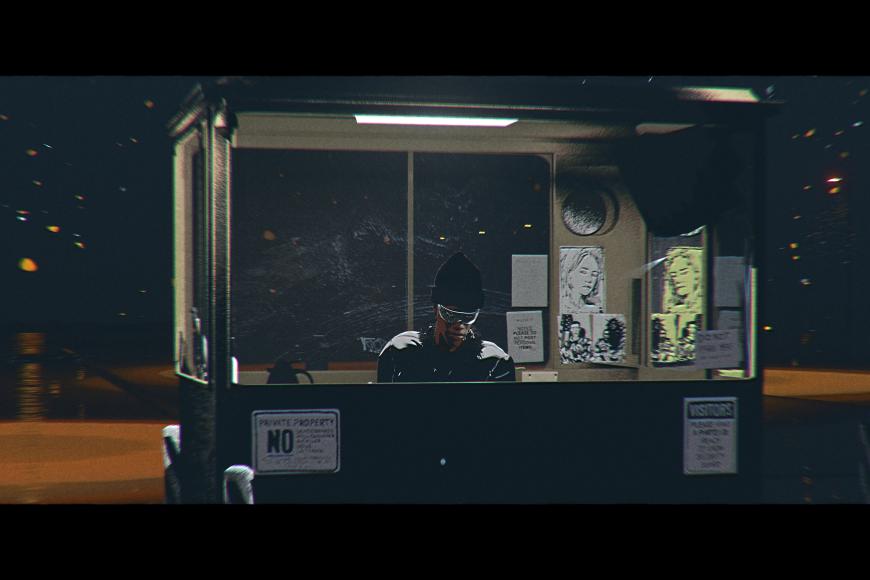
A cold winter’s night. Armoured in coolness, Nobody makes his lonely security guard rounds in the square, engrossed in his meandering reflections of life – melancholy of the streets.
The winter’s night draws its last breaths in the milky amber glow of the street lights. Snowflakes trickle down, the camera slowly circles a small guardroom in a driveway. Night after night, this lonely island is occupied by: Nobody. As a security guard in the cold, he guarantees the safety of the warm homes and their owners. He passes the time with a recalcitrant oil radiator, a calendar girl on a green meadow and his meandering thoughts. His security logs serve as a seismograph of reflections on life and nightly rounds of the square. Nobody is wrapped in a shell of coolness grown over a long time, which makes it hard for him to react to a rare smile the way he would like to in his heart. Nadia Hallgren and Jamie-James Medina condense an autobiographical short story by artist and musician Willis Earl Beal aka “Nobody”. The actor Michael K. Williams, who died in 2021, lent his voice to this inner monologue and gives it a sleepy, melodious sound. In this very cinematic, melancholy piece in a state of limbo, casual observations open a philosophical cosmos. But every time the journey of the mind crashes on the tarmac of the carpark in front of the block of flats.
André Eckardt
Credits
Director
Nadia Hallgren, Jamie-James Medina
Script
Willis Earl Beal
Editor
Spencer Campbell
Producer
Michael Stirton, Jamie-James Medina, Nadia Hallgren
Jerry Blumenthal, Suzanne Davenport, Sharon Karp, Gordon Quinn, Jenny Rohrer
The Chicago Maternity Center, which provided safe and affordable home births primarily to Black women, is threatened with closure. Resistance begins to form.
Jerry Blumenthal, Suzanne Davenport, Sharon Karp, Gordon Quinn, Jenny Rohrer
Retrospective: Un-American Activities 2025
Documentary Film
USA
1976
60 minutes
English
Subtitles:
German
In 1974, the Maternity Center, located in a low-income Chicago neighbourhood, is acutely threatened by lack of financing from its funding body, North Western University. Resistance begins to form in the predominantly Black community, since this is an institution with a 75-year-old history that has provided countless woman with safe and affordable home-births. “The Chicago Maternity Center Story” uses this civil protest as a starting point to tell the story of the rampant commercialisation of medical care in the USA, including its sexist and racist connotations. A film that approaches the issue sometimes gently, sometimes with agitprop vigour.
Tobias Hering, Tilman Schumacher
Credits
Director
Jerry Blumenthal, Suzanne Davenport, Sharon Karp, Gordon Quinn, Jenny Rohrer
Can a geometric structure be seductive? The answer of this spare and yet utterly charming film is clear: Yes, it can! A simple white line on a black background bewitches us with its dynamic curves as we marvel, open-mouthed, at its suppleness and excellent timing. This line is a saucy star that would be a credit to every burlesque show.
The curious and the harrowing in the sparsely populated desert of Nevada with its subterranean water reservoirs. An atmospheric film about how freedom is defined in the US.
Chivas DeVinck works his way up from the soil to the stars to find out what constitutes Nevada outside of Las Vegas. Milieus, places and people are intertwined in a collage. The magnetic core of the whole is the subterranean water from which everything seems to grow and for which everyone strives. What looks like an arid desert landscape or a sleepy little town from afar, turns out on closer inspection to be an atmospheric representation of the rural U.S.
Just before the COVID pandemic brought the whole world to a standstill, DeVinck captures the curious, the mundane and the harrowing in White Pine County in eastern Nevada. There are well-nigh endless community meetings about dog-keeping issues, and farmers who talk to their Peruvian shepherds in appalling Spanglish. There are droning radio shows nobody may listen to anyway, and special church services for sex workers. But people are also preoccupied with explosive political issues: the distribution of water supplies in the arid region, the thirty-year dispute over the construction of a water pipeline to Las Vegas, the continuing discrimination against the indigenous people. Resonating in all this is the myth of the US concept of freedom, manifesting itself in gun possession, the idea of every man for himself and an unwavering faith in the healing powers of capitalism.
Kim Busch
Credits
Director
Chivas DeVinck
Cinematographer
Yoshio Kitagawa
Editor
Matthieu Laclau, Yann-Shan Tsai
Producer
Chivas DeVinck
Sound
Danfeng Li
Score
Felicia Atkinson
Nominated for:
Prize of the Interreligious Jury,
FIPRESCI Prize
Lee Anne Schmitt explores the disparate influences to shape life in Utah’s Henry Mountains, home to one of the last remaining bison herds in the US which are hunted to this day.
In her second feature-length film, Lee Anne Schmitt leaves California behind to explore the disparate influences that have shaped life in Utah’s Henry Mountains, home to one of the country’s last remaining bison herds, which are hunted to this day. Hewing closer to pure observation than much of the rest of her work, Schmitt and her roving camera stick tightly to the everyday rhythms of the contemporary cowboys who organise these now touristic hunts. The images of buffalos being shot at close range, disembowelled or stuffed speak for themselves, as do the endless landscapes, stubborn iconography of the former Wild West and the story of the Native American dream recounted in voice-over: the impossible return to a land never again empty.
A pop art-punk-psychedelic trip into the life of the young housewife Marcia in 1970s London. She thinks about the mites in her bedclothes and talks to the ghost of dirt.
A pop art-punk-psychedelic trip into the life and rich fantasy world of a young 1970s London housewife. Marcia is mesmerised by the astonishing mountain of folds in the bedclothes where the tiny, almost invisible tribe of the mites lives, and drawn into a conversation with the ghost of dirt. But stop, her zeitgeisty-feminist friends are coming over for morning coffee.
Hollywood star Errol Flynn loves Havana, its casinos and its cocktails. As an eyewitness to the Cuban Revolution, he also learns to love Fidel Castro, the “Cuban Robin Hood.”
When Hollywood star Errol Flynn appeared on the Leipzig festival screen in 1960, he had been dead for a year. The audience saw him in his last role: as an aged lover – of Havana, casinos and cocktails, as the nemesis of the Cuban liberation movement, which had declared war on corrupt bon vivants like him. The movie swashbuckler rhapsodises about his Cuban counterpart Fidel Castro and nonchalantly moderates the history of the dictatorship and liberation of the island state, cigarette holder in hand. Did Hollywood call Leipzig to recommend this film? It was probably Moscow, because its world premiere is said to have taken place there in 1959. But how did the self-confessed anti-communist Errol Flynn come to make this declaration of love? Maybe his new friend Fidel did not tell him the whole truth?
Tubas are stolen from Californian schools. What does the lack of a particular sound do to our perception of music? An entertaining, multilayered reflection on hearing and not hearing.
German Subtitles for deaf and hard-of-hearing, English
A series of tuba thefts that occurred ten years ago at Californian schools is the starting point of a multilayered and entertaining reflection about sounds and music, how they are represented in images and described in words. The artist Alison O’Daniel tells the story from the perspective of Deaf people; her film resembles a musical composition that varies its material in several movements.
In one sequence we hear the swelling drone of a passenger plane flying at low altitude over a residential area and gradually drowning out the sounds of the wind before we first see its shadow glide over the houses and at last the source of the noise. The subtitles, an integral part of this film, not only describe the sounds in amazing precision but also quantify their acoustic pressure in decibels.
Alternating between passages with and without sound motivates us to be more differentiated, focused, targeted in our perception. The film revolves around the motifs of hearing, sounds, noise pollution more than around the narrative of the mysteriously vanished tubas, more even than around the impressive protagonist Nyeisha “Nyke” Prince who plays a Deaf drummer in “The Tuba Thieves.” The tuba thefts are first and foremost a metaphor: What does the lack of a specific sound do to our perception?
Christoph Terhechte
Credits
Director
Alison O’Daniel
Script
Alison O’Daniel
Cinematographer
Derek Howard
Editor
Alison O’Daniel, Zack Khalil
Producer
Alison O’Daniel, Su Kim, Maya E Rudolph, Rachel Nederveld
During a brief encounter, a real connection seems to develop between a whale and a diver. But then the whale disappears again in the depths of the ocean.
A diver encounters an injured whale. He decides to help the animal and gets a friendly look of thanks. For the space of a few seconds, the border between the two species seems permeable. The whale disappears in the depths of the ocean and leaves the diver wondering whether this was all just a projection of human hopes.
Franka Sachse
Credits
Director
Tess Martin
Score
Spencer Thun
Animation
Tess Martin, Webster Crowell, Stefan Gruber, Britta Johnson, Amanda Moore
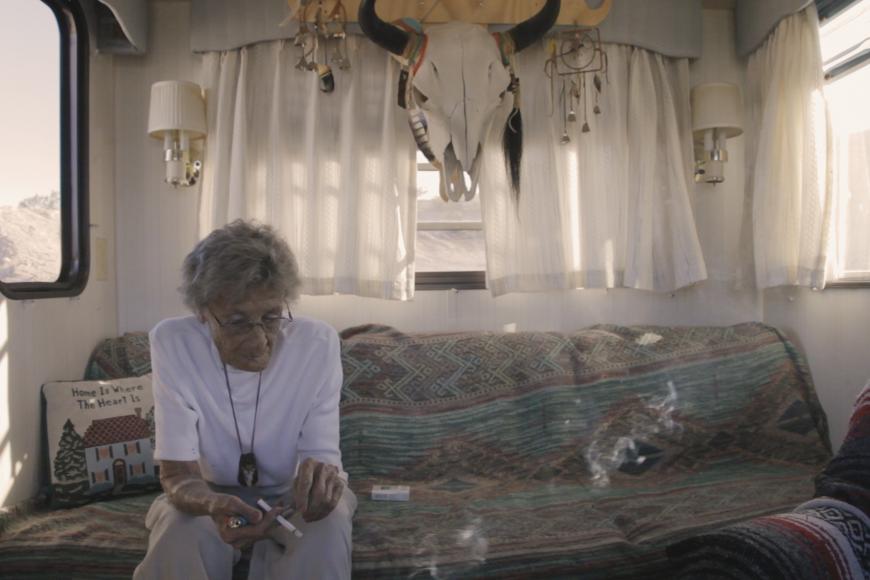
A privately operated spaceport in the desert of New Mexico inspires dreams of tourism to new worlds. In the nearby small town, life plans are more modest.
Forty kilometres outside the small town of Truth or Consequences in New Mexico, in the middle of the desert, lies “Spaceport America”, the first private space mission launch centre. People there have been dreaming of tourism in space for the past decade. Hannah Jayanti observes the people of the town who live in the shadow of such great ideas. She tells of tiger bites and scrap collectors, of sparkling stones, of trailer life and how painfully the past still affects the present.
What starts out as a tale about humanity’s great plans gradually turns into one of the dreams and stumbling blocks of human beings. Step by step, the film approaches its characters and unfurls into a reflection of what remains of a life. In addition to documentary and historical footage, the director also uses virtual reality techniques. When the camera travels through 3D simulations of empty streets and houses you feel that something long gone is made tangible again – like an expedition to a ghost town, at a time when the population will have long since left the planet in spaceships. But the created images remain patchy, the objects are captured only in spots, almost as if this was a map of the stars.
Marie Kloos
Credits
Director
Hannah Jayanti
Cinematographer
Hannah Jayanti
Editor
Hannah Jayanti
Producer
Sara Archambault
Sound
Hannah Jayanti, Scott Hirsch
Score
Bill Frisell
Animation
Alexander Porter, Alexander Porter
Nominated for:
Prize of the Interreligious Jury,
FIPRESCI Prize