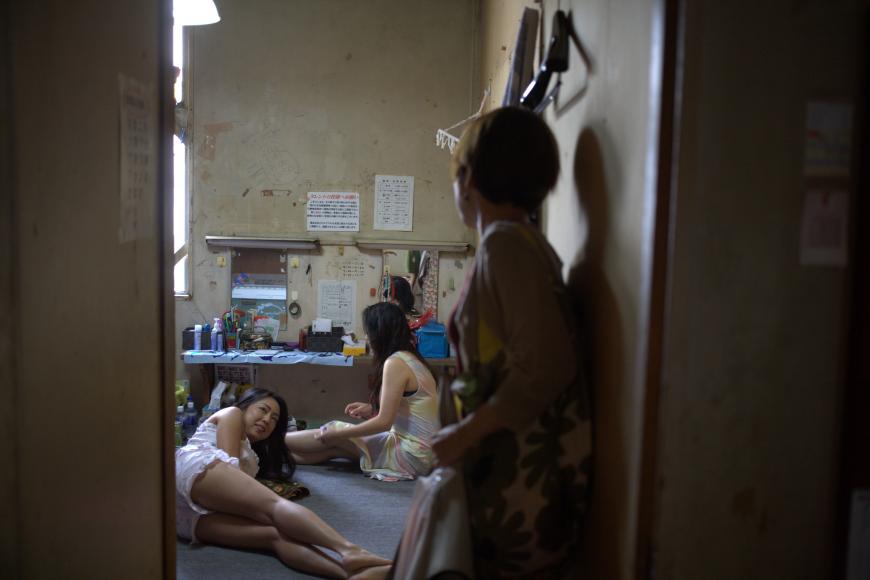
A background study of a dying amusement culture, filmed in slovenly dressing rooms in front of badly polished make-up mirrors. – Director Yoichiro Okutani follows the Odoriko, the Japanese strippers, through their daily routine between dressing and undressing, between pragmatic approaches to life and eroticism made fit for the stage. Okutani’s cut begins naked: A nude woman descends a staircase, filmed not to advantage but with the brutal ordinariness of routine. One production year and five minutes lie between this – Okutani’s – director’s cut and Mary Stephen’s editor’s cut “Nude at Heart”. But how much more?
Sylvia Görke
Credits
Director
Yoichiro Okutani
Script
Yoichiro Okutani
Cinematographer
Yoichiro Okutani
Editor
Yoichiro Okutani, Keiko Okawa
Producer
Asako Fujioka, Eric Nyari, Yoichiro Okutani, Annie Ohayon-Dekel
Mike Brett, Steve Jamison, Pierre Zandrowicz, Arnaud Colinart
The nuclear threat became real for 1.4 million people on Hawaii. On 13 January 2018, a text message warned them of a missile. The message was false, its consequences momentous.
Mike Brett, Steve Jamison, Pierre Zandrowicz, Arnaud Colinart
Extended Reality 2022
XR
France,
UK,
USA
2022
42 minutes
English,
French,
German,
Korean,
Japanese,
Norwegian
Subtitles:
English
The peace of the superpowers is based on “mutual assured destruction”. States can annihilate each other completely with their arsenals. On 13 January 2018, 1.4 million people on Hawaii got a taste of this: A false missile alert text message brought their lives to a standstill that lasted 38 minutes, panic broke out and the nuclear threat suddenly became real.
Lars Rummel
Credits
Producer
Arnaud Colinart, Jo-Jo Ellison, Mike Brett, Steve Jamison
Executive Producer
Paul Mezier, Susanna Pollack
Production Company
Atlas V, Archer’s Mark
Animation
Alan Sorio
3D Artist
Renaud de Bellefon, Anthony Rubier
VFX Artist
Yasuyuki Otsuki
Script
Dr. Jamaica Heolimeleikalani Osorio
Score
Bobby Krlic
Key Collaborator
Games for Change, Princeton University, British Film Institute, VR for Good, ARTE France, CNC
Director
Mike Brett, Steve Jamison, Pierre Zandrowicz, Arnaud Colinart
This alien body that does not seem to be yours. It is too conspicuous, too tall, and then again too insignificant. A cinematic reconciliation with being different.
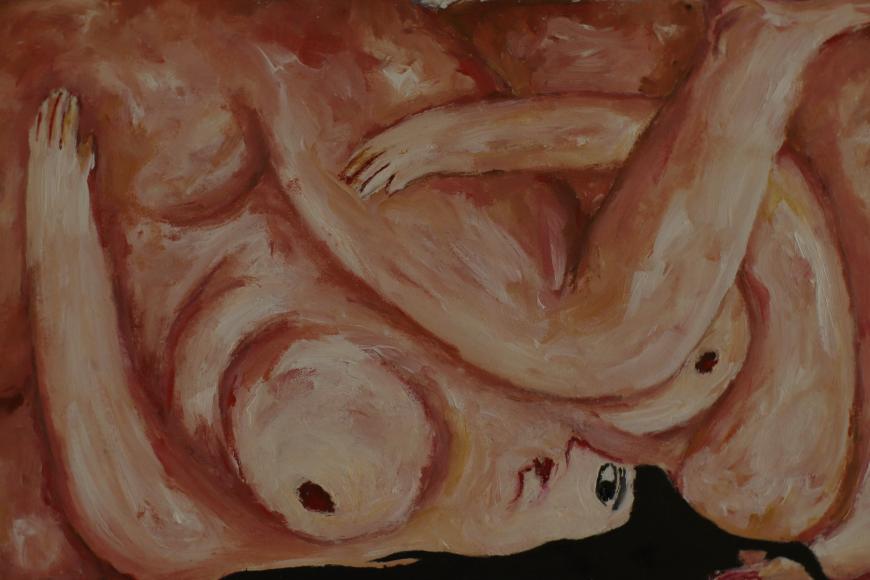
“There was a body that didn’t want to be human. It didn’t know it belonged to someone. To me.” María Cristina Pérez González opens her film with these poetic and cryptic words, diving deep into the visually powerful, hand-painted animation. Associative rather than narrative, the sad voice pulls us into a maelstrom of remembered fragments that all revolve around the protagonist’s body: A voluminous shape that sometimes eats itself with loathing, stretches until it fills the frame or cowers like a pea – in the blackness of the fluid, generous brushstrokes, but above all in its own fleshy self. There is the estranged sister who once called the feet of this body ugly. The good friend who disappeared without a farewell. The father who once said that all unhappy women grow fat. And most of all there is this nameless figure that lives in her belly and feeds her depression with a cute grin. As so often in life, the only path to contentment is reconciliation. With the sister, of course, but above all with her own body which does not fit into narrow social norms – but is the only one she has. And with which she can dance, jump, and even laugh quite splendidly once she understands that it is not a monster to be fought.
Marie Ketzscher
Credits
Director
María Cristina Pérez
Script
María Cristina Pérez
Editor
Mauricio Cuervo Rincón
Producer
Mauricio Cuervo Rincón
Co-Producer
Mireia Vilanova, James Belfer, Adam Belfer
Score
Daniel Gwilym Jones Cozzarelli
Animation
Laura Alcina, Natalia Rojas Noy, Megumi Cardona, Gizenth Barreto, Fabián Llantén, Anamaría Sáenz Peñas, Julián Arias Garzón, Juan Pablo Figueroa, Daniel Bonza
Quartzsite, Arizona. A small town in the middle of the desert becomes a huge camping ground in winter, where a motley community live the other side of the “American Dream”.
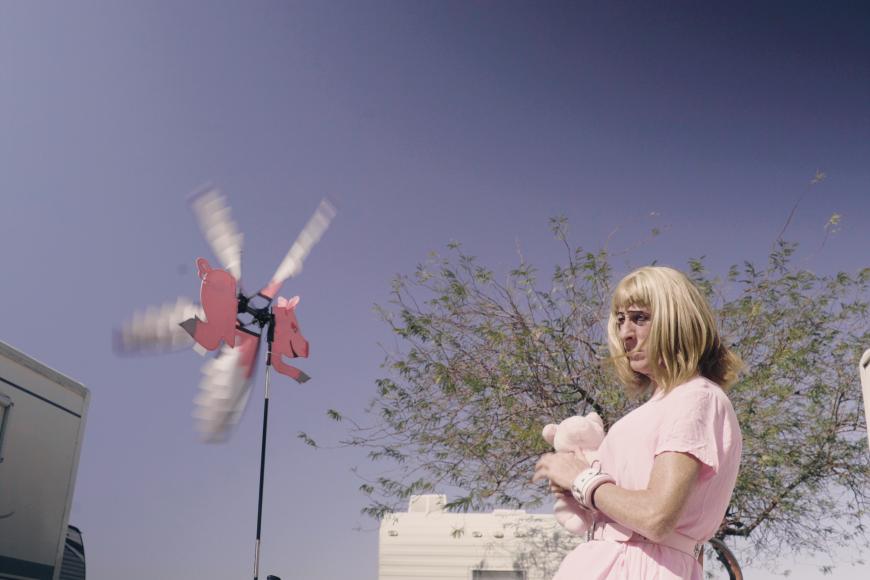
Quartzsite, Arizona. A town in the middle of the desert which regularly turns into a huge camping ground where up to a million people from the northern US states escape winter. It’s less chilly here, and people of every kind are welcome to rent a plot of dry land for 180 dollars. Ryan Maxey joins them for three seasons in a row, approaching the motley community with an intimate and at the same time soberly observant eye.
Meth junkies, gun lovers, constitution keepers, a trans woman dressed in pink and breeding cuddly pets and white men wearing “Black Guns Matter” t-shirts. People trade everything and help each other. Sometimes it can get rough. But the US-American flag, the ever-present guns and collective prayer are part of life, just like the democratic choice between pancakes and hamburgers. Maxey’s documentary foray takes him through all these lives and lifestyles which he seems to register sometimes with affectionate tenderness, sometimes shaking his head. Despite his critical semi-distance, he is clearly a part of the community he portrays. His film, a collaborative work in some ways, combines shots of this place from different perspectives and different times. Ambivalences persist, which is why all judgement must be preliminary.
Calm and focussed, Elleni Sclavenitis brings to light a historical crime forgotten by hegemonic historiography: cinematic history writing in perfection.
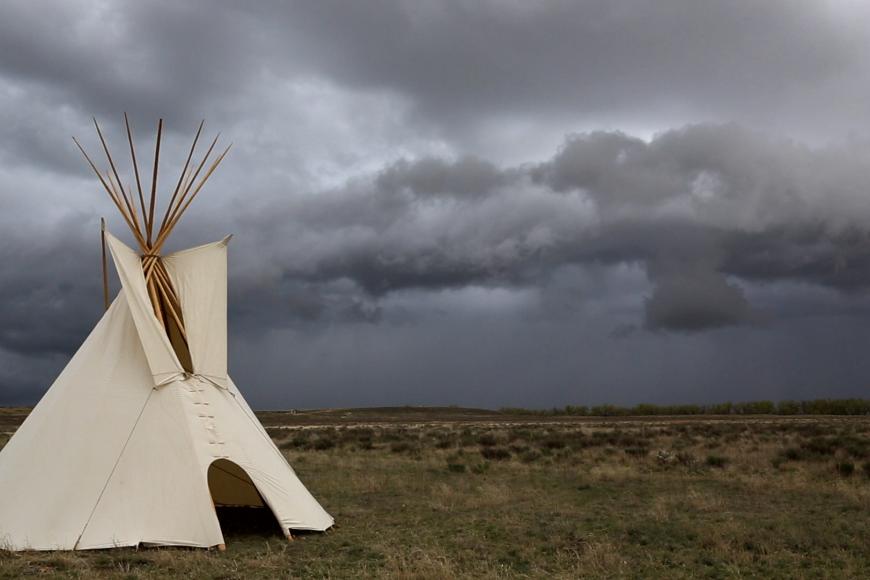
The Sand Creek Massacre on 29 November 1864: More than 200 Cheyenne and Arapaho were murdered by the U.S. Cavalry. Ignorant hand-downs from the past and the omnipresence of statues glorifying murderers are juxtaposed with an empty museum of indigenous history for which there is no funding. This film against forgetting by a white female director also examines its own position: she talks frankly with descendants of the survivors – many of whom are choosing a scientific approach to history.
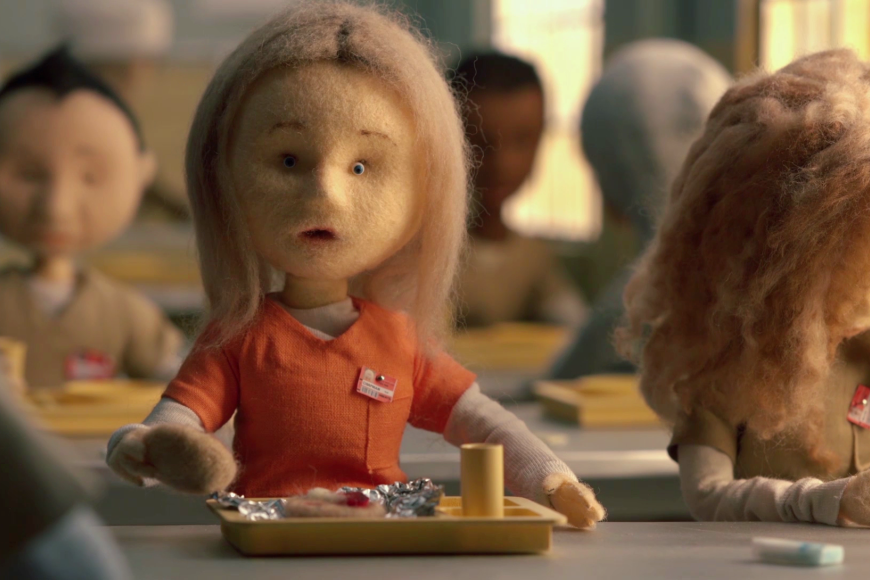
A commissioned work: Špela Čadež’s summary of the legendary comedy drama show set in a women’s prison, “unravelled” in soft and scratchy wool, yellow as urine and red as blood.
To promote the start of season five, Špela Čadež summarises the first four seasons of the legendary US comedy drama show for Netflix. From the streaming provider’s logo to the canteen food through to vomit – Čadež “unravels” her condensed version of the stories from the women’s prison in soft and scratchy wool, yellow as urine and red as blood.