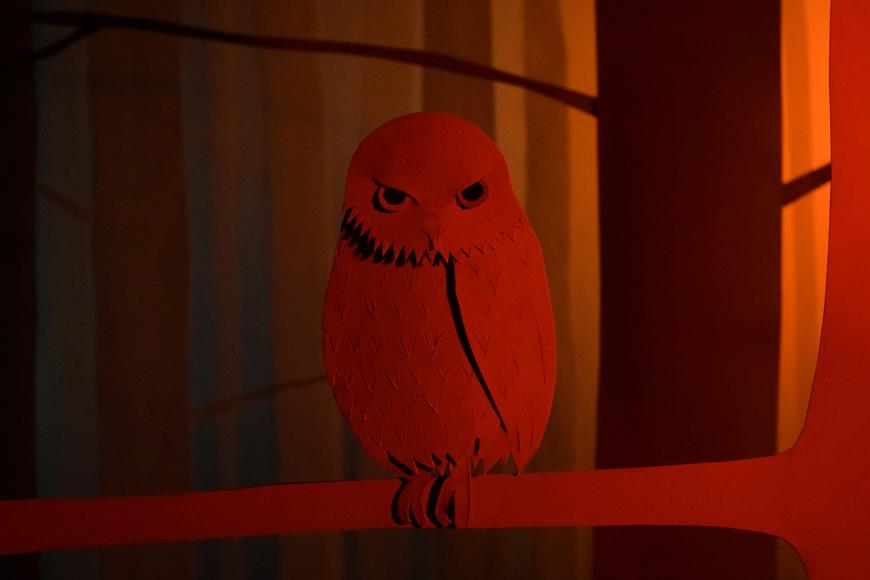
A young woman is strangled. The mother’s moving dirge – based on a poem by Percy Shelley – accompanies us as her daughter Ginevra is laid out and resurrects.
The rising sun reveals a gruesome crime. In the orange-red dawn, between the dunes and the rippling sea, a young woman is strangled to death. The victim’s neck is marked by the deep imprints of her murderer’s hands. The mother’s moving dirge – based on a poem by Percy Shelley – accompanies us as her daughter Ginevra is laid out and resurrects.
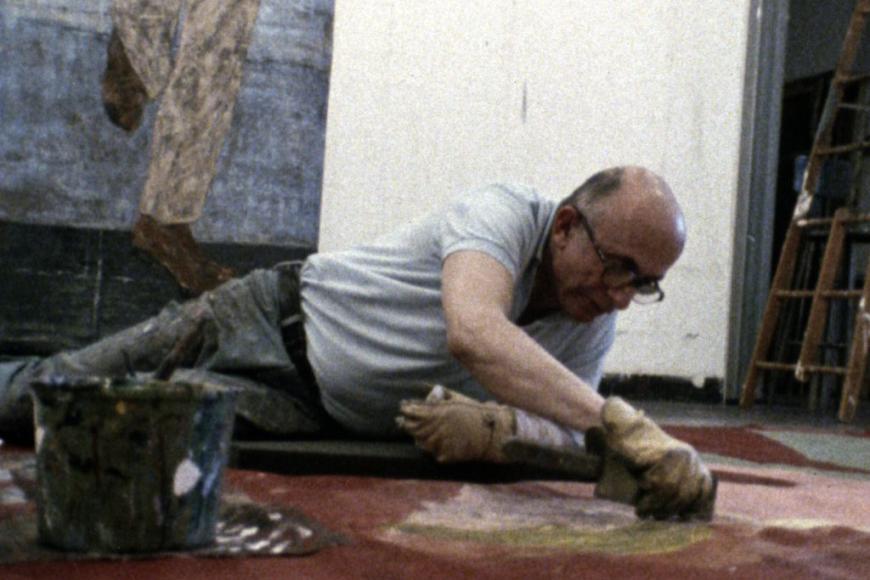
How can art respond to the horrors that happen in this world every day? Leon Golub offers insights into his New York studio and shows his unflinchingly political paintings.
How are art and social reality connected? How can art respond to the horrors that happen in this world every day? At what point does art become political, at what point corrupted by the market? Leon Golub (1922–2004) works on huge canvases in his New York studio, uses press photos as models, distils gestures from them, applies paint, removes it, scrapes free what was hidden. The process has a violent side – like the martial motifs of his works. They show shootings, tortures or grotesque figures that enjoy their inhuman acts. These are motifs usually unearthed by investigative journalism in times of war. Now they are hung in an exhibition room supposedly free from the banal – and shock the viewer.
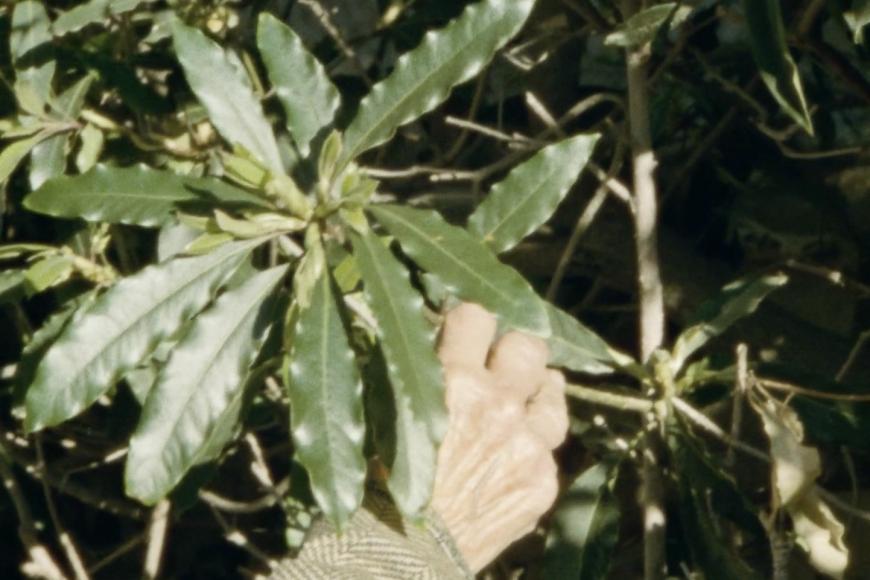
A minimalist eulogy to the painter Luchita Hurtado, who only experienced her breakthrough at the age of 97. A film in autumn colours about a woman in tune with nature.
A visual artist all her life, Luchita Hurtado only reluctantly experienced her breakthrough at the age of 97. “Green Turns Brown” is a minimalist eulogy to the publicity-shy painter. Shot on Super 8 film stock during the last months of her life, this film, which revels in autumn colours, paints the portrait of a woman in tune with nature who sees death not as the end but as the crossing of a border. “Life goes on.”
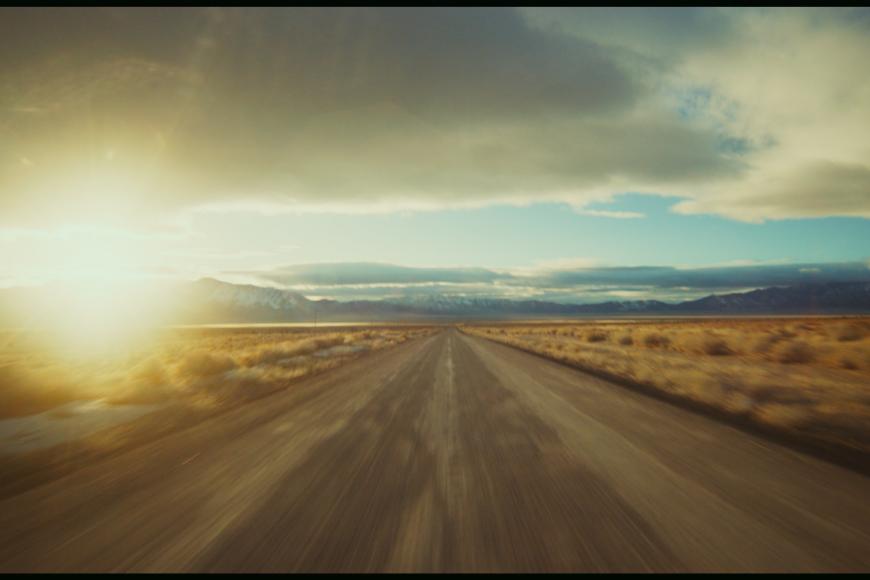
The curious and the harrowing in the sparsely populated desert of Nevada with its subterranean water reservoirs. An atmospheric film about how freedom is defined in the US.
Chivas DeVinck works his way up from the soil to the stars to find out what constitutes Nevada outside of Las Vegas. Milieus, places and people are intertwined in a collage. The magnetic core of the whole is the subterranean water from which everything seems to grow and for which everyone strives. What looks like an arid desert landscape or a sleepy little town from afar, turns out on closer inspection to be an atmospheric representation of the rural U.S.
Just before the COVID pandemic brought the whole world to a standstill, DeVinck captures the curious, the mundane and the harrowing in White Pine County in eastern Nevada. There are well-nigh endless community meetings about dog-keeping issues, and farmers who talk to their Peruvian shepherds in appalling Spanglish. There are droning radio shows nobody may listen to anyway, and special church services for sex workers. But people are also preoccupied with explosive political issues: the distribution of water supplies in the arid region, the thirty-year dispute over the construction of a water pipeline to Las Vegas, the continuing discrimination against the indigenous people. Resonating in all this is the myth of the US concept of freedom, manifesting itself in gun possession, the idea of every man for himself and an unwavering faith in the healing powers of capitalism.
Kim Busch
Credits
Director
Chivas DeVinck
Cinematographer
Yoshio Kitagawa
Editor
Matthieu Laclau, Yann-Shan Tsai
Producer
Chivas DeVinck
Sound
Danfeng Li
Score
Felicia Atkinson
Nominated for:
Prize of the Interreligious Jury,
FIPRESCI Prize