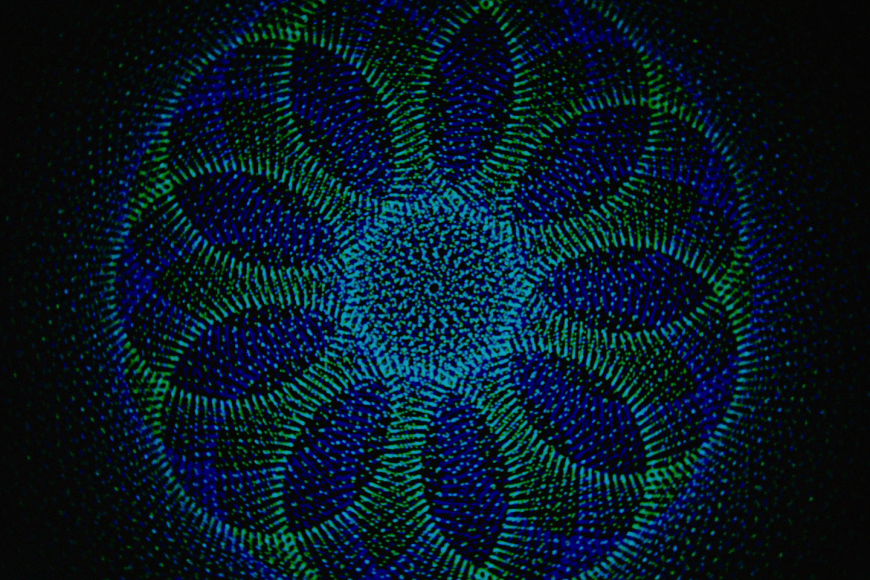
Myriads of dots orbit the kaleidoscopic centre to the sweeping sound of a sitar. A breathtaking piece of visual music, realised by means of early computer animation.
To the sweeping sound of a sitar, thousands and thousands of dots orbit a kaleidoscopic centre, like the individual notes of a raga circle the keynote. Repeated graphic patterns blossom and crumble back into the mass. As traditional as the reference points for James Whitney's breathtaking visual music were, the realisation with early computer animation by his brother John Whitney was just as innovative.
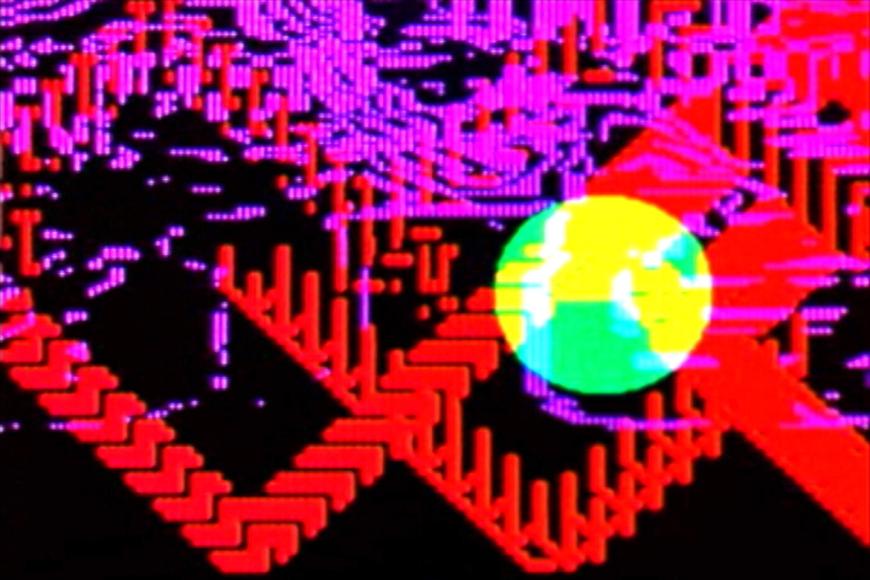
Rectangular shapes in brilliant colours proliferate in a black void. The pioneer of computer animation uses 2D programming language to simulate strange fantastic galaxies.
Rectangular shapes in luminous colours proliferate in a black void. They resemble phosphenes, the subjective perceptions of lights that can appear when we rub our closed eyelids. Coloured round surfaces circle each other, even though they live in separate graphic worlds. Lillian Schwartz, pioneer of computer animation, uses the EXPLOR 2D programming language to simulate strange and fantastic galaxies.