Valentyna and her bed-ridden mother live on a small farm surrounded by the evergreen, lush flora of the rain forest. The works and thoughts of the poet and the artist, though, are filled with the landscapes of their old home, Ukraine. Memories of snow and birch trees, thistles and orchids, vegetable gardens and their animal residents come to life in Tamara’s poems and Valentyna’s drawings.
Life flows quietly in the small house in the middle of nowhere. Valentyna takes care of the few animals, milks the cows, makes cheese, cares for her mother. The photos on the chest of drawers, the allusions to the Chernobyl disaster only hint at why the two left Ukraine a long time ago. But what they left behind still lives in exile. One wonders whether she, the celebrated poet, still remembers her writings? Mother and daughter are as gentle with each other as the film’s gaze on the two women, their animals and surroundings. Without a trace of nostalgia, cinematographer Mariano Maximovicz’s images let us see not only the beauty of the landscapes we live in but also of those that live on in our minds.
Marie Kloos
Credits
Director
Hernán Fernández
Script
Constanza Sandoval, Hernán Fernández
Cinematographer
Mariano Maximovicz
Editor
José Goyeneche
Producer
Maca Herrera Bravo
Sound
Julián Caparrós
Score
Serguéi Rajmáninov
Nominated for:
FIPRESCI Prize,
Prize of the Interreligious Jury
When Mizu discovers a small plant in the forest, she goes there every day to water it. The years pass by, the little seedling becomes a big tree, Mizu a big girl, and one day they are both grown-up. But then a big rain comes that seems to go on forever. When the forest is flooded, Mizu must save herself. She takes refuge in her tree.
Luciano lives in an impoverished neighbourhood in Argentina: everyday life with mother and sister, job hunting, hormone injections. A sensitive film about gender, origins and getting on with life.
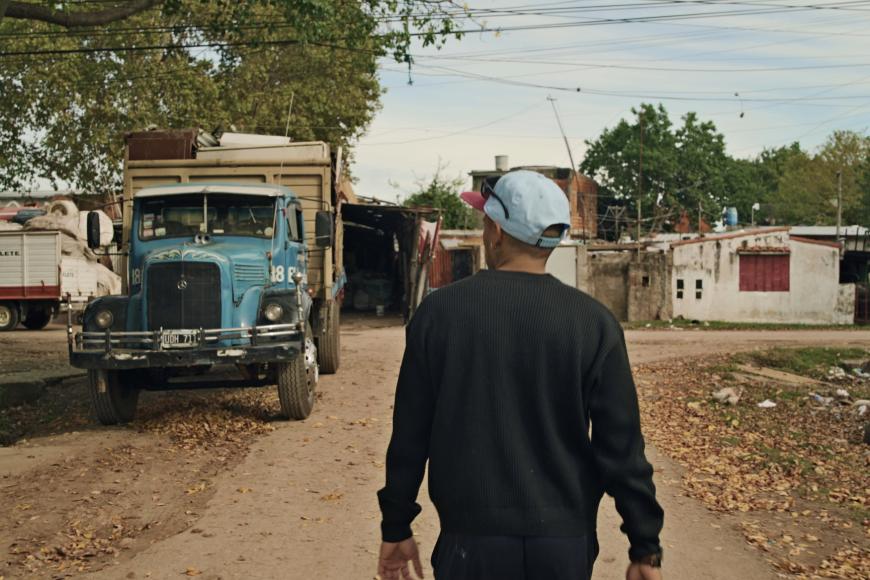
Luciano cuts a slight figure as he wanders through the narrow streets of the improvised Barrio Tablada on the edge of Rosario, taking care of his mother and sister and the makeshift home they share, finding occasional work on building sites as the search for a proper job continues, lifting weights at the gym. Manuel Besedovsky lays out the different episodes of this precarious, if not atypical existence with such deliberate deemphasis that it feels almost like a plot twist when Luciano meets with a consultant to talk about the various options for constructing a penis. And yet this part of Luciano’s experience has actually been there all along – another thread woven often imperceptibly into the fabric of the film with gentleness and care. Handing CVs out, hormone injections, smoking joints with buddies from the neighbourhood, talking to his mother about the daughter that is no longer there, some slightly awkward rapping, thinking about having children – the most radical thing about this portrait is how each challenge, each diversion, each encounter is presented with the same sense of normality with which Luciano experiences it. Class, gender identity and their seldom-seen intersection shown as nothing more than getting on with life.
James Lattimer
Credits
Director
Manuel Besedovsky
Script
Manuel Besedovsky
Cinematographer
Tomás Pasini
Editor
Marina Sain (EDA)
Producer
Pablo Romano, Juan Diego Kantor, Guillermo Willy Berman, Nicolás Capola, José Salvia
Sound
Verónica Brunello, Jimena Chaves
Sound Design
Fernando Romero de Toma (ASA)
Score
Guillermo Pesoa
World Sales
Alfredo Calvino
Nominated for:
Silver Dove,
Prize of the Interreligious Jury,
FIPRESCI Prize