Film Archive

International Competition Documentary Film 2024

Things of a Lifetime, Intimate Archeological Exercises

Céline Ségalini
Céline arranges objects in the house of her deceased grandmother. It is an attempt to understand her better – her relationship to her own identity and France’s colonial history.

Filmstill Things of a Lifetime, Intimate Archeological Exercises

Things of a Lifetime, Intimate Archeological Exercises

Les choses d’une vie, exercices d’archéologie intime
Céline Ségalini
International Competition Documentary Film 2024
Documentary Film
France
2024
50 minutes
French
Subtitles: 
English
The filmmaker’s grandmother moved into this house in 1971. When Rolande Ségalini died, everything remained as it was during her lifetime. But what to do with all the accumulated things? As her granddaughter Céline begins to film this material legacy, she realises that her grandmother has remained an enigma to her to this day. Room by room, she inventories, classes, counts, sorts the possessions retrieved from wardrobes, drawers, cabinets and boxes and arranges the objects into new still lives. It is an attempt to understand the deceased woman better and find out more about her. Step by step, the heiress discovers various connections to France’s colonial history.
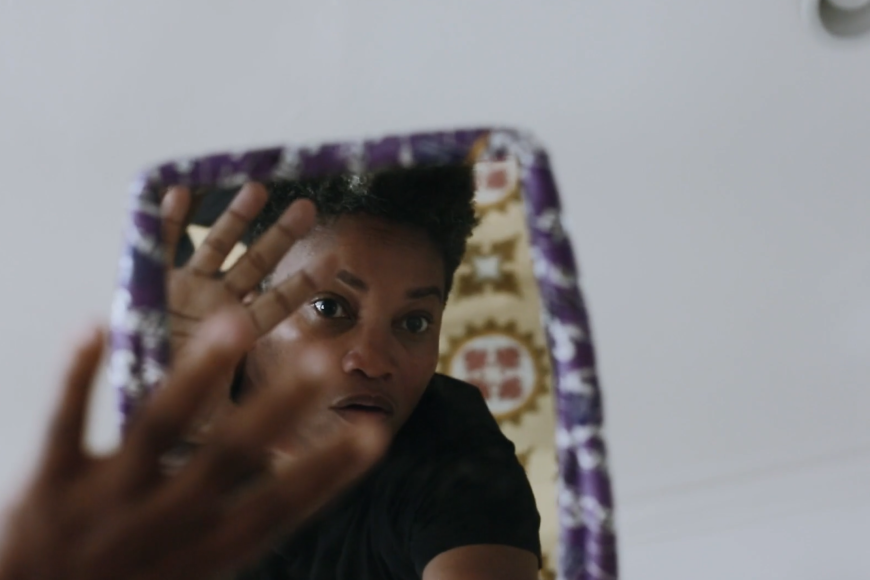
The film unfurls the facets of a discreet relationship with one’s origin – searching, questioning, interpreting, at the same time investigating the construction and external perception of identity, the practice of passing. The things of a life, displayed like the findings of an archaeological dig, are laid out ready to be analysed. They express a desire: to be recognised as a white Frenchwoman.
Seggen Mikael

Credits DOK Leipzig Logo

Director
Céline Ségalini
Cinematographer
Pierre Nativel, Christophe Leroy, Céline Ségalini
Editor
Anne-Laure Viaud
Producer
Marc Faye, Magali Hériat
Sound
Christophe Leroy
Sound Design
Loïc Villiot
Nominated for: Silver Dove, Prize of the Interreligious Jury, FIPRESCI Prize
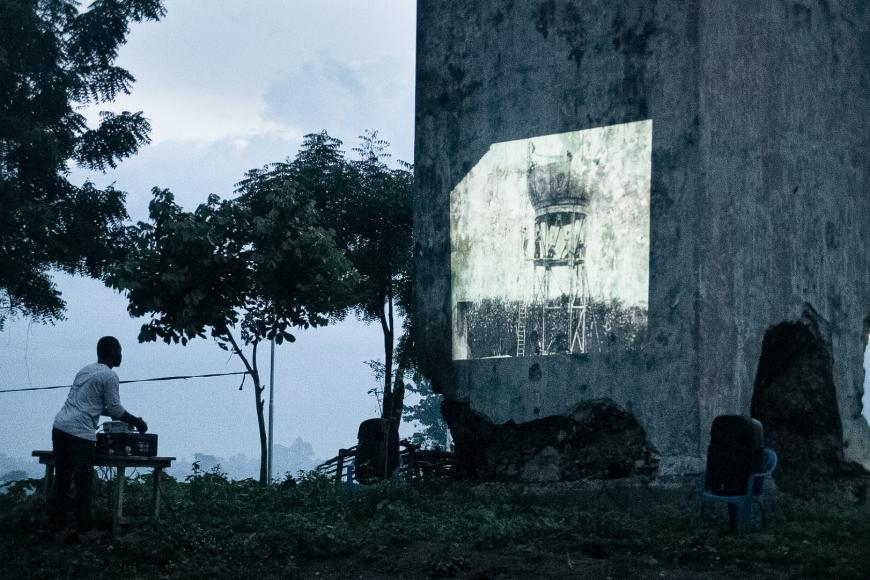
Filmstill Togoland Projections

Togoland Projections

Togoland Projektionen
Jürgen Ellinghaus
German Competition Documentary Film 2023
Documentary Film
France,
Germany,
Togo
2023
96 minutes
French,
German,
English,
Ife,
Tem,
Anufo,
Bassar,
Kabiyé,
Dagbani,
American Sign Language,
Konkomba
Subtitles: 
German, English
Following in the footsteps of the Hamburg film director Hans Schomburgk who travelled through the German colony of Togo from Lomé to the north with his companion and actress Meg Gehrts in 1913, Jürgen Ellinghaus screens the footage shot then at its locations in modern-day Togo. Schomburgk’s affirmative images show slave labour, humiliation and the arrogance of the colonial power. The material is contrasted by Gehrts’ romanticising diary entries and other colonial reports which often testify to a horrifying coldness.

The screenings of this material, which has never been shown in Togo before, prompt the audiences to reflect on tradition, stereotypes, the “white gaze.” In the villages, the colonial images conjure up memories of handed down stories. In the metropolis of Lomé, young film enthusiasts deplore that these images were kept from them until today and discuss in which contexts they should be screened. But “Togoland Projections” not only shows how much these painful documents and texts are needed in contemporary Togo, because they are part of the country’s history. The film also demonstrates that they are needed in Germany so we can take responsibility for our suppressed history and face our own racism – past and present.
Christoph Terhechte

Credits DOK Leipzig Logo

Director
Jürgen Ellinghaus
Script
Jürgen Ellinghaus
Cinematographer
Rémi Jennequin
Editor
Nina Khada
Producer
Frédéric Féraud
Co-Producer
Peter Roloff, Madjé Ayité
Sound
Caled Boukari
Sound Design
Anders Wasserfall
World Sales
Stephan Riguet
Commissioning Editor
Rolf Bergmann
Funder
nordmedia Film- und Mediengesellschaft mbH Niedersachsen/Bremen, Centre national du cinéma et de l'image animée
Narrator
Jürgen Ellinghaus
Nominated for: Goethe-Institut Documentary Film Prize, Leipziger Ring, VER.DI Prize for Solidarity, Humanity and Fairness
Homage: Dominique Cabrera 2024

Tomorrow and Again Tomorrow

Dominique Cabrera
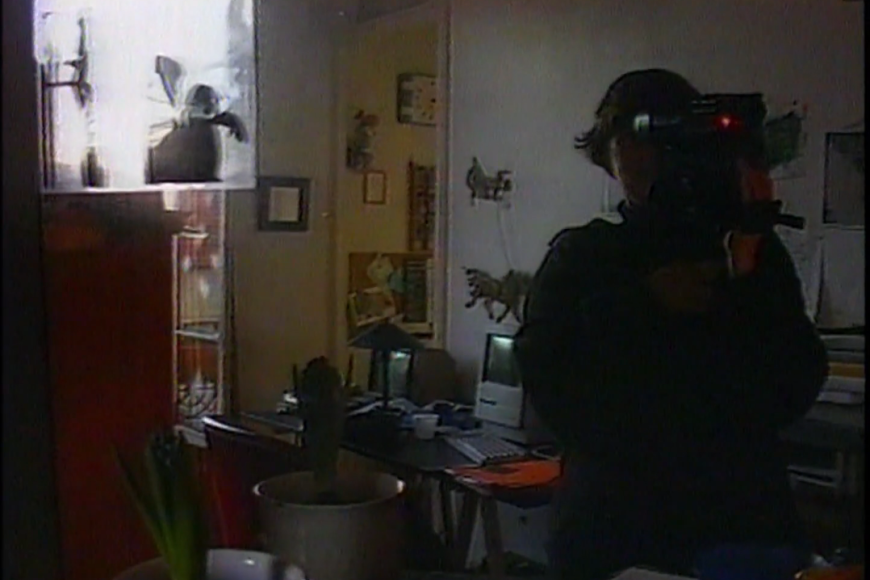
A radically personal video diary that deals with Cabrera’s fears and joys but always remains universally valid: autobiography, not self-centred but society-centred.
Filmstill Tomorrow and Again Tomorrow

Tomorrow and Again Tomorrow

Demain et encore demain
Dominique Cabrera
Homage: Dominique Cabrera 2024
Documentary Film
France
1997
79 minutes
French
Subtitles: 
English
The 1990s were the heyday of the lightweight and affordable Hi8 cameras, a time that brought forth many first-person documentaries. Unlike most of these films, Cabrera’s diary, shot in 1995, is not a purely introspective work. She focuses primarily on the others: her adolescent son, her ex-husband and her new love, her mother and the strangers on the train and in the streets. Her form of autobiography is always collective, social, polyphonic. It is only the other’s gaze, the returned gaze, that makes understanding and insight possible. The camera serves as a catalyst of communication, creating trust and distance at the same time, opening eyes and ears.
Christoph Terhechte

Credits DOK Leipzig Logo

Director
Dominique Cabrera
Cinematographer
Dominique Cabrera
Editor
Réjane Fourcade
Producer
Sylvie Blum, Gérald Colas, Claude Guisard
Sound
Dominique Cabrera
Media Name: 61a93d79-291b-4752-9822-a3271564052f.jpg

Trouble Sleep

Trouble Sleep
Alain Kassanda
International Competition Short Film 2020
Documentary Film
France,
Nigeria
2020
40 minutes
English,
Yoruba
Subtitles: 
English
While the transaction tax collectors seem to be dancing to jazz music, a pointedly staged text passage by Patrick Chamoiseau lets not only our visual and auditory but also our olfactory senses unfold: The third-largest Nigerian city can be experienced by smell. In this rhythmic portrait of life in Ibadan the urban cinematic poetry is by no means at odds with the profundity with which it captures themes like lack of perspective, globalisation and corruption.
Borjana Gaković

Credits DOK Leipzig Logo

Director
Alain Kassanda
Script
Alain Kassanda
Cinematographer
Alain Kassanda
Editor
Alain Kassanda
Producer
Alain Kassanda
Sound
Alain Kassanda
Score
Florent Dupuit, Jr EakEe
Winner of: Golden Dove Short Documentary (International Competition Short Film)
Filmstill Twice into Oblivion

Twice into Oblivion

L’oubli tue deux fois
Pierre Michel Jean
International Competition Documentary Film 2024
Documentary Film
France,
Haiti,
Dominican Republic
2023
100 minutes
French,
Haitian Creole,
Spanish,
English
Subtitles: 
English
In 1937, Dominican dictator Rafael Leónidas Trujillo ordered the murder of the Haitian population of the Dominican Republic. Tens of thousands were brutally killed. A language test made the difference between life and death: The Creole-speaking Haitians who could not pronounce the Spanish word “perejil” had to die, which is why this genocide went down in history under the innocuous name of “Parsley Massacre.” Until today, the region is marked by deep traumatisation, racism and classism, which are linked to the colonialist past of this two-state island.
Haitian filmmaker Pierre Michel Jean approaches this rarely examined subject with great delicacy and succeeds in creating a history lesson that combines different historiographies – from factual research to problematic narrative constructions through to the haunting testimonies of the last survivors – in a kind of montage of knowledge. At the same time, his documentary addresses the complexity of collective guilt and the important question of who can and should say “mea culpa” today, more than eighty years later. A performance workshop organised by theatre director Daphné Ménard, which brings together artists from both states, and the memories of the elderly Henry Noncent form the heart of this filmic monument whose empathy makes it compelling.
Borjana Gaković

Credits DOK Leipzig Logo

Director
Pierre Michel Jean
Cinematographer
Pierre Michel Jean, Louvenson Saint Just, Réginald Louissaint Jr
Editor
Marie Bottois
Producer
Maud Martin, Lysa Heurtier Manzanares
Sound
Jeannis Bazelais, Macaisse Bellegarde
Sound Design
Brice Kartmann, Marie Moulin
Nominated for: Prize of the Interreligious Jury, FIPRESCI Prize, Leipziger Ring, Silver Dove
Winner of: Prize of the Interreligious Jury, Silver Dove Feature-Length Film (International Competition Documentary Film)