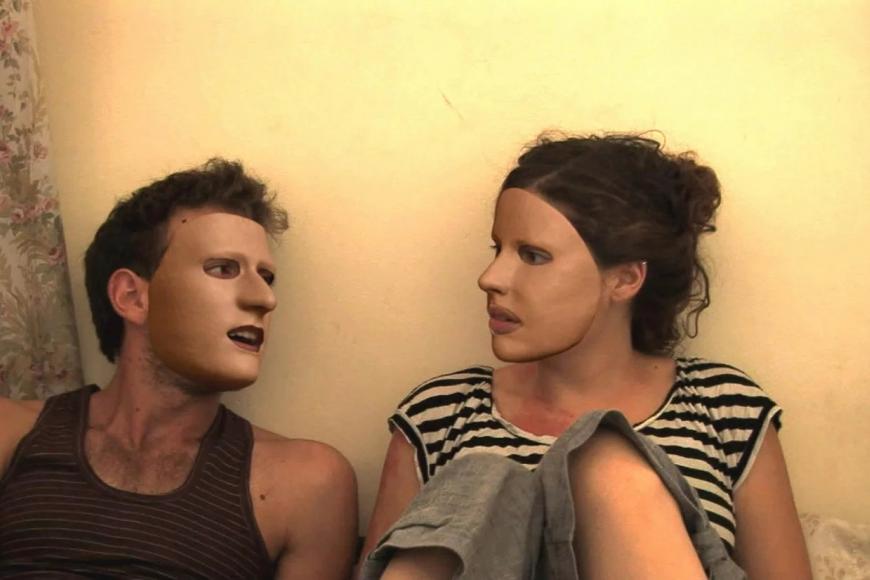
Mutated creatures wobble in the void, police voices strike like truncheons. The bodies fight back, generating an indelible energy field of radical feminist protest.
Four creatures wobble like marionettes in the black void. An alien power tries to subdue them, police voices strike like truncheons. Bent, with bulging or thread-thin limbs, their skin turned inside out – human anatomy has mutated. But these vulnerable bodies start to fight back … “Scum Mutation” takes us into the battle zone without protection, into an indelible energy field of radical feminist protest – and becomes a resounding beacon of reconquest.
André Eckardt
Credits
Director
Ov
Script
Ov
Editor
Ov
Producer
Le Fresnoy – Studio national des arts contemporains
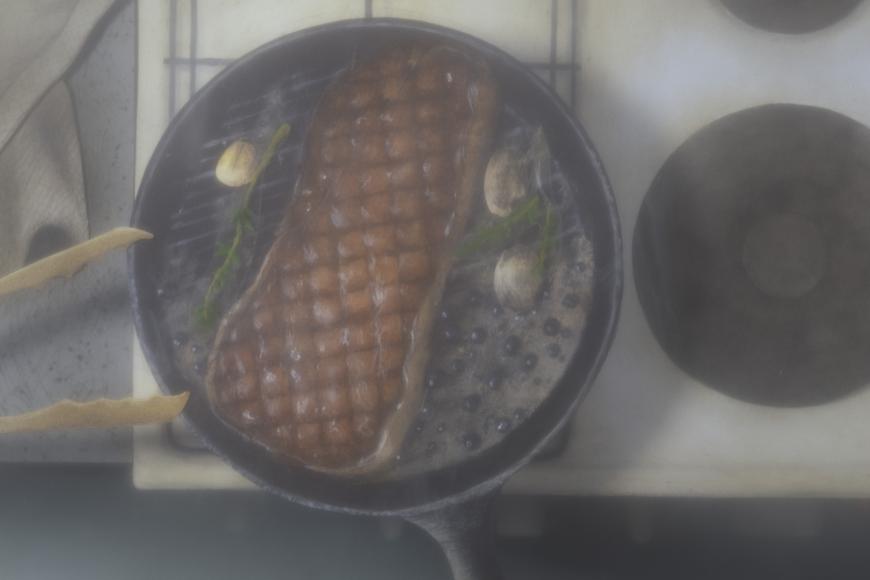
He and she are a good team. What was intended as a pleasant evening for two becomes overshadowed by an acrid cloud of roast fumes and ends civilized, but bloody. Black humour, “well done”.
Coupledom has its own dynamics. Her professional obligations do not tick by the clock, his cooking and love are extraordinary, but, alas, precisely timed. This all too familiar incompatibility is condensed into murky, acrid roast fumes and ends civilized, but bloody. Špela Čadež gradually slows down the pace, creating a space for the absurd goings-on to penetrate deeper and deeper. Black humour, “well done”.
André Eckardt
Credits
Director
Špela Čadež
Script
Gregor Zorc
Cinematographer
Špela Čadež
Editor
Iva Kraljevic
Producer
Tina Smrekar, Špela Čadež
Co-Producer
Emmanuel-Alain Raynal, Pierre Baussaron, Fabian Driehorst
“Stripsody” is based on a score of onomatopoetic elements and cartoon language quotes. The solo voice swings on a liana: past the “achoo” to the “boinnnggg”.
The musical piece “Stripsody” for solo voice was created in a collaboration between mezzo-soprano Cathy Berberian and comic book author and illustrator Roberto Zamarin. The score unites onomatopoetic elements, cartoon language and action sequences. Berberian’s magnificent voice takes up the dynamics of the images, swinging on a liana: past the “achoo” to the “boinnnggg”.
The last archivist secures artefacts of a civilization that is collapsing outside in the real world. A documentary science fiction in the field of tension between image and sound.
Photographs are dusted, records cleaned, insects removed from books and everything is digitized for eternity. The matter-of-fact shots of fastidious archival work, though, are combined with the voice of a young woman who reports on the collapse of civilization, the fragile artefacts of which she secures as the last human being left in the “Congress”. In the field of tension between image and sound a space for our imagination opens up.
The First 54 Years – An Abbreviated Manual for Military Occupation
Avi Mograbi
Why and for what purpose does politics resort to the model of “military occupation”? Avi Mograbi uses the example of “Israel-Palestine” to explain its standard mechanisms and aporias.
The archived testimonies of “Breaking the Silence”, an association of military veterans, are to be turned into a compilation of “service incidents” in the Israeli-occupied territories. But Avi Mograbi confesses: “My films tend to get complicated, even when my intention is to make a very simple film.” His reaction to a complex doom is artistically and intellectually commensurate: complex. Once again he uses a built-in commentary function in which he himself, white-bearded, explains the tricky situation to his audience: not as a special “Israel-Palestine” case, but as the bitter standard application of the globally familiar aporetic model of “military occupation”.
Sylvia Görke
Credits
Director
Avi Mograbi
Script
Avi Mograbi
Cinematographer
Tulik Gallon, Philippe Bellaiche
Editor
Avi Mograbi
Producer
Camille Laemlé, Serge Lalou
Co-Producer
Annie Ohayon-Dekel, Fabrice Puchault, Heino Deckert, Leila Lyytikäinen, Elina Pohjola, Farid Rezkallah, Anne Grolleron, Avi Mograbi
Veteran Israeli soldiers organize themselves as an NGO to criticize military conduct in the Occupied Territories. Heated discussions follow, and no easy answers.
English, German Subtitles for deaf and hard-of-hearing
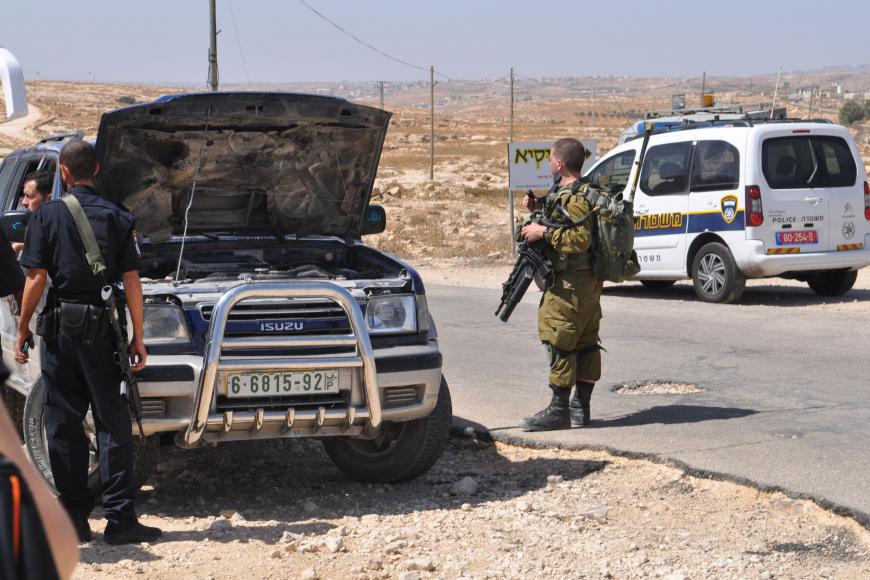
The NGO “Breaking the Silence” – BtS for short – consists of veteran Israeli soldiers who, by collecting personal accounts of their memories, want to raise awareness of everyday military life and the treatment of the population in the Occupied Territories. Director Silvina Landsmann’s film allows us a look behind the scenes of a contested group with a controversial approach in the midst of a conflict that’s been smouldering for more than 70 years.
What makes a good soldier? The ability to execute orders without scruples, or the consideration of higher moral goals when dealing with the enemy? For many members of BtS, the latter was only possible after active military service. In their work, they engage with operations and acts that in retrospect seem wrong to them. They address the Israeli population and foreign media with videos, lectures and city tours. The streets of Hebron are the site of frequent clashes between BtS, Israeli settlers and the army. On the political level, too, the organisation is harshly criticized. They are accused of fabricating stories, damaging Israel’s reputation and playing into the hands of anti-Semites. Landsmann observes with a cinematic, sober eye how the group struggles internally and externally to find its voice.
Kim Busch
Credits
Director
Silvina Landsmann
Cinematographer
Silvina Landsmann
Editor
Tal Shefi
Producer
Silvina Landsmann, Pierre-Olivier Bardet
Co-Producer
Christoph Menardi
Sound
Ami Arad, Guy Barkay, Nadir Fleishman, Zohar Cheppa, Tully Chen
An abandoned amusement park offers a secret real-life retreat for young people in Casablanca. They escape their restrictive society digitally into the Internet to soak up international trends and amplify themselves. A camera floats through the tableaux vivants they have formed. Their eyes are frozen, the self-chosen poses seem undead.
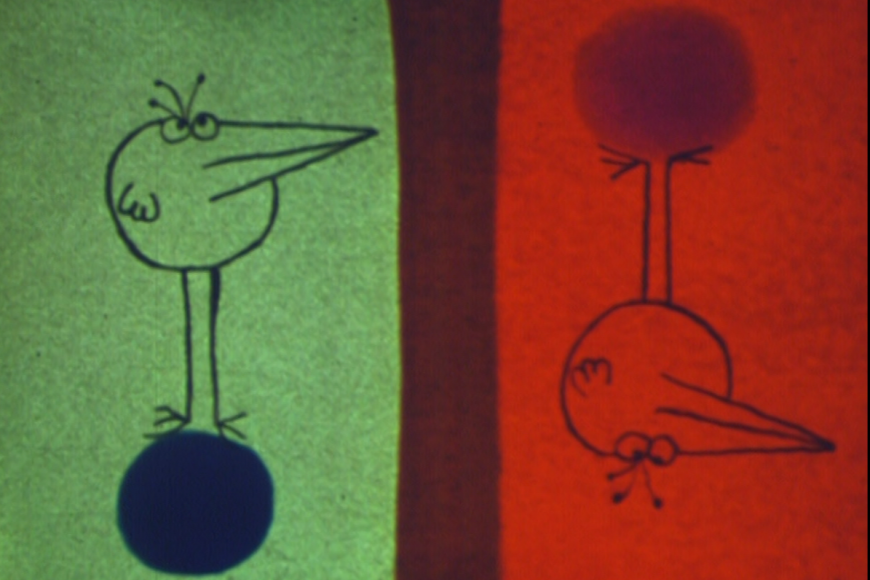
At the end of the first Space Age wave, bird-like and bowler-hatted creatures enter the TV screen. The Shadoks and the Gibis live on distant two-dimensional planets. Jacques Rouxel’s absurdly funny, minimalist animated science fiction world of drawings is spiked with the electro-acoustic, cartoon-like, extra-terrestrial sounds of the composer Robert Cohen-Solal, well-versed in musique concrète.
The fictional story of a scientific experiment: The scientist Roderick Norman extracts dreams from a skeleton, which raises questions of gender identity.
How are we shaped by our DNA? The 360° film tells the story of fictional scientist Roderick Norman, who tries to extract dreams from an unidentified skeleton that are inscribed in the blueprint of this ruin of a body. This black and white collage of text, 3D images and traditional film footage questions our conventional understanding of gender and identity.
Lars Rummel
Credits
Producer
Le Fresnoy – Studio national des arts contemporains
Co-Producer
Caza d’Oro – Centre International d'Art Contemporain
Since the end of the civil war in the early 1990s, the region of Abkhazia has been acting independently of Georgia. This has turned a massive dam into a border. But the hydroelectric power station also connects the two political entities: Because over a distance of fifteen kilometres the water flows freely, underground, from one side to the other. When a young journalist gets stranded here, stories of division emerge.
On the way back from a reportage trip to the dam, director Maradia and her cameraman’s car breaks down. Ika takes care of them. For decades, the joyous engineer has worked – in cooperation with his colleagues on the Abkhazian territory – on the maintenance of the plant. Maradia, representative of a whole generation of Georgians who know this place of longing on the Black Sea only from stories, becomes curious. But while the workers take the bus across the border every morning, the film crew is thwarted by bureaucracy. Time and again they are denied passage. This turns out to be fortunate for the film, because waiting for the permission, in the cafeteria of the dam, in drives around the river, the stories of people emerge whose lives are shaped by the secession. They talk of legal and clandestine border crossings, weddings and funerals and of life in the here and there.
Marie Kloos
Credits
Director
Maradia Tsaava
Script
Maradia Tsaava
Cinematographer
Nik Voigt
Editor
Maradia Tsaava, Anne Jochum, Jérôme Huguenin-Virchaux
English, German Subtitles for deaf and hard-of-hearing
On Guadeloupe, an archipelago in the Caribbean, the past speaks up. Sylvaine Dampierre has the workers of an old sugar refinery read passages from the transcripts of an 1842 court case, while the machines roar and groan in the background. The testimonies of the slaves from back then in the rusty halls of today give rise to a polyphony both explosive and poetic in nature.
The “Grande Anse” sugar refinery is a monster from a distant past: Flames like long tongues spew from the furnaces, piles resembling bones everywhere. The workers cut them with machetes in the plantations of Marie-Galante, a tiny island that belongs to the archipelago of Guadeloupe. The long bones, the sugar cane, are the scaffold that keeps everything together here. Sylvaine Dampierre is in the thick of it, shows the pulsating factory and the hard labour that goes on inside. Seasonal workers come and go; the men organize themselves. They are free. There are occasional flashes of the peculiar bond with France, of which this overseas territory is an integral part, but Dampierre foregrounds the transcripts of a court case from almost two hundred years ago, in which slaves testified against their violent master. An act of self-empowerment, whose gestus the director brings into dialogue with the present.
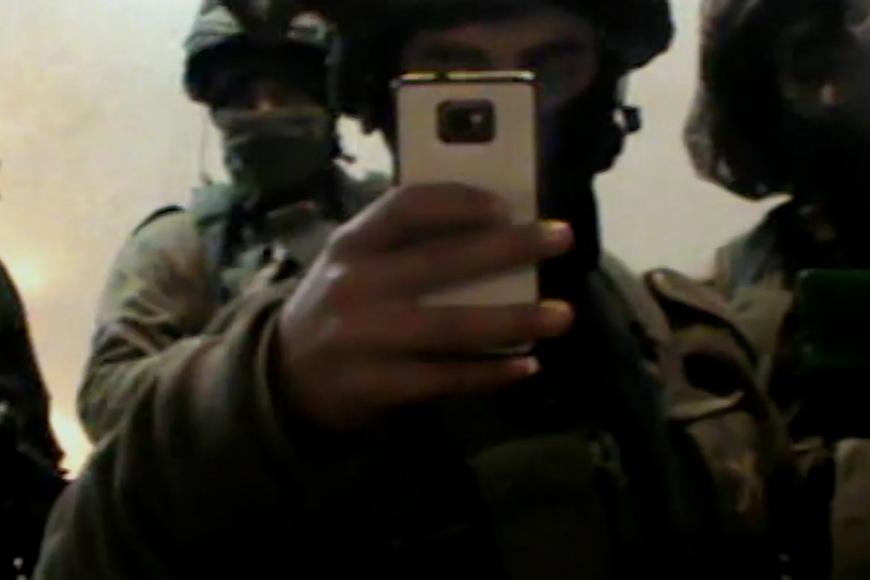
An ex-soldier of the Israeli army declares himself complicit in the killing of Palestinians. He faces a filmic cross examination which Avi Mograbi comments on in song.
Under file entry Z32, the testimony of a former elite soldier of the Israeli army is preserved. He confesses to having participated in the killing of Palestinians. Was it a breach of duty resulting from high spirits, collateral damage of the Israeli-Palestinian conflict or the self-fulfilling prophecy of every military training? Avi Mograbi uses the testimony and his own disturbance as an occasion to re-interrogate the confessor who is made anonymous by image manipulation. He calls his cross examination a “documentary musical tragedy”, because he sings his comments right into the experimental interrogation room: “Oy, I’m harbouring a murderer, oy, inside my film.”