Film Archive

International Competition 2021

A Custom of the Sea

Fabrizio Polpettini
Three friends explore the radiance of the Mediterranean, which connects Christian and Islamic countries and has always been and still is a site of conflicts.
Media Name: d3e99bf9-067c-40ac-89ba-43866d355b28.png

A Custom of the Sea

Un usage de la mer
Fabrizio Polpettini
International Competition 2021
Documentary Film
France
2021
52 minutes
Arabic,
English,
French,
Italian
Subtitles: 
English, German Subtitles for deaf and hard-of-hearing
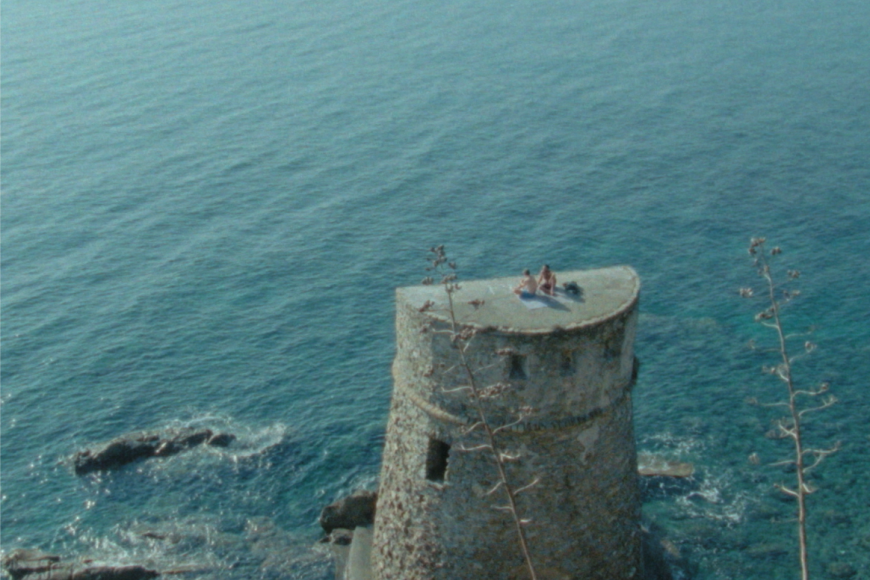
Porto Maurizio, where the director, who lives in France today, grew up, is located on the Ligurian coast. The village is the starting point for a cinematic journey into the past that spans a surprisingly wide arc to a time when Muslim pirates, the corsairs, haunted the Mediterranean and took Europeans as slaves. To this end, the film light-handedly draws from the rich fund of film history and its iconography.
Adventure films from the 1940s and historical murals depict the naval battles of the early 19th century in powerful images. The director ingeniously combines such visual finds with analogue new recordings of a journey with two friends. Their seemingly loosely told anecdotes and chance encounters combine to form a coherent whole, forming a geopolitical system of coordinates around the Mediterranean that deals with eurocentrism, colonial history and religiously motivated conflicts between Christian and Islamic countries. The subjects couldn’t be more topical.
Annina Wettstein

Credits DOK Leipzig Logo

Director
Fabrizio Polpettini
Cinematographer
Valentina Provini
Editor
Marylou Vergès
Producer
Fabrizio Polpettini
Co-Producer
Pierre-André Belin
Media Name: db390b6f-607c-4480-bfe4-a0c2865fa1d2.jpeg

Conversations with Siro

Conversations avec Siro
Dima El-Horr
International Competition 2021
Documentary Film
Lebanon,
France
2021
52 minutes
Arabic,
French
Subtitles: 
French, English
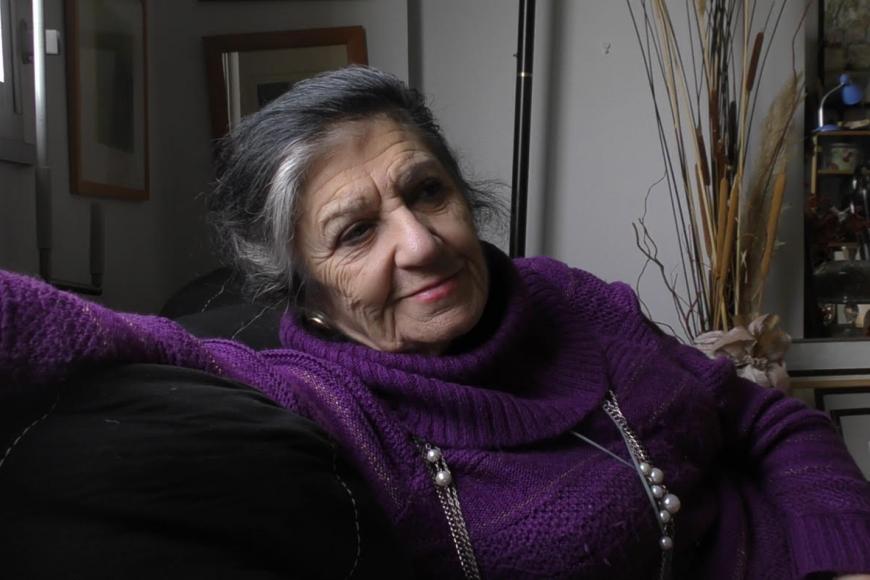
Lebanese filmmaker Dima El-Horr moved to Paris several years ago. Among the friends who stayed at home is the artist Sirvat Fazlian, whom she regularly visits in Beirut until the failed revolution of 2019, the COVID lockdown, the devastating port explosion and finally the dramatic economic crisis put a temporary end to their meetings. So the director decides to give her conversations with Siro a cinematic form.
Ever since the death of her husband, the well-known Armenian actor Berj Fazlian, Siro has lived alone in a flat filled with souvenirs and devoted most of her time to music and painting. In this film, footage from the years before 2019 blends with recorded phone calls between Siro and Dima and recent scenes from Paris, coming together in a densely woven portrait of life in exile. While snow falls in Paris, Siro talks about warm days on the Mediterranean coast and sings Armenian songs. She rails against the permanent crisis in Lebanon, but her nature is not affected. For one thing, Siro personifies the legendary Lebanese resilience. Yet for the filmmaker she represents that part of the heart that people in exile leave behind. So almost inevitably, “Conversations with Siro” becomes the director’s dialogue with herself.
Christoph Terhechte

Credits DOK Leipzig Logo

Director
Dima El-Horr
Cinematographer
Dima El-Horr
Editor
Catherine Zins
Producer
Paul Rognoni, Sabine Sidawi
Sound
Jean-Pierre Dussardier
Nominated for: FIPRESCI Prize, Prize of the Interreligious Jury
International Competition 2021

May God Be with You

Cléo Cohen
The young Frenchwoman Cléo Cohen has an identity crisis: Is she Jewish? Arab? Even her grandparents seem unclear about this. Cléo struggles for clarity: intensely, playfully.
Media Name: 9e63b2d2-e42d-429b-a026-e5a321e26a5a.jpeg
Media Name: c40aa093-3242-45d5-9320-2be7c122b331.jpeg

May God Be with You

Que Dieu te protège
Cléo Cohen
International Competition 2021
Documentary Film
France
2021
77 minutes
French
Subtitles: 
English, German Subtitles for deaf and hard-of-hearing
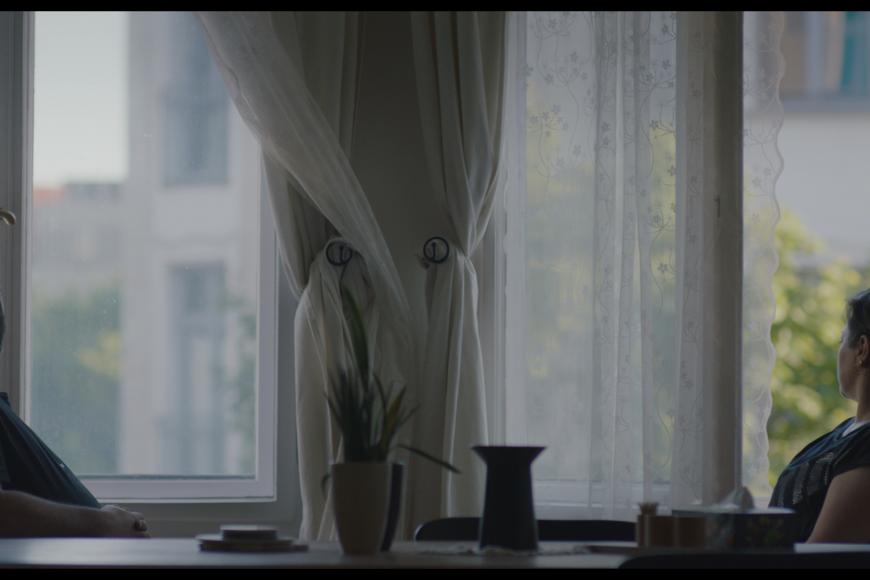
The director makes an attempt to locate herself, because historical erosions in society and politics have led to an identity crisis for Cléo Cohen, a young Frenchwoman. Is she Arab? Jewish? She struggles for clarification, aided by her grandparents, who all emigrated from the Maghreb to France as Jews. The questioning is playful, but determined. Cléo awakens memories, confronts, muses in the bathtub.
Cléo wants to find out from her grandmother Flavie whether she’s “sedje”, able to marry. Flavie reacts evasively. Her sister would definitely be, Flavie thinks, and Cléo, too, knows roughly how to go about things. But she doesn’t seem entirely convinced. Cléo Cohen is in the middle of a process of discovery. Her grandparents play a role in this. While some came to France as Algerian Jews, others relocated from the neighbouring country of Tunisia, also as Jews. Cléo is confused. Denise’s native tongue, for example, is Arabic, she knows Arabic cuisine, but she’s not an Arab? Cléo talks to everyone, shoulders her way briskly but warmly into the past. She reads the writings of Albert Memmi, who grew up in Tunis as the son of Jewish parents under French colonial rule; she listens to Philippe Katerine’s song “Juifs arabes”. She travels to Tunisia.
Carolin Weidner

Credits DOK Leipzig Logo

Director
Cléo Cohen
Cinematographer
Cléo Cohen
Editor
Saskia Berthod
Producer
Rebecca Houzel, Maria Knoch
Sound
Gilles Bénardeau
Score
Patrick Bismuth
World Sales
Pascale Ramonda
Executive Producer
Petit à Petit Production
Winner of: Prize of the Interreligious Jury
Media Name: 3ba06c00-5868-4888-8ae9-f424a56ef0bd.jpg

Republic of Silence

Republic of Silence
Diana El Jeiroudi
International Competition 2021
Documentary Film
France,
Germany,
Italy,
Qatar,
Syria
2021
183 minutes
Arabic,
English,
German,
Kurdish
Subtitles: 
English
Silence reigns in the Berlin flat, but the film, whose complex montage encompasses the disintegration of Syria and life in exile, leaves no doubt that things are different in director Diana El Jeiroudi’s mind. Archival footage, loose portraits of confidants and an intimate perspective that explores her own position and her way of coping with trauma add up to a multi-layered document.
“Evil has a very loud and terrifying sound,” El Jeiroudi already noted as a child. Growing up in a country marked by surveillance and military parades has left its mark. In “Republic of Silence”, she looks for a way to come to terms with it, condensing old material, some of which shot in Syria, with a written monologue and stories of persons who also chose exile in the course of the civil war. The result is a complex filmic space that reveals the political and social disintegration of a nation. El Jeiroudi increasingly concentrates on showing a present outside Syria, life in emigration. Passing her husband's  nocturnal teeth grinding, birthday parties and disruptions in the international film festival scene, a life between tension and new beginnings becomes apparent.
Carolin Weidner

Credits DOK Leipzig Logo

Director
Diana El Jeiroudi
Script
Diana El Jeiroudi
Cinematographer
Sebastian Bäumler, Diana El Jeiroudi, Orwa Nyrabia, Guevara Namer
Editor
Katja Dringenberg, Diana El Jeiroudi
Producer
Orwa Nyrabia, Diana El Jeiroudi
Co-Producer
Camille Laemlé
Sound
Raphaël Girardot, Nathalie Vidal, Pascal Capitolin
Winner of: Goethe-Institut Documentary Film Prize, Honourable Mendtion (International Competition)
Media Name: 16a1d127-621d-4889-9a4d-453d33eafc47.jpg

Water Has No Borders

Tskals sazghvrebi ar akvs
Maradia Tsaava
International Competition 2021
Documentary Film
France,
Georgia
2021
85 minutes
Georgian,
Russian
Subtitles: 
English
Since the end of the civil war in the early 1990s, the region of Abkhazia has been acting independently of Georgia. This has turned a massive dam into a border. But the hydroelectric power station also connects the two political entities: Because over a distance of fifteen kilometres the water flows freely, underground, from one side to the other. When a young journalist gets stranded here, stories of division emerge.
On the way back from a reportage trip to the dam, director Maradia and her cameraman’s car breaks down. Ika takes care of them. For decades, the joyous engineer has worked – in cooperation with his colleagues on the Abkhazian territory – on the maintenance of the plant. Maradia, representative of a whole generation of Georgians who know this place of longing on the Black Sea only from stories, becomes curious. But while the workers take the bus across the border every morning, the film crew is thwarted by bureaucracy. Time and again they are denied passage. This turns out to be fortunate for the film, because waiting for the permission, in the cafeteria of the dam, in drives around the river, the stories of people emerge whose lives are shaped by the secession. They talk of legal and clandestine border crossings, weddings and funerals and of life in the here and there.
Marie Kloos

Credits DOK Leipzig Logo

Director
Maradia Tsaava
Script
Maradia Tsaava
Cinematographer
Nik Voigt
Editor
Maradia Tsaava, Anne Jochum, Jérôme Huguenin-Virchaux
Producer
Mariam Chachia, Luciano Goor
Co-Producer
Edith Farine
Sound
Geoffroy Garing, Paata Godziashvili
Media Name: c94f99f0-6b10-428b-a59b-0d4012f54b4a.jpg

Words of Negroes

Paroles de nègres
Sylvaine Dampierre
International Competition 2021
Documentary Film
France
2020
78 minutes
French
Subtitles: 
English, German Subtitles for deaf and hard-of-hearing
On Guadeloupe, an archipelago in the Caribbean, the past speaks up. Sylvaine Dampierre has the workers of an old sugar refinery read passages from the transcripts of an 1842 court case, while the machines roar and groan in the background. The testimonies of the slaves from back then in the rusty halls of today give rise to a polyphony both explosive and poetic in nature.
The “Grande Anse” sugar refinery is a monster from a distant past: Flames like long tongues spew from the furnaces, piles resembling bones everywhere. The workers cut them with machetes in the plantations of Marie-Galante, a tiny island that belongs to the archipelago of Guadeloupe. The long bones, the sugar cane, are the scaffold that keeps everything together here. Sylvaine Dampierre is in the thick of it, shows the pulsating factory and the hard labour that goes on inside. Seasonal workers come and go; the men organize themselves. They are free. There are occasional flashes of the peculiar bond with France, of which this overseas territory is an integral part, but Dampierre foregrounds the transcripts of a court case from almost two hundred years ago, in which slaves testified against their violent master. An act of self-empowerment, whose gestus the director brings into dialogue with the present.
Carolin Weidner

Credits DOK Leipzig Logo

Director
Sylvaine Dampierre
Cinematographer
Renaud Personnaz
Editor
Sophie Reiter
Producer
Sophie Salbot
Winner of: FIPRESCI Prize