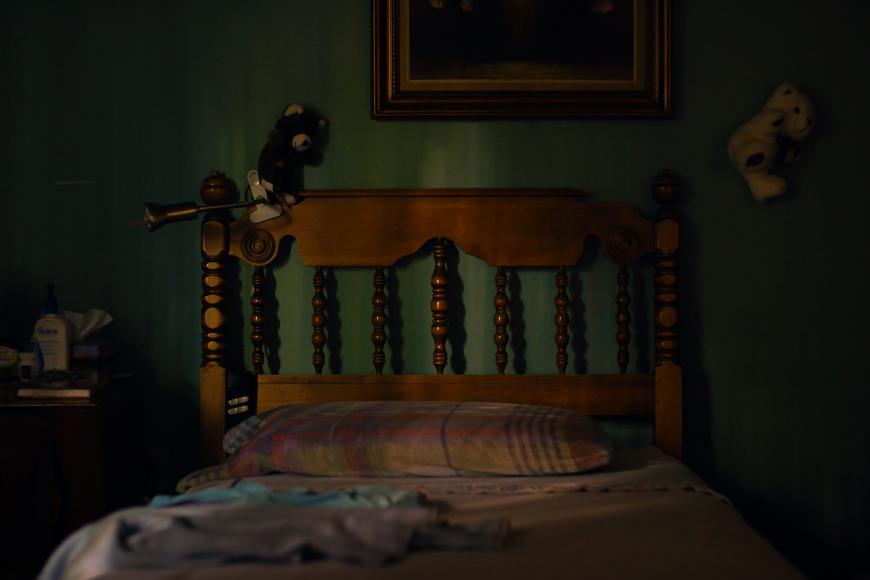
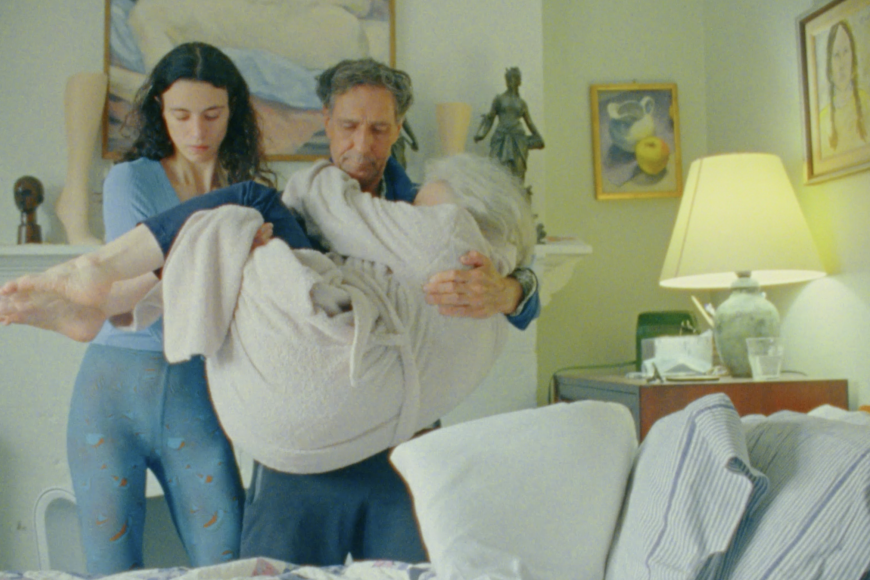
A patient camera glides over the everyday objects: still lives on the wall, flowers in the vase, a swaying drop light. The sun enters the cosy home where Noëlla sits smoking at her laptop, playing Solitaire. The situation is hopeless. She’s going to lose against the computer once again. All the while her son-in-law, Pierre, is organising everything she needs, pragmatic and friendly: breakfast, the (last) doctor’s visit – and then the transfer.
Because Noëlla intends to die, and she is determined. Pierre conscientiously manages the paperwork and invites her loved ones to say goodbye. They bring photos and chat with the protagonist who is about to depart this life and who waves one last time before the doctor administers the deadly dose. Bye bye, that’s it. Dying can be so unexcited. This slowed-down, minute study of time very gradually acquires a completely different meaning from what one assumed at first. How one would love to see the onetakes from the beginning again. Félix Lamarche’s unpretentious observation evolves into a metaphor of life. Noëlla’s insistent head-on gaze from the screen into the viewers’ eyes will always be unforgettable.
Borjana Gaković
Credits
Director
Félix Lamarche
Cinematographer
Félix Lamarche
Editor
René Roberge
Producer
Félix Lamarche
Sound
Samuel Gagnon-Thibodeau
World Sales
Robin Miranda das Neves
Nominated for:
FIPRESCI Prize,
Prize of the Interreligious Jury
A neighbourhood dispute escalates … The pixilated movements of actors and scenery seem more and more absurd, heightened by the frantic sounds of the hand-drawn soundtrack.
An escalating neighbourhood dispute as a pacifist parable on the Korean War. The pixilation, which Norman McLaren is said to have pioneered, makes plot and scenery look more and more absurd. The madness is heihgtened by frantic electronic sounds, which were also created by a special technique: McLaren drew optical sound signals in lines and dots by hand directly on the soundtrack.
The director stages her parents, dancing, in the family home. A playful approach to family, transience and to illness. Associative, loose and intelligent.
Director Nora Rosenthal brings a very specific focus to this portrait of her parents, Heidi and Alan: She shows them dancing. But these are far from “easy dances.” Rosenthal realises quickly that her own inflated expectations threaten to make her ambitious project fail. She hires two professional dancers – mirror images and, as it were, interaction partners for Heidi and Alan – to spread the enormous pressure on robust shoulders and with whom they can waltz or even do a disco number. Abstractly playful, yet empathetic, “Nine Easy Dances” addresses heavyweight subjects like transience and illness, opens the door to the family archive and tries to tell a story whose end already hangs in the air. A multilayered endeavour, associative, free and intelligent.
Hands grasp emptiness or for bundles of lines. Their everyday movements are turned into a ghostlike play of gestures, because the devices they operate are erased from the frames.
Hands grasp emptiness. Sometimes they get hold of bundles of lines. Their everyday movements are turned into a ghostlike play of gestures, because the objects they handle and the devices they operate are erased from the frames. The sense of touch takes centre stage – in the actions themselves, but no less in the scratches on the material which dance to creaky, grating sounds.