Over three decades, Uwe Walter from Gelsenkirchen has become part of the Japanese village community of Miyama. This moves him at last to say goodbye to the past.
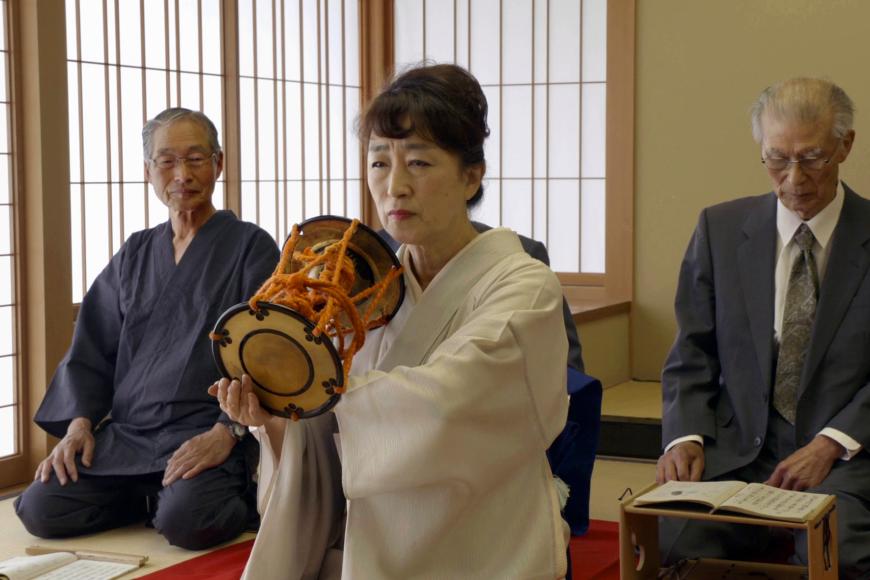
There’s probably no other citizen of Gelsenkirchen who has ever mastered Nō singing and playing the Shakuhachi flute as authentically as Uwe Walter. He has lived in the mountain village of Miyama north of Kyoto for three decades and emulates the local residents, whether they earn their living on the fields, breeding cattle or hunting. People tend their gardens, repair fences to keep away the macaques and grow their own rice. Uwe has become perfectly Japanese, at one with his environment.
However well-suited his Ruhr area wit makes him as a figure of identification, the camera keeps a respectful distance, more reserved than Uwe himself. Only at one point does it come touchingly close: When he is forced to say goodbye to an essential part of his past in the interest of the village community. But the real subject of this film is not the German with his greyish blonde curls but rather that very community, portrayed by Rainer Komers in bittersweet polyphony. It emerges in the children’s games, the adults’ pursuits and the old people’s tales, in the summer downpours of the rainy season, the white moon over the nocturnal village and the blood-red leaves of autumn.
Christoph Terhechte
Credits
Director
Rainer Komers
Script
Gregor Bartsch
Cinematographer
Rainer Komers
Editor
Gregor Bartsch
Producer
Rainer Komers
Sound
Uwe Walter, Yuki Morimoto, Michel Klöfkorn, Oscar Stiebitz
Score
Uwe Walter, Yuki Morimoto
World Sales
Joachim Kühn
Broadcaster
Doris Hepp
Key Collaborator
Hiroko Inoue
Nominated for:
VER.DI Prize for Solidarity, Humanity and Fairness
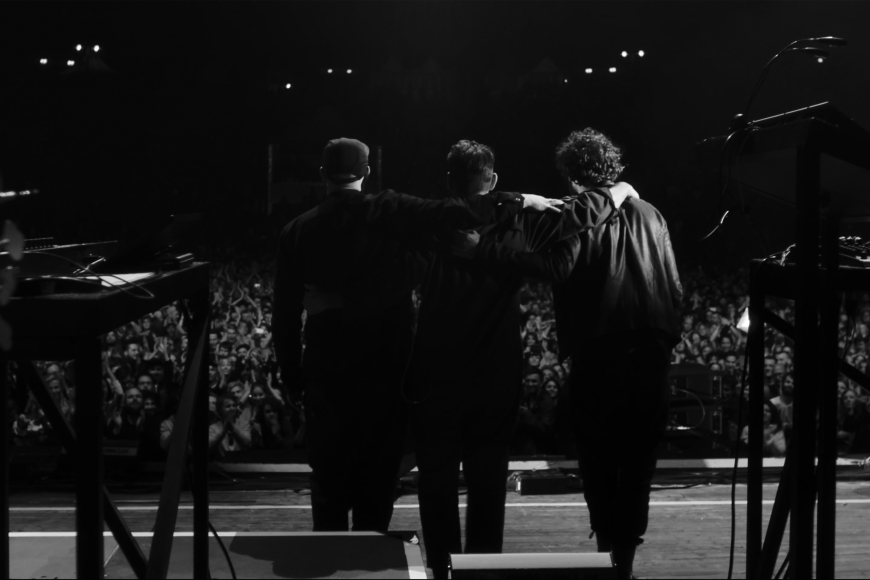
Just before a five-year creative break as “Moderat”, the members of the band speak freely about interpersonal matters and the dynamics of their electrifying cooperation.
Competition for the Audience Award Short Film 2022
Documentary Film
Germany
2022
21 minutes
German
Subtitles: 
English
After years of touring together, the Berlin supergroup “Moderat” decided in 2017 to go on a (recently terminated) hiatus. “The Last Days” portrays the three protagonists of “Intelligent Dance Music” at their most human. Black and white images taken around their last concert tour serve as a projection surface for off-screen interviews in which Sascha, Szary and Gernot describe each other, allowing deep insights into their artistic dynamics.
Please note:Stroboscopic effects are used in this film.
Six youths were sentenced for the fire at Camp Moria on Lesbos in 2020. A look back exposes the questionable proceedings of the judiciary and the EU’s political stance on refugees.
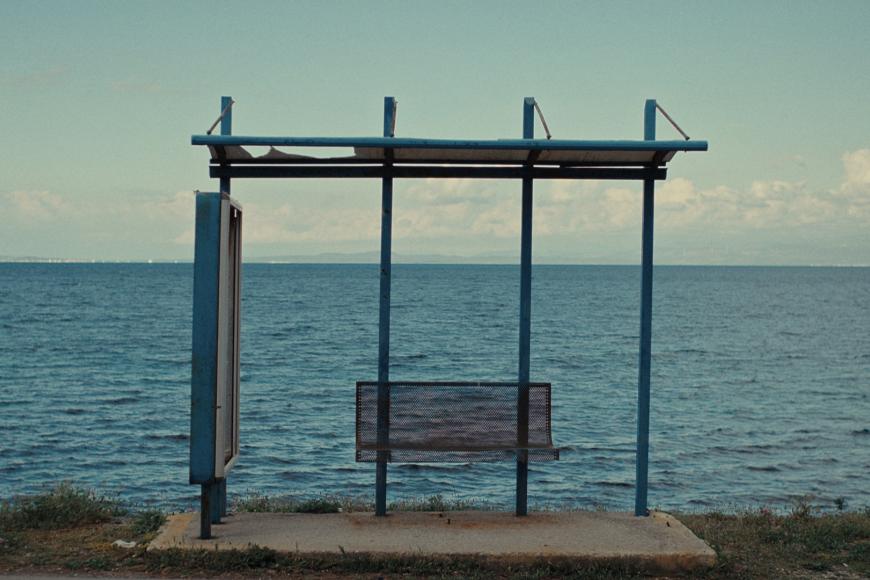
There was an eery silence after a fire had destroyed the Moria camp completely in September 2020. Not just locally, but in public discourse. The world did not seem particularly concerned with the inhumane conditions in other camps on Europe’s external borders or the countless pushbacks in the Mediterranean. Nor did the arrest of six adolescents who were accused of arson resonate in any audible way – though even a second glance at the circumstances of the investigation and the criminal proceedings revealed the actions of the Greek judiciary to be questionable. Not to mention the underlying refugee policy of the European Union. Jennifer Mallmann dares to take this second glance with her film. At its centre is her correspondence with Hassan, one of the convicted youths, who tells her of his everyday life, his desires and fears from prison. Calm, precisely framed images document “normality” on the fringes of Fortress Europe. They show how strategical isolation and the ensuing structural exclusion work. If you want to know how our community of nations imagines its future you only need to look at the newly-built futuristic high-security camps, where new arrivals are treated like people who have committed serious crimes.
Luc-Carolin Ziemann
Credits
Director
Jennifer Mallmann
Cinematographer
Sina Diehl
Editor
Maxie Borchert
Producer
Matthias Drescher
Co-Producer
Max Brunner, Svenja Vanhoefer
Sound
Vincent Egerter
Sound Design
Timo Kleinemeier
Score
Clemens Gutjahr
Nominated for:
VER.DI Prize for Solidarity, Humanity and Fairness,
Gedanken Aufschluss Prize,
DEFA Sponsoring Prize,
Leipziger Ring
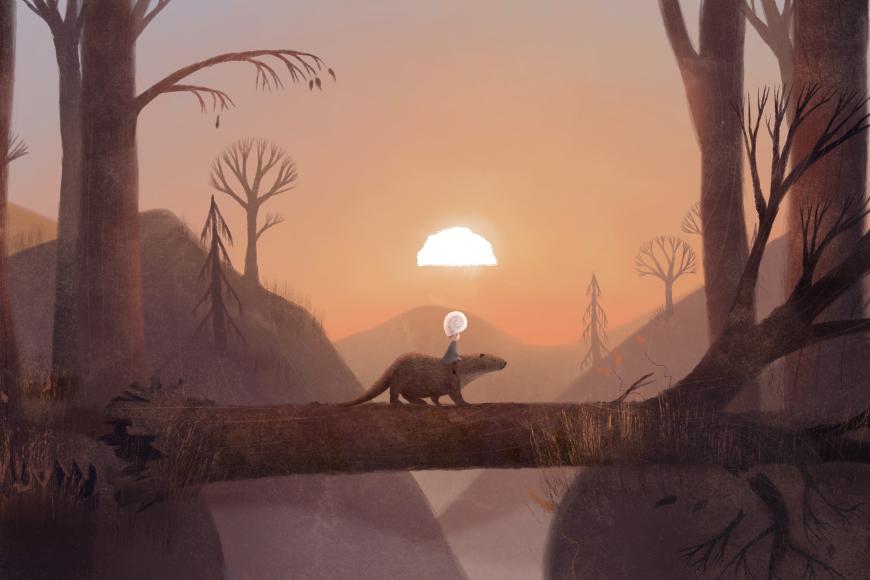
When the spring in the forest dries up, the child sets off on an adventurous journey on the back of the otter. They cross deserts, mountains and valleys to find the water again.
The child and the otter live in a small cottage in the woods. Their water source has dried up a while ago. In their distress they set out together to the snow-covered mountains to bring back a supply from the icy summits … With her first animated film, illustrator Malin Neumann delivers a poetic tale in warm colours about the vital importance of water.
A Turkish woman goes to Germany as a guest worker – without her children at first. The family’s youngest daughter describes what it’s like to grow up without a mother.
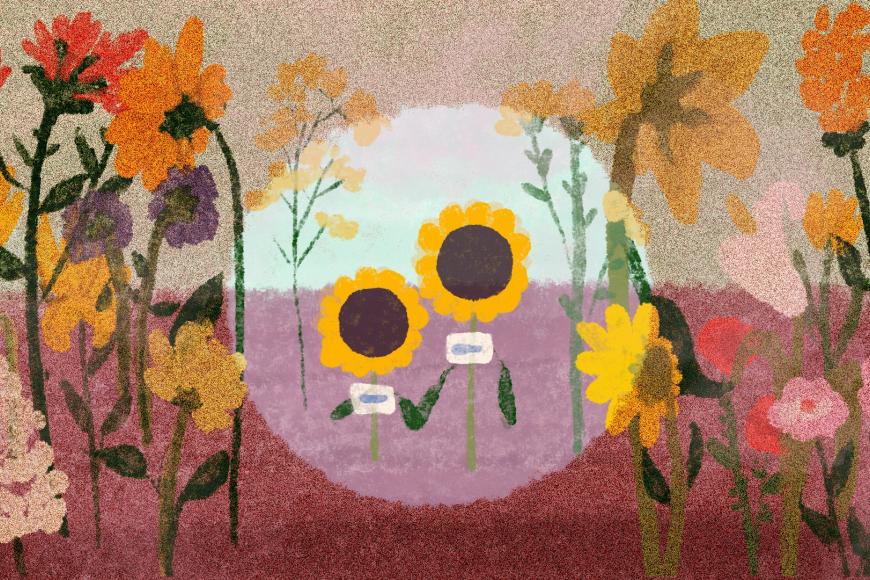
A Turkish woman emigrates to Germany in the 1970s to earn money as a guest worker. Her children have to stay with their grandparents and it takes a few years before the mother can bring them over. In memory, this period feels almost unbearable and endless. Özgür, the family’s youngest daughter, describes what it’s like to grow up without a mother.