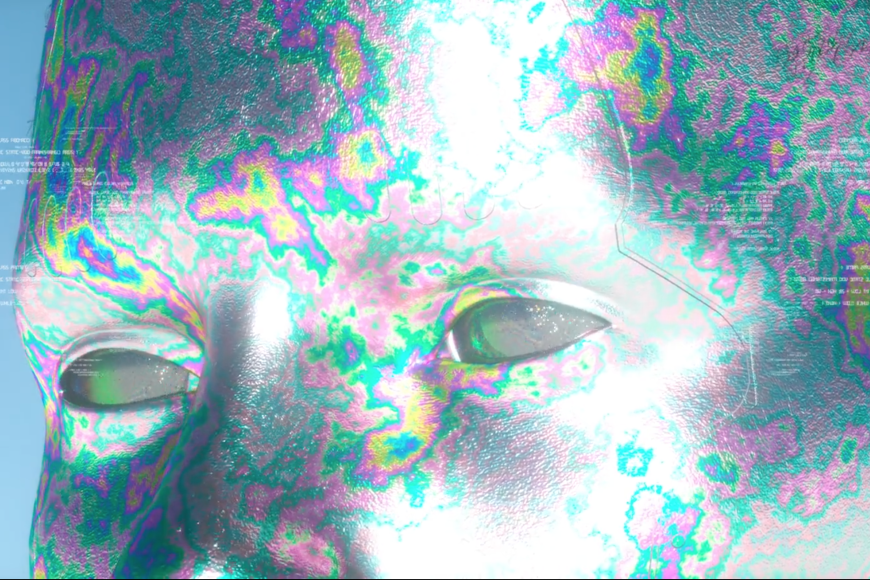
An experimental science fiction film which constantly changes with the weather, responding to real time data from around the world, listening and reacting to nature.
A cyborg of a film, the work is a living interaction of computer graphics and nature. Shaped in real time by weather patterns, the film’s rhythm and sequencing is tied with planetary data from over forty locations around the world. In the spirit of geomantic practice, this truly magical experience is about listening and reacting to Earth’s stories.
This desktop video essay examines how the media illustrate the issue of abortion. Clicking through photo databases and magazines reveals the consequences of suggestive images.
What images do we associate with abortion and why? Where do these images and the emotional scripts in our head come from? How do they influence women who (want to) have an abortion, how do they shape the general discussion? Franzis Kabisch’s personal desktop documentary investigates these questions with great precision, clarity and humour (yes, humour, too!).
In the process, she moves from early 2000s girls’ magazines to the late 19th century, sifts through troves of feminist knowledge and checks alleged cultural-historical facts (such as the discovery of hysteria in women) that haunt conventional wisdom to this day. At the end of the film, we have not only seen an exemplary examination of image politics and how they contributed to pushing the issue of abortion to the social sidelines and linking it with shame and guilt. Franzis Kabisch manages, almost “in the same breath,” to break up the false hubris of the documentary and demonstrate that the evidential value of filmic and photographic “testimonies” must always and implicitly be scrutinised. Ultimately, “cui bono?” – the question who profits, must be considered in every media-critical reflection – not just in the age of stock photos, editing software and AI but, strictly speaking, at the start of every documentary image production.
Luc-Carolin Ziemann
Credits
Director
Franzis Kabisch
Script
Franzis Kabisch
Cinematographer
Franzis Kabisch
Editor
Franzis Kabisch
Producer
Franzis Kabisch
Sound Design
Franzis Kabisch, Katharina Pelosi, Laura Schick
Winner of:
Golden Dove Short Film (German Competition)
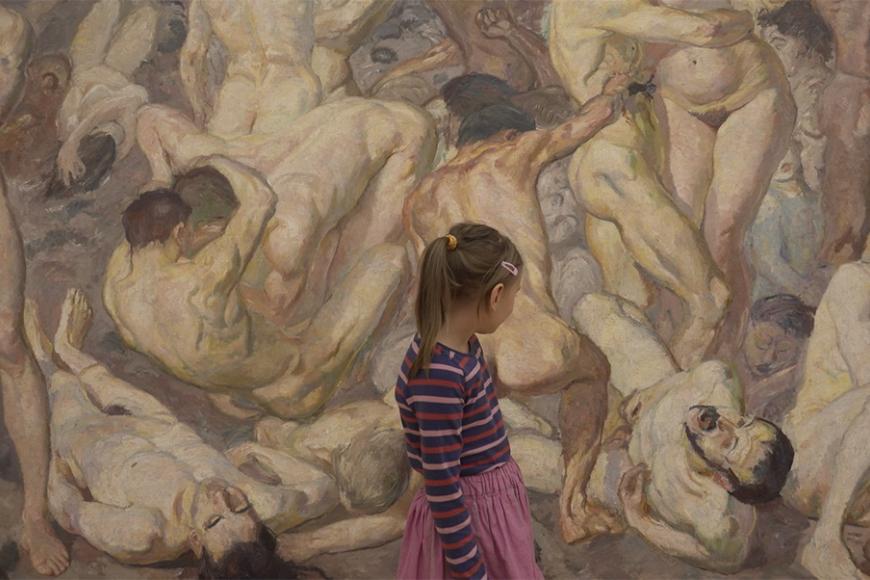
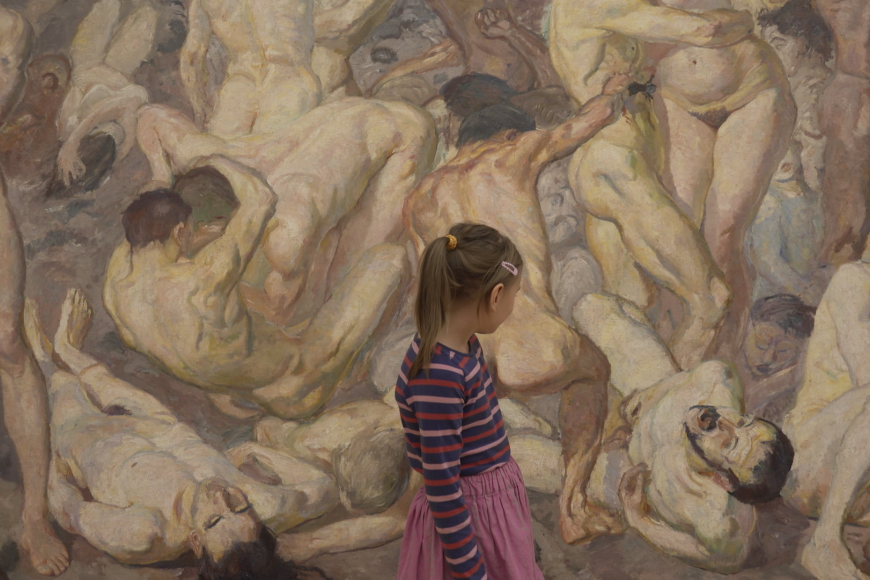
Girls in an exhibition: visitors aged between seven and nineteen contemplate individual works in the Leipzig Museum of Fine Arts and offer spontaneous interpretations.
Art is in the eye of the beholder, they say. Shelly Silver’s beholders range in age from seven to nineteen years. They focus their attention on artworks in the Leipzig Museum of Fine Arts. Their spontaneous interpretations of the works allow for resonances: both, the paintings as well as their young reviewers, reveal different things about themselves, depending on the point of view.
“Shit that I’m not a boy”, a teenager exclaims as she stands in front of the painting of a rich young man who lived centuries before her, perhaps in the Netherlands. Because boys are allowed much more, she says. Playing basketball outside, for example. Shelly Silver’s hypothesis is as simple as it is fruitful: The outside perspective will always lead back to one’s own perspective. The director’s questions and suggestions are not revealed. But she picks out details of the paintings to substantiate and illustrate statements – or put them up for discussion again. Silver’s finesse lies in the montage. Meanwhile, the timeline of the exploration runs from the past to the present, from the pierced feet of Jesus Christ via a reclining naked nymph by Lucas Cranach the Elder to the more recent photography of the Swedish artist Arvida Byström.
Girls in an exhibition: visitors aged between seven and nineteen contemplate individual works in the Leipzig Museum of Fine Arts and offer spontaneous interpretations.
Who decides what is art and what is not? What does the picture on the wall tells about the society in which it was created? Shelly Silver looks at the collection of the Museum der bildenden Künste Leipzig through the eyes of some young girls and makes visible how role models have changed over time - and what art has to do with it.
In the 1970s, the free spirits of the Clara Mosch artist group from Karl-Marx-Stadt declared the GDR a happening zone. A poetic film portrait about the power of art.
In the 1970s, the free spirits of the Clara Mosch artist group from Karl-Marx-Stadt declared the GDR a happening zone. A poetic film portrait about the power of art.
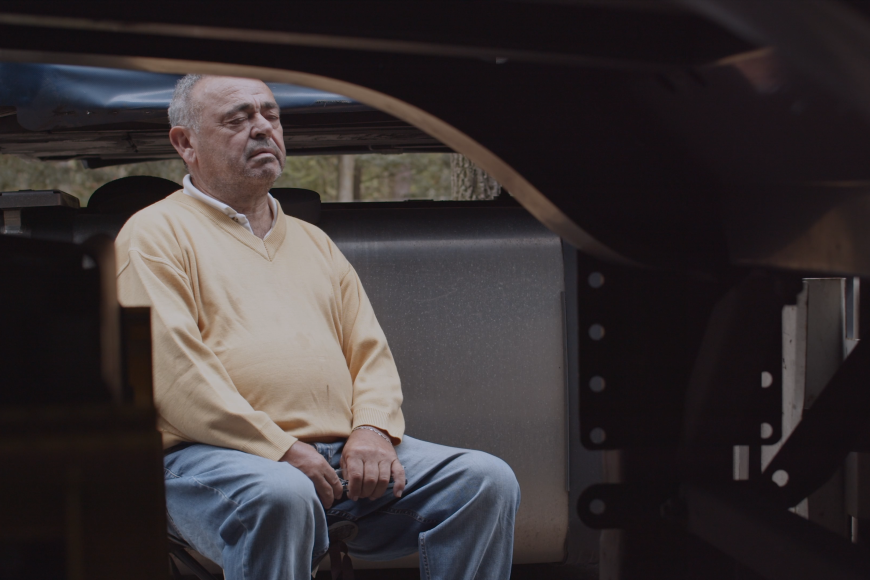
A summer Sunday at a motorway service area. The trucks stand still. The drivers doze, cook, stare into space. A phone call with the family provides inner and outer movement.
The motorway roars in the background, darkness lies over the service area. One truck driver smokes; another turns on the light in his sleeper cab. A summer Sunday is dawning, everything is standing still. Precisely designed detail shots induce in us a state of waiting. This is what life on the road can also look like. Cooking, dozing, staring into space. Hair is shorn short, words are exchanged. Polish pop songs resound from one of the cabs.
Life seems to have been tuned out. And yet it is happening. One of the men roams the forest, calls home. Suddenly a family is present in the images: The man remembers a swimming trip when the children were small. A strangely beautiful sight. He holds his mobile up in the air so the person on the other end of the line can hear the woodpecker.
Do you think of what a memorial is meant to remind you of? An enlightening tour of Leipzig, “City of Heroes” of the Peaceful Revolution, and the grey areas of a contemporary culture of remembrance.
In autumn 1989, many Leipzig citizens lost patience with the GDR. Within weeks, they brought down a forty-year-old state apparatus resistant to change by rallies. Now their patience is tested again: In 2008, the German Bundestag promised the “City of Heroes” of the Peaceful Revolution a monument. Planning has been going on and on … Leipzig bears the waiting with equanimity; after all, it was not idle in the meantime. Right after reunification, the citizenry took charge of its culture of remembrance with such vigour that the monuments are piling up today. Looking up to the crown of the palm tree of the Nikolai Column, one had better take care not to step on a commemorative plaque, fall into a commemorative fountain or bump into a commemorative bell. Classicist? Figurative? Abstract? What is the formal language a city chooses to tell itself its own history while it is practically still happening? Locals and newcomers roam the current Leipzig collection of monuments, a man ties his shoelaces on the big toe of the bronze sculpture “Step of the Century”. Do people think about what monuments give them to think about? The subtly framed and laconically presented impressions of the city are intermingled not only with the trademarks and emblems of lived urbanity, but also with the voices of local cultural delegates. They are thinking: about the pros and cons of accelerated remembrance.
A historical trade show film on various folding and stapling machines which are shown in action and explained in abundant detail, featuring exterior views of the factory in Plagwitz.
The Gebrüder Brehmer company produced wire stitching and folding machines and was one of the largest of its kind in Germany with up to 1,000 employees. Even in the early days of the medium, the company used film to promote its goods and cultivate its reputation. This image film presents the factory in Plagwitz and special folding machines, for example the “¾-Automatic Sheet Feeder”.
After thirty years, Bademsoy returns to the former players of the first Turkish girls’ football team in Berlin. Many questions are still open, including the old ones about being German.
“You got to try to live your own life,” Arzu, one of the football players from the Turkish-Kreuzberg girls’ team Ağrı Spor, demanded in a 1995 film by Aysun Bademsoy. Today she is in her late forties and leads her own life, like her former teammates Türkan, Nalan and Nazan. Bademsoy visited the four of them for the fourth time, following their lives, recalling their visions for the future from back then. And this time she also talked to their daughters, some of whom on the brink of adulthood, who also think about adaptation, tradition, religion and culture. Little has changed between then and now, being German remains a difficult question to answer for every generation. Aysun Bademsoy has produced a delicately layered work of German-Turkish perspectives in which female concepts of identity are reflected back at a society where integration is formulated only as expectation. “If others don’t accept that we are Germans, how are we supposed to accept that?” Selin, Türkan’s daughter, asks. You don’t need to know the other three films to understand “Game Changers” – and to appreciate the significance of this project which now spans almost thirty years. The best thing about it: Football is being played again!
Jan Künemund
Credits
Director
Aysun Bademsoy
Cinematographer
Ines Thomsen, Isabelle Casez
Editor
Maja Tennstedt
Producer
Alex Gerbaulet
Sound
Ivonne Gärber, Camilo Garcia Castro
Sound Design
Titus Maderlechner
Nominated for:
VER.DI Prize for Solidarity, Humanity and Fairness,
Gedanken Aufschluss Prize







![Filmstill Messefilm der Fa. Gebrüder Brehmer [Ausschnitt]](https://www.dok-leipzig.de/sites/default/files/styles/stepped_teaser_/public/fiona/films/stills/9a4bd28d-d399-49b5-aa0c-02a279d358df.jpg?h=346bc062&itok=L3e-BX-j)




![Filmstill Messefilm der Fa. Gebrüder Brehmer [Ausschnitt]](https://www.dok-leipzig.de/sites/default/files/styles/film_stills_full_content_view/public/fiona/films/stills/9a4bd28d-d399-49b5-aa0c-02a279d358df.jpg?h=346bc062&itok=ND0OPpZr)
