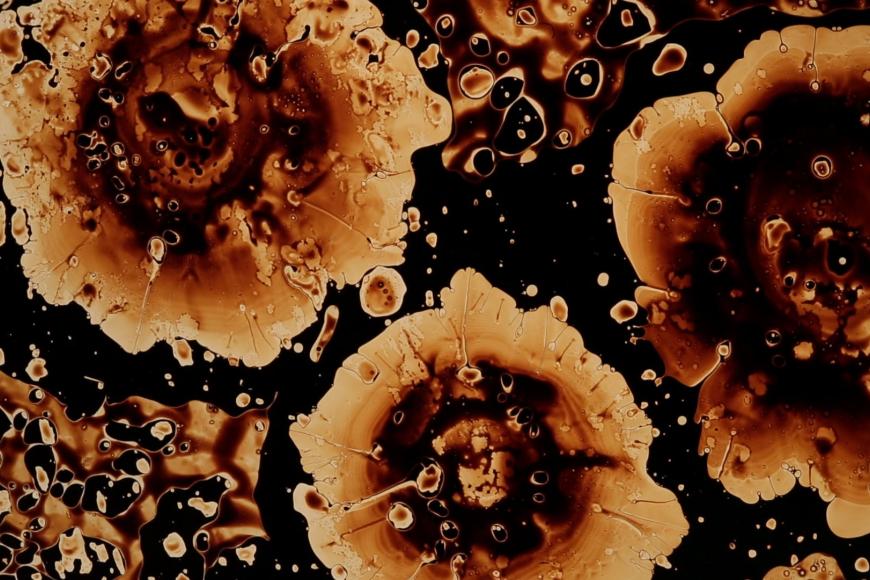
An oily liquid oozes across the frame. Wafting windows in the black mass draw the eye to the levels below. Everything is in motion. Hypnotic music enhances the viscosity of the soft body until we believe that we see a “Liquid Light Show” from the 1960s. But these are the dark revenants of psychedelic hippie visuals that put us into a black trance.
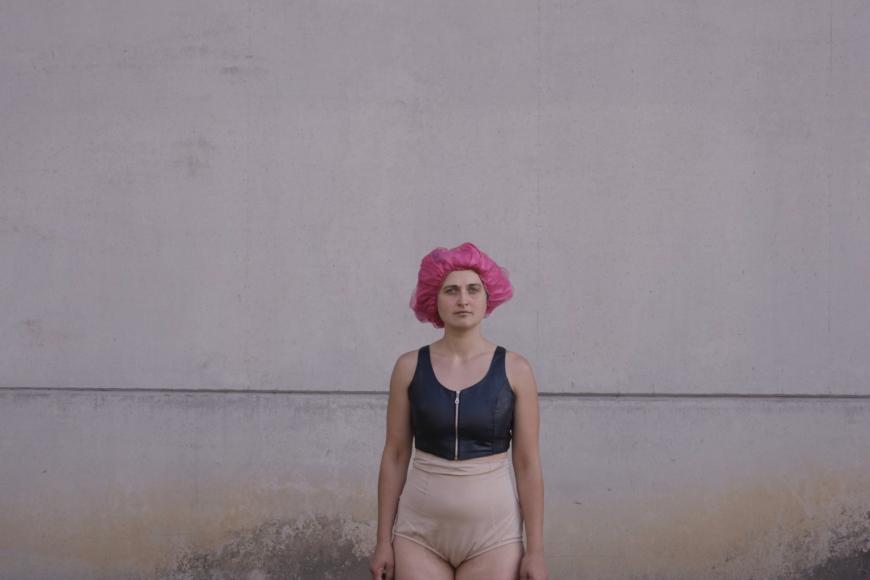
Clowning around with a red nose? No way! Clown*esses challenge the patriarchal society with anarchy and subversion and cultivate the fun of creative resistance.
Clown*esses are more than jesters; they hold a mirror up to society. They move between the worlds and like to break rules, albeit with a wink. At the same time, clown*esses are contradiction experts by nature, because they know on the one hand that life is far too short to be sad, and on the other hand use their art not only to entertain us but to make oppression and violence visible and attackable.
The artists portrayed in this film, for example, look closely at patriarchal structures and learned social behaviours. When Gözde in her unerring performances questions and satirises the images of women still prevalent in Turkey, this critique is rooted in her own experience – and that is precisely what makes it so funny. Lokke from Germany, on the other hand, emphasises the transformative aspect of clowning that allows them to try out different identities and characters, to refuse being pinned down and to ridicule stereotypes. Jana Rothe’s cogent short portrait presents these and other clownesque attitudes towards the world. It makes you wonder how in the world we ended up sacrificing fun and subversion to rationality in our daily lives.
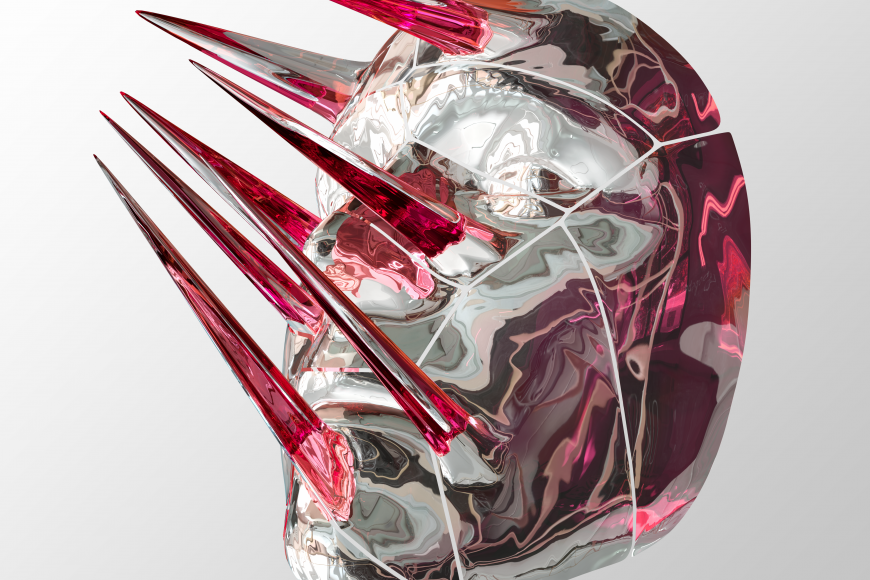
Painting, virtual sculptures, technophile hybrids of reality and illusion – Aaron Jablonski has been creating mobile face filters for social media channels since 2018. Sometimes they form a confusing swarm of echoes around a head, sometimes they come as spiky digital punk. His immaterial masks, hovering between fashion and art, conceal as much as they reveal about their wearers.
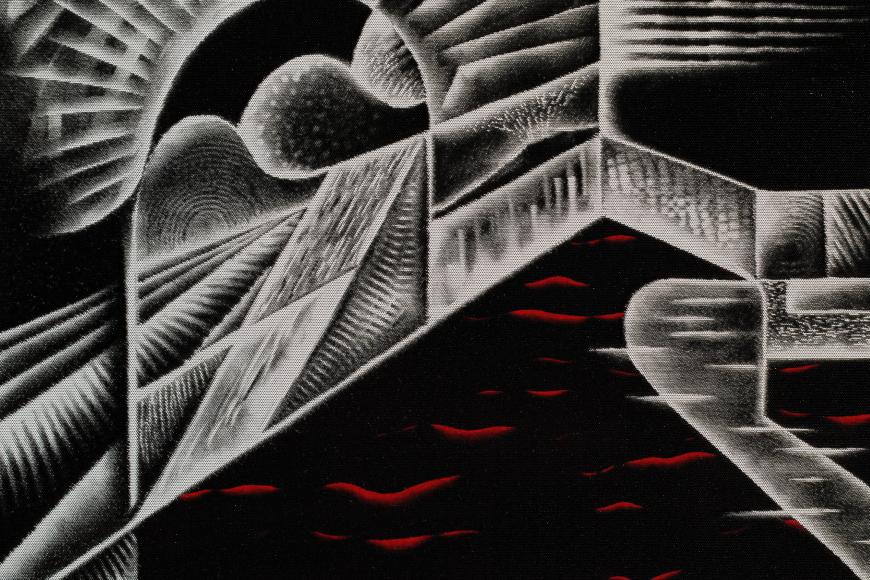
Dark spots eat their way into graphically idealised images of home. With unsparing objectivity, Rubina describes why Russian can no longer be the language of security for her.
How brutal is it when your own language casts you out of your home because it has been turned into the language of crimes against other people? In her autobiographical animation, Irina Rubina analyses why Russian can no longer be the language of security for her and why German – historically riddled with guilt and therefore insecure – does not offer a new home yet. The stark factuality of the director as narrator is enormously unsettling because it describes the irreversibility of this emotional state precisely. On the visual level, dark spots eat into idealised images of home, until the planes become deadlocked in abstraction. The pictures were created on a so-called pinscreen. Reliefs can be “painted” and animated by the pins’ shadows on this screen on which around 200,000 pins are arranged in lines. The alternation of light and shadow and their immediate proximity lend drastic expression to the inner turmoil and ambivalence.
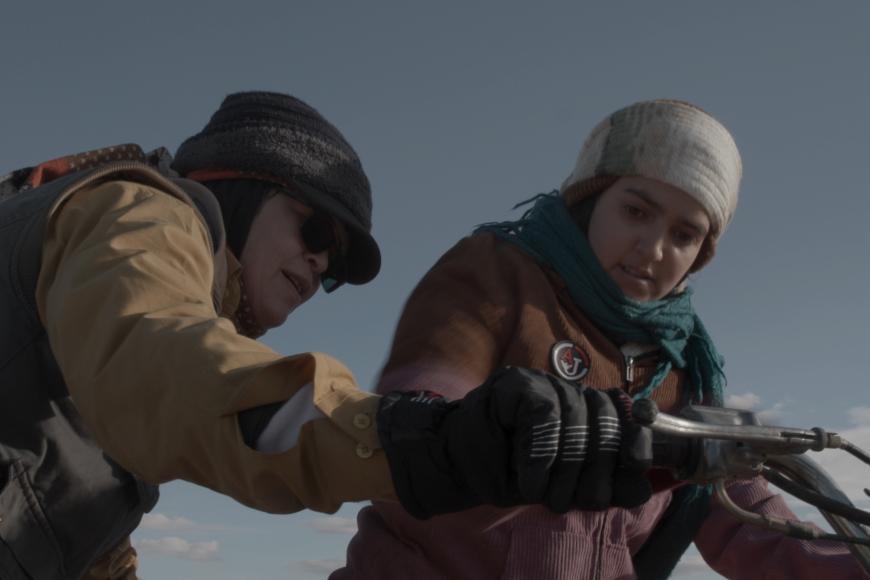
Fighting patriarchy on a motorcycle: A female local politician in rural north-western Iran is campaigning for the self-determination of the women and girls in her community.
The “Woman, Life, Freedom” protests in Tehran and other major cities seem far away from the place where Sara lives. But in her rural community in northwestern Iran, the protagonist of this film advocates the same feminist values in a practical, everyday way. Again and again, we are reminded by the images that her father once taught her to ride a motorbike – to the disapproval of the whole village. A small favour with big consequences: For Sara, it paved a way outside patriarchal marriage. Mobile on two wheels, she works as a midwife and has delivered many girls for whom she now wants to fight: At the start of the film and in middle age, Sara decides to be the first woman in the history of her community to run for the local council. A step which earns her enthusiastic support on the one hand; on the other, she must endure open hostilities and an interrogation by the moral enforcers of the Islamic Republic. In “Cutting Through Rocks”, Sara Khaki and Mohammadreza Eyni capture these power structures and their individual impact as precisely as the gestures of solidarity and self-determination.
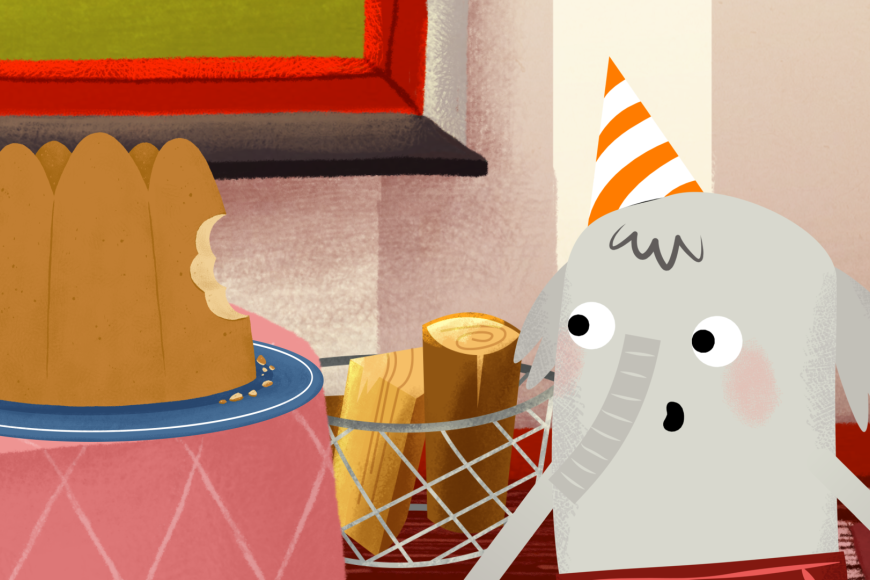
A new Musifants episode! This time, Charlie bakes a birthday cake. No sooner is it on the table, smelling delicious, than someone takes a sneaky bite. Who is the cheeky rascal?
A new Musifants episode! Grandpa Günter – a retired circus elephant – and grandson Charlie take another musical excursion into the songbook of the 1920s and 1930s. This time, it’s the little green cactus’s birthday and Charlie bakes a cake. No sooner is it on the table, smelling delicious, than a bit is missing. Charlie wants to know who has been sneaking a bite …
Lina Dinkla
Credits
Director
Meike Fehre
Script
Geoffrey Schöning
Cinematographer
Sabine Dully
Editor
Thomas Schmidl
Producer
Meike Fehre
Co-Producer
Nina Paysen, NDR Norddeutscher Rundfunk / German TV ARD Network, Mitteldeutscher Rundfunk
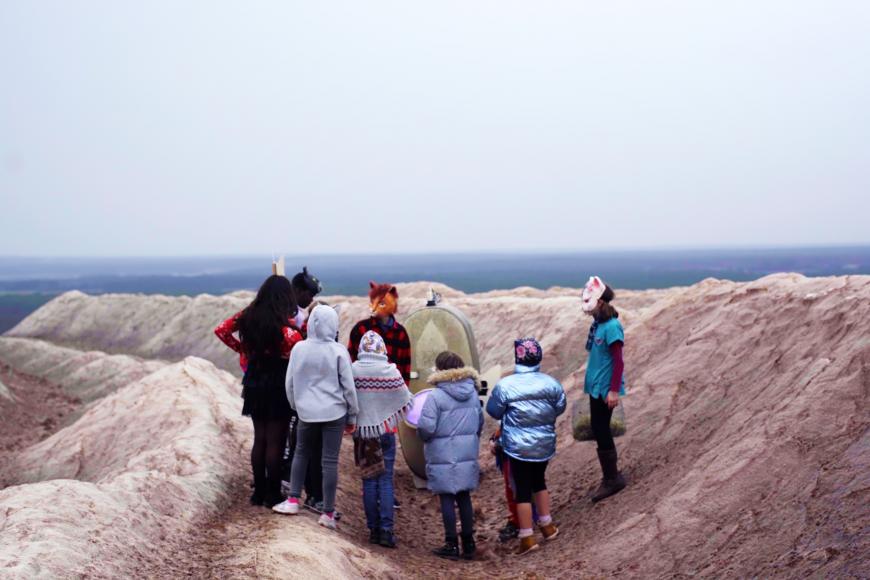
If childhood is a place: How does it feel, what is there to discover? A documentary journey into children’s minds, to unique planets and personal cabinets of wonder.
Four kids aged 12 to 14 let us in on their secrets and desires. They talk about what shapes their lives: friendship, but also bullying and ostracism. Love, but also the struggle with prejudice. An imaginative, very musical film, created together with the children, which shows the world from their perspective – unadornedly beautiful, idealistic and radically honest.
Luc-Carolin Ziemann
Credits
Director
Susanne Kim
Script
Joline, Elias, Wisdom, Roya, Susanne Kim
Cinematographer
Emma Rosa Simon
Editor
Marion Tuor
Producer
Holm Taddiken
Co-Producer
KiKA, Alexander Herrmann
Sound
Lukas Scheigenpflug, Christoph Fleischer, Daniel Fischer