In the small Sicilian town of Siculiana, people place their fate in the hands of a black Christ, but do not totally trust the African refugees living nearby.
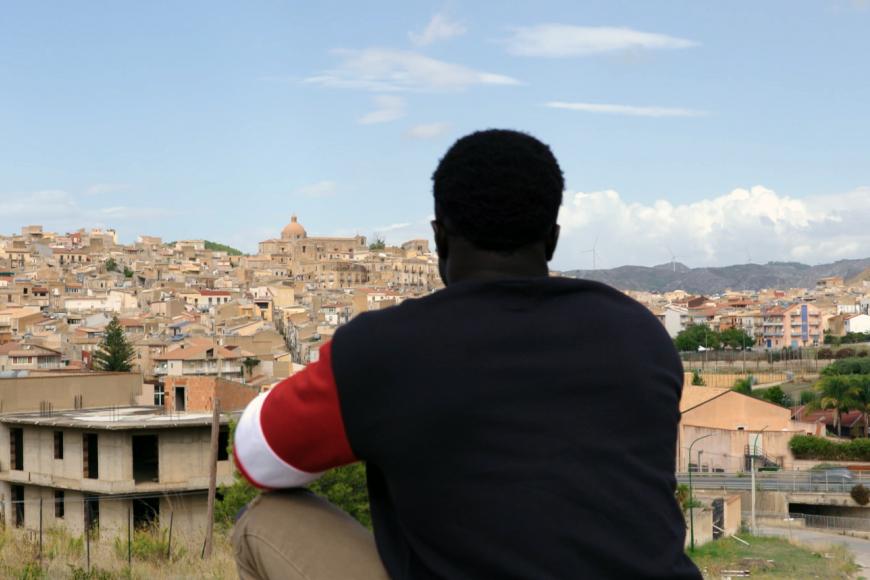
In Siculiana, a small Sicilian town full of flaking facades, religiosity is lived out as a matter of course. And of course the figure of Jesus Christ worshipped here is black, and always has been. However, some people cannot get used to their dark-skinned neighbours in the refugee camp. The camera accompanies locals and stranded people along their paths, which often lead to the church, but not necessarily together, and draws a kind of map of the city in black-on-black contrasts.
It’s become quiet in Siculiana, a local says. He’s not referring to the loud demonstrations against the Villa Sikania, now converted into a refugee reception camp. And certainly not to the colourful flurry of activity that grips the city every year as the faithful prepare for the feast of the Finding of the Cross. That’s when they hang up the “Benvenuti” sign. But who exactly is welcomed here? The pomp and circumstance of the festivities are at the centre of this filmic portrait of a community in which the alleged common ground is disintegrating into voice and skin tones: between the black people from abroad and the black man on the cross who – according to an elderly lady – was forced to “darken” himself in order to incorporate human sins. Between an aging city stylised to the point of becoming scenery and God’s newly arrived children who promise a future and who could bring new life into the alleys.
Impressions of an imaginary city, filmed on the background of the Chinese zeal for globalization: Contexts of meaning and geographical borders blur and reconstitute themselves.
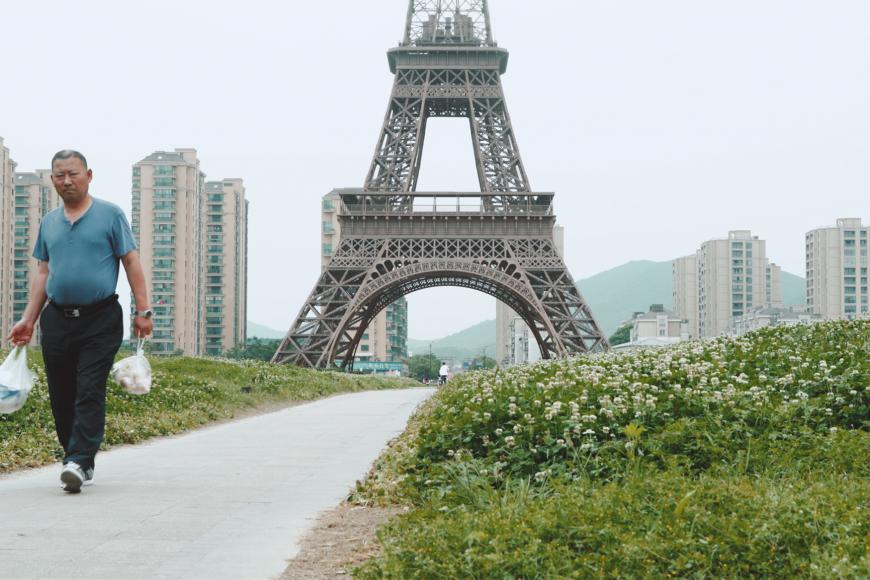
The account of a journey through an imaginary city, filmed along China’s new trade routes. Like the fictionalized Marco Polo from Italo Calvino’s “Invisible Cities”, the traveller in this film talks of worlds that resemble familiar places but follow their own, sometimes seemingly incredible rules. The observations condense into a meditation about the nature of cities and the transformation of the concept of globalization.
The foreign visitor’s voice sounds muffled, as if it were coming out of the cave whose interior views open the film. Time and again, the eye returns there – but the fluorescent rock faces soon turn into the sparkle of distant galaxies, the narrow confines of the cave indistinguishable from the vastness of space. It is a symbol of the decoupling of sign and meaning, of “real” and “false”, of sensual impressions and their positive geographical allocation that pervades the film: Daft Punk perform in front of a Chinese shopping mall; the Eiffel Tower stands first in a housing estate, then, folded up to a fraction of its size, in view of Big Ben and Tower Bridge.
The Bulgarian town of Kyustendil was hit hard by Covid. In the hospital, doctors, patients and film crew try to mitigate the horror of the disease with gallows humour.
Kyustendil, a city in the Bulgarian mountains, was hit hard by Covid. The local hospital is probably a reasonably representative microcosm of how the medical staff dealt with the worst consequences of the pandemic. Ten years after his debut “Sofia’s Last Ambulance” (DOK Leipzig 2012), Ilian Metev returns with another film about a national health system that opposes the virus with gallows humour and individual commitment.
Metev himself was stuck in London during the shooting, monitoring from afar as co-director Teneva and her colleague Chertov collected the material and edited it alone. The focus is on the hospital staff. And if there is one main protagonist among the countless members of the cast, it’s Dr. Popov. Warm-hearted and always ready with a quip, we even often see him without a mask – the other employees are usually hidden behind protective gear. They all share a tough sense of humour to get them through the days and nights. The logistical challenges of such a film project also crop up: The people with the cameras are frequently mentioned and addressed. In this emergency community of patients, doctors and film crew they seem to be always ready to joke. But death, up in the intensive care unit, is very close.
A visually and aurally outstanding film about the musician Marja Burchard, leader of the legendary band “Embryo”. An ode to hearing, experimentation and inspiration.
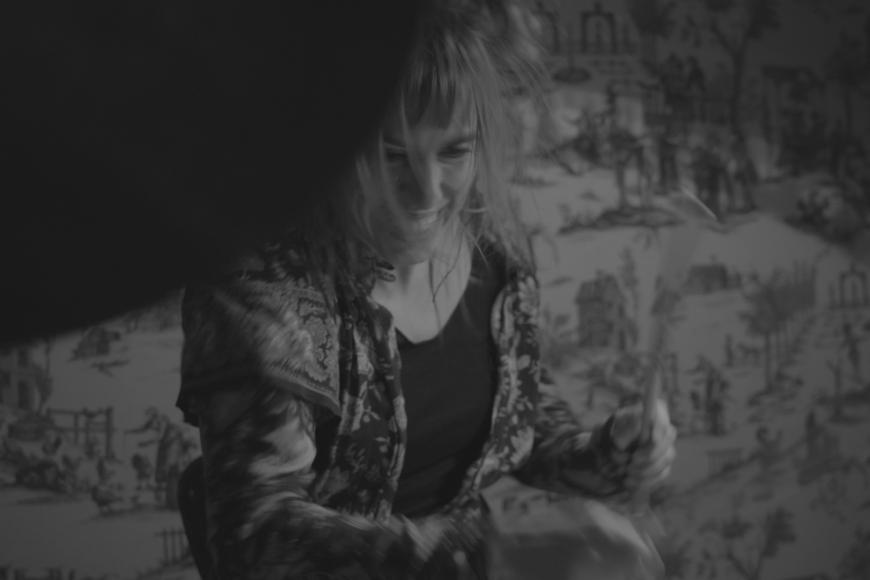
She first appeared on stage at the age of eleven with the legendary Krautrock band “Embryo”. Her father, Christian Burchard, founded the band in 1969 and led it until 2016. Today – in her mid-thirties – Marja Burchard is the bandleader in this project, which has become a kind of family for her. But what seems so simple and organic is far from self-evident in an extremely male-dominated sphere, as Rebecca Zehr shows in her precisely observed and designed film.
This strictly and yet lightly composed melange mixes archival footage, psychedelic animation sequences and everyday observations of the normal life of a female musician between organisation and inspiration. With the visual level restricted to black and white and thus deliberately restrained, all the more attention is focused at the sound. The – who wonders? – outstanding score never takes the music for granted but works robustly with our perception. It’s the lucid, calm images and the narrative that is always anchored in the here and now that let this film stay incredibly haptic despite its concentration on our sense of hearing. Rebecca Zehr is not interested in portraying a musical legend, but in showing us what it could look and feel like to not only make music but live in it.
Luc-Carolin Ziemann
Credits
Director
Rebecca Zehr
Cinematographer
Felix Press
Editor
Melanie Jilg
Producer
Rebecca Zehr, Katharina Rabl, University of Television and Film Munich (HFF)
Who is the clever mind behind “AIVA”, the absolutely incredible AI novelty everyone talks about? An avatar with a female voice introduces themselves as the inventor.
Who is the clever mind behind “AIVA”, the absolutely incredible AI novelty that everyone talks about and wants to have? An avatar with a female voice, unfolding in two dimensions like a pattern, praises their successful multi-million-pound project. Answers are not provided, just another ghastly feedback loop of artificiality.
Animals caught by chance by Google Maps car cameras disrupt the claim of capturing the world accurately. Their appearance in the image creates – involuntarily – funny situations.
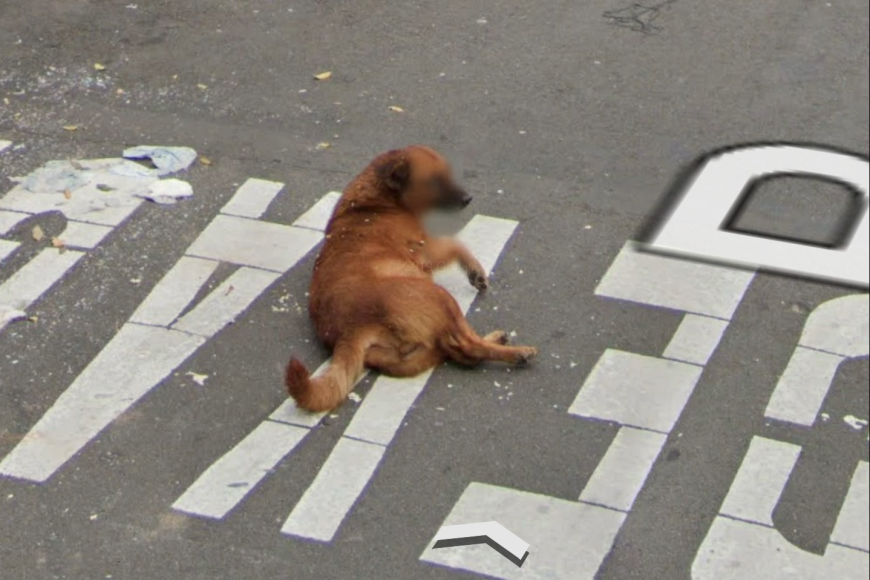
We have probably all thought about the influence of digital logic and algorithms on our perception of the world at some point. This equally humorous and profound short film takes the interactive online tour service “Google Street View” as a starting point for an investigation of where the reality mapped by fifteen automatic cameras and the one perceived by human senses drift apart – and what the consequences are. The “Accidental Animals” that happened to come across the lenses of Google cars defy the claim that every area, however remote, is reproduced as realistically as possible. Instead, their appearance in the frame produces unintentionally funny situations. Like glitches in the matrix, they remind us that we are watching only a patchy series of snapshots. Before we “drop” into a random place on the map, before we arrive to look around, the animals are already there. The fact that Google’s technology blurs many of those bird, dog and pig faces – like ours – to protect personality rights furnishes the directors with the perfect excuse for a provocative question: How is it that in this respect the algorithm acts more ethically than the humans who programmed it?
A woman in love ventures out of her cocoon to go out into the mundane world of “dead language.” Two universes meet in raw, intimate drawings, shimmering stones and overpainted video sequences.
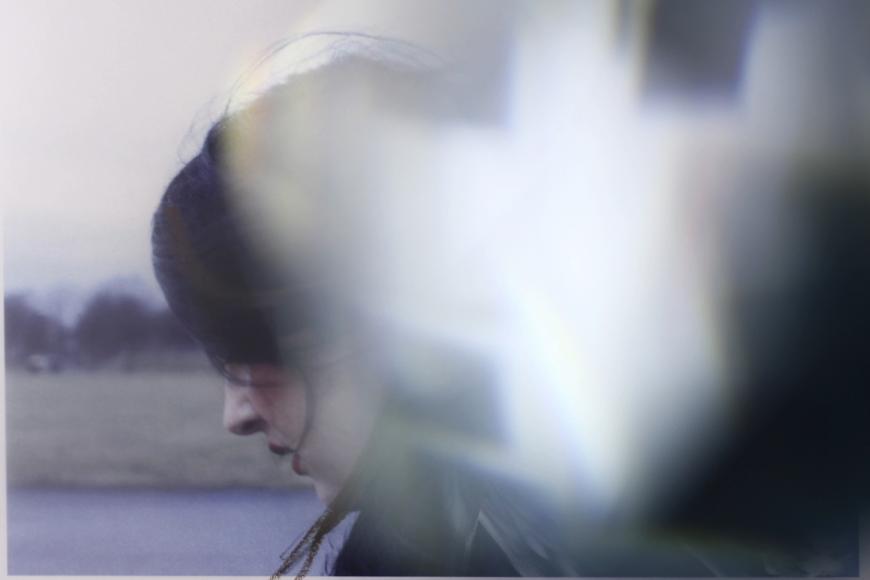
The truth is hidden behind blurs, but the allure of secrecy fades as the clarity increases. A woman in love ventures out of her cocoon to go out into the mundane world of “dead language.” Accompanied by a restless musical motif by Marian Mentrup, “Achill” boldly balances on the thin line between two universes – with raw, intimate drawings, shimmering stones and overpainted video sequences.
AIVA is an artist, animated by algorithms. But above all she is the soberingly limited male tech vision of what more diversity in the arts could look like.
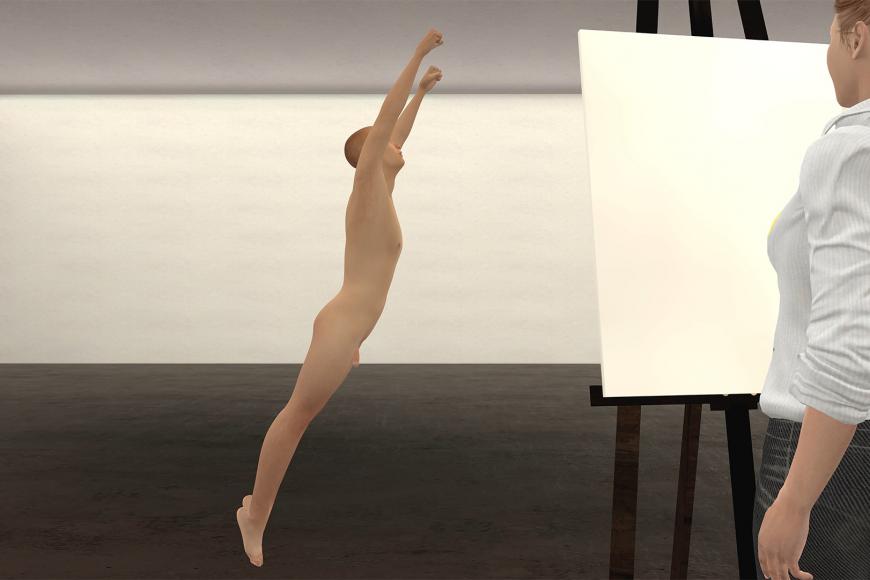
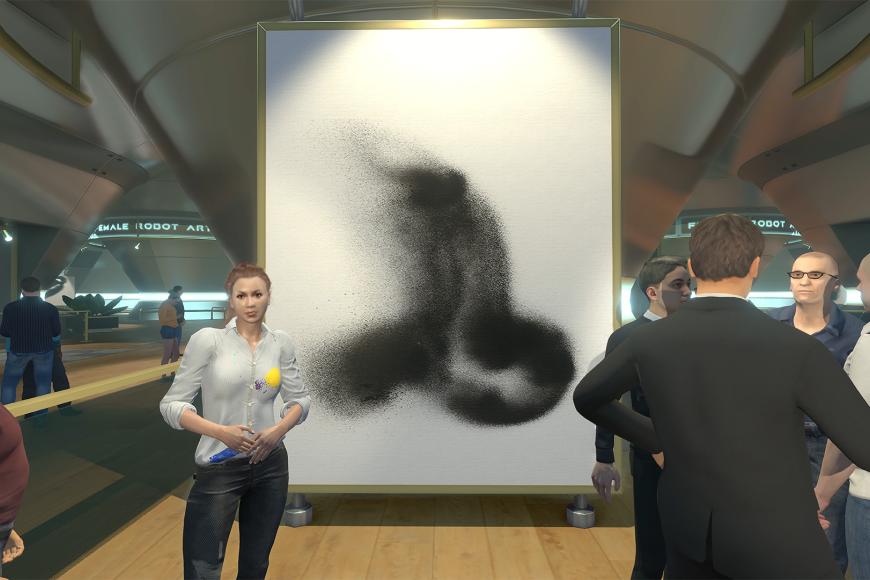
AIVA is an artist, animated by algorithms. But above all she is the soberingly limited male tech vision of what more diversity in the arts could look like. In her paintings AIVA prefers the vertical, to some acclaim. A naive and cliché-ridden “art documentary” lets us participate in her work. Precisely observed, with sparse gestures and trenchant wit, Veneta Androva reflects a current status quo in her computer-animated future fiction.
AIVA is an artist animated by algorithms. But first and foremost, she is the chillingly limited male tech vision of what more diversity in the arts could look like.
AIVA is an artist animated by algorithms. But first and foremost, she is the tech vision of male IT commitment to more diversity in the arts. Which is why AIVA prefers the “portrait” format in her paintings. An “art documentary” lets us share her creative process and fulfils every stereotype at hand. With unerring wit, Veneta Androva mirrors actual conditions in her computer animated science fiction.
Among the Palms the Bomb, Or: Looking for Reflections in the Toxic Field of Plenty
Lukas Marxt, Vanja Smiljanić
The Salton Sea, a former nuclear testing ground on the brink of ecological collapse. The few people who still live here are campaigning to protect the abandoned area.
Among the Palms the Bomb, Or: Looking for Reflections in the Toxic Field of Plenty
Among the Palms the Bomb, Or: Looking for Reflections in the Toxic Field of Plenty
Lukas Marxt, Vanja Smiljanić
Camera Lucida 2024
Documentary Film
Austria,
Germany
2024
86 minutes
English
Subtitles:
English
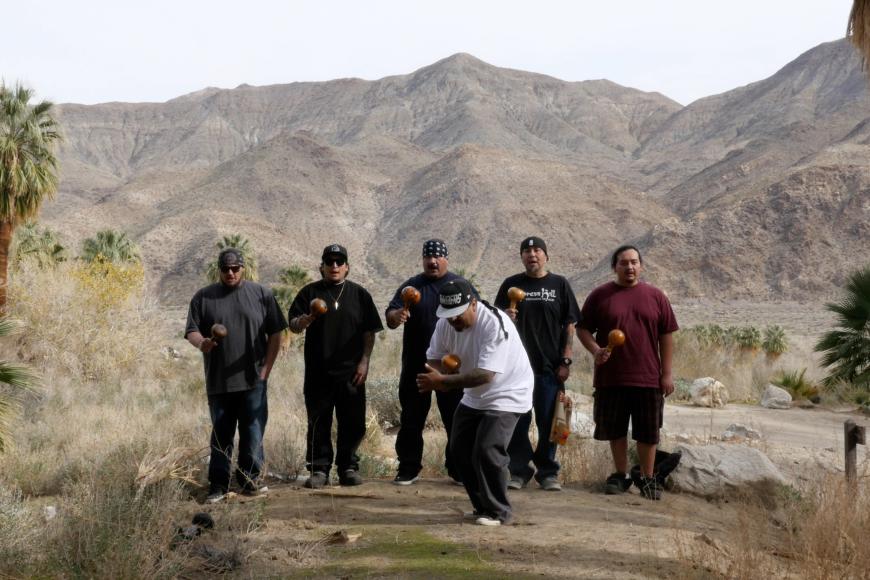
Where the sandy beach of the Salton Sea, the biggest lake in California, begins to crunch harder, it does not even consist of sand any more: Millions of dead fish, plants and insects pile up on the shore to form a highly toxic substance. This is how Derek explains it, a member of a Cahuilla tribe that managed to escape an attempted genocide in the 19th century to the Salton Sea and now sees itself as a protective force for the once flourishing but increasingly deserted area and its outcasts. Derek is one of the many locals whose trails Lukas Marxt and Vanja Smiljanić calmly follow, gliding with them through the desolate landscapes. In the process, they pick up slivers of nuclear history time and again: During the Second World War, the area was a test site for the bombs that were dropped on Hiroshima and Nagasaki. The experiments continued through the Cold War; the armed forces are still training here. The film finds its starting point and end two states away: The nuclear devices were sent on their way from Wendover, Utah. The local Airfield Museum pays tribute to their development. Once, the camera performs an almost weightless dance around a model of the Hiroshima bomb “Little Boy” on display there, to the sounds of the indestructible World War classic “We’ll Meet Again.”
Home birth or clinic? In the field of tension between traditional and modern midwifery, the conflicts of women in Ethiopia’s changing society come to light.
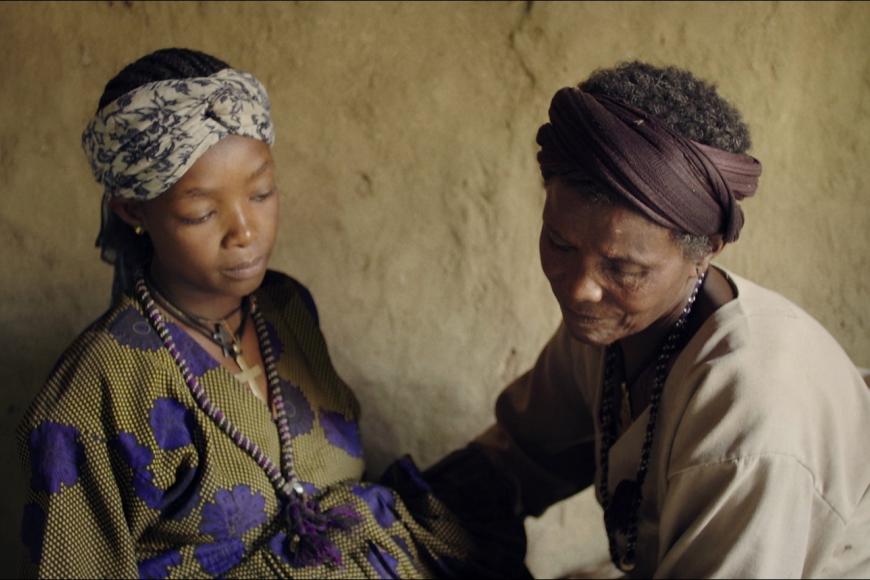
In rural Ethiopia the staff of a health centre are fighting maternal mortality. They tirelessly appeal to women to give birth in the clinic. But reservations are strong, and so are the practical obstacles. How are heavily pregnant women supposed to arrive in time when the ambulance comes hours later or not at all? Against medical advice, Hulu Ager decides to give birth at home, assisted by a traditional midwife.
With palpable familiarity, the film crew captures moments of intimate communion between Hulu Ager, the midwives and other women. On the margins of the central conflict, the many challenges they face in a patriarchal society emerge. The debates are most lively under the hood dryer at the hairdresser’s: She doesn’t enjoy sex because of her circumcision, the medical professional Welela reports. “Sometimes you have to prepare yourself for sex,” another customer advises. Sometimes it helps to get drunk. But the perky hairdresser is sure: Bad sex is grounds for divorce. The women share their desires and woes with each other, experience solidarity and gather courage for small and great acts of departure and resistance. Men are relegated to the role of extras, if at all.
Sarina Lacaf
Credits
Director
Sarah Noa Bozenhardt, Daniel Abate Tilahun
Script
Sarah Noa Bozenhardt
Cinematographer
Bernarda Cornejo Pinto
Editor
Andrea Munoz
Producer
Sonja Kilbertus
Co-Producer
Hiwot Admasu, Beza Hailu Lemma
Sound
Alex Praet
Score
Anna-Marlene Bicking
Winner of:
Honourable Mendtion (International Competition)
The portrait of a young, queer generation in a Colombia marked by violence and repression, told as a real-life ghost story in atmospheric and morbid images.
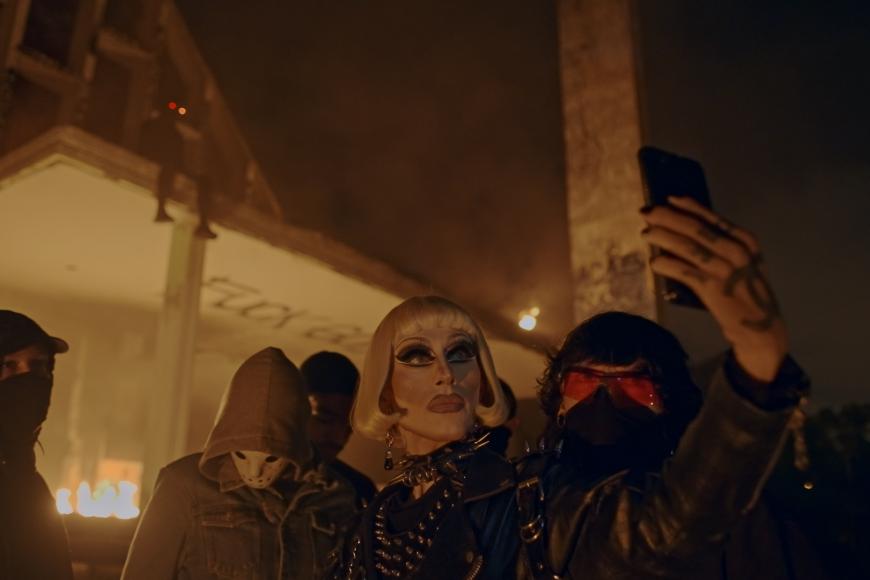
Theo Montoya draws on casting outtakes, melancholy observations of daily life and decadent party impressions from his friends to create a morbid and yet tender portrait of a young, queer generation in Colombia. In a country marked by violence and repression they can hardly imagine their future, but maintain a close, almost loving relationship with death.
This was meant to be a fiction film: a ghost story in which the dead no longer find cemetery space and consequently coexist with the living, including having sexual relationships – which the state rigorously forbids and persecutes. A clandestine nocturnal subculture emerges where erotic desires for which daylight means annihilation can be acted out. A week after Montoya found his leading actor for the project, the latter died of a heroin overdose. More deaths among his friends follow. They are the ghosts haunting the film that was ultimately made. It retains its dystopian character, but the dangers it portrays are quite real: For these young people, they are part of everyday life in Medellín, which is still deep in the shadow of Pablo Escobar and where the search for pleasure and human warmth takes one through labyrinthine abysses.
Carolin Weidner
Credits
Director
Theo Montoya
Script
Theo Montoya
Cinematographer
Theo Montoya
Editor
Matthieu Taponier, Delia Oniga, Theo Montoya
Producer
Theo Montoya, Juan Pablo Castrillón, Bianca Oana, David Hurst
Co-Producer
Balthasar Busmann, Maximilian Haslberger
Sound
Eloisa Arcila Fernandez, Estephany Cano
Sound Design
Marius Leftărache, Victor Miu
Score
Vlad Feneșan, Marius Leftărache
Winner of:
Golden Dove (International Competition)
A media-historical interrogation of the German fascination with the colonialist construct of “Red Indians” which leads right up to its instrumentalization by the “New Right”.
Partly rhetorical, partly ironic and partly profound, the film deals with the Germans’ strange, three-hundred-year-old relationship to their stereotypical ideas of America’s native population. This includes the question of how the audience themselves feel about this ominous object of fascination. The backdrop and starting point of a floating journey through the history of various stereotypes are the ruins of the former U.S. embassy in East Berlin, where an exhibition on the subject took place in 1986.
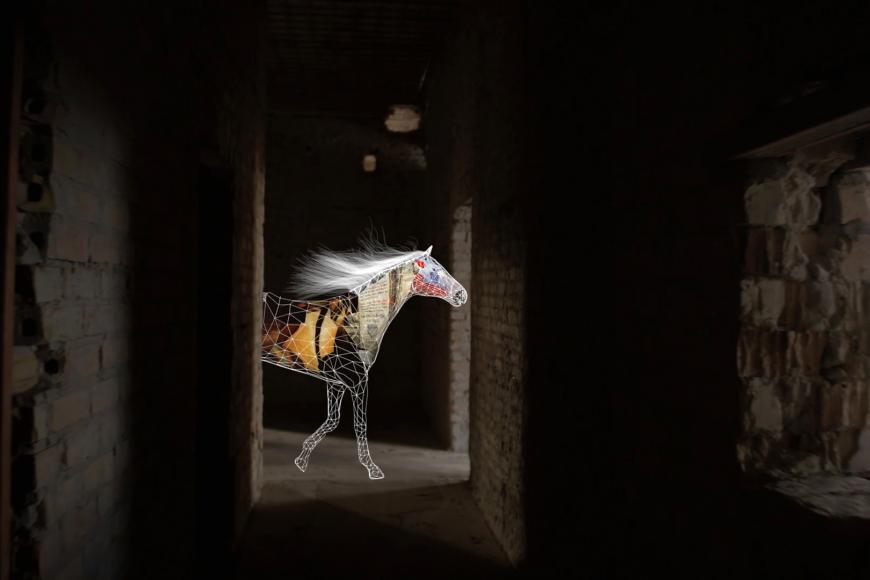
Motion is the art that binds the changing characters of this AR-project, which are drawn by exhibition visitors. An artwork created by all, always fluctuating.
Art is often in the unseen, and in this AR project art is in the motion. Motion is what brings together the changing characters, drawn by exhibition visitors and updated daily. By bringing anyone and everyone’s artwork to the Museum der bildenden Künste Leipzig, this piece challenges the notion of authorship in the art space. Come draw!
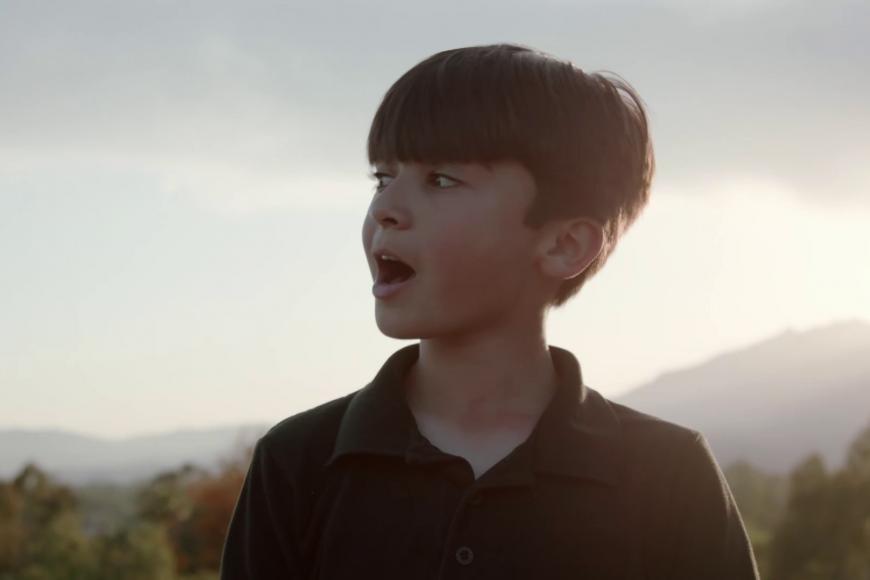
Arshan is ten years old and dreams of becoming an opera singer. When rehearsals for an opera production start in his town, he anxiously goes to the casting.
Classical music is great, says ten-year-old Arshan. He lives with his family on a ranch in California, helps to feed the cows and does household chores. But he uses every spare minute to train his voice. Arshan’s big dream is to become an opera singer. When performers for an opera production are sought in town, he anxiously goes to the casting.
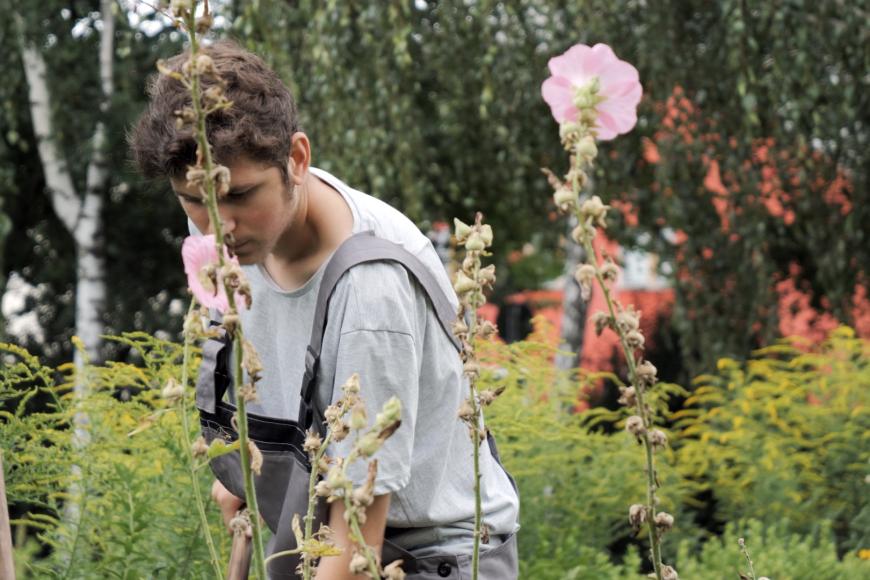
A school in Berlin that offers subjects like horticulture and animal care. The film portrays a group of young people between lessons, childhood and adulthood.
Can school be exciting and even fun? The integrative pre-vocational August Sander school in Berlin-Friedrichshain at least seems the perfect place for this. The noise of the cars of the big city can be heard from the distance, birds are singing on the lush green grounds. Lessons here include horticulture, agriculture and animal care. And when you watch the students weed garden plots and feed rabbits, things look extremely enviable at first glance. But of course, even in this paradisiacal place there are conflicts, annoying teachers and the anxious question: What comes after graduation? This documentary follows the school life of a group of pupils with different learning disorders and other impairments over one school year. At its focus are young people who are on the way from training to work, from childhood to adulthood, and struggle to find their place in the narrow regulatory system of school and in society.