In 1940, two friends who grow up like brothers rescue horses destined for war in Sardinia. Only one of them will survive. An equally dark and poetic animation.
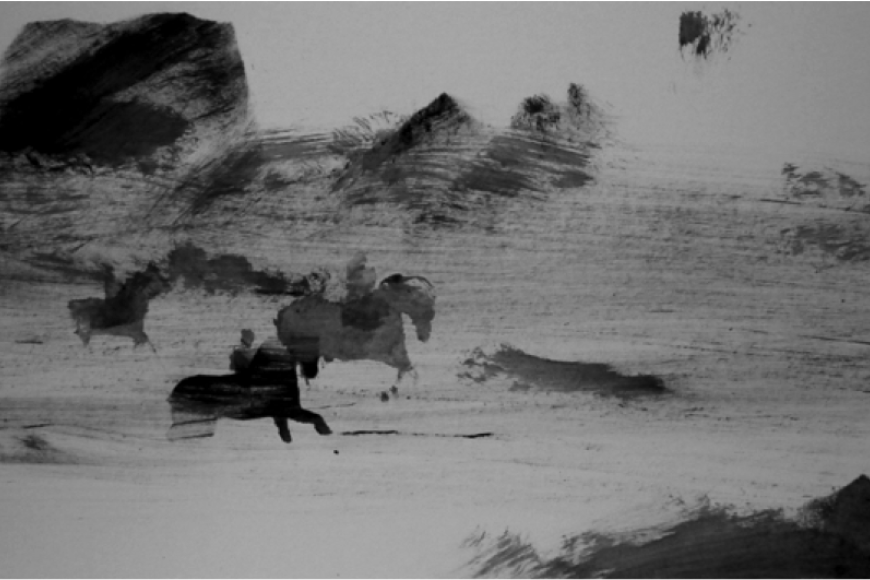
Sardinia, 1940. The harmless term “horsing around” takes on a very serious and ultimately tragic meaning for 14-year-old Michele and his 11-year-old friend Ventura. When they learn that the peasants have sold their best horses for serious money to the state and thus to the military for the approaching war, the two boys take a decision that is as naïve as it is intuitive: They free the herd in a daring nighttime operation. Their happiness is short-lived. Betrayed by a villager, they are caught on the way home and Ventura is shot dead. A senseless death? Or a sign of special bravery, as the ambiguous Sardinian film title suggests? Director Giovanni Columbu, a Sardinian himself, has dedicated his late animation debut to his grandmother who once told him the story. He took the liberty of adapting it with brushstrokes on paper, his style drawing primarily on the charms of historical painting schools, animation techniques and cinema genres. Columbu’s associative visual language, marked by shades of black, white, and grey, is animated by impulsive hatchings, countless dots, and generous elisions. The soundtrack, too, sets rather sparse nuances – subtle illustrations that draw on Sardinian cultural traditions while opening a space for universal metaphors.
Andreas Körner
Credits
Director
Giovanni Columbu
Script
Giovanni Columbu
Editor
Giovanni Columbu
Producer
Giovanni Columbu
Co-Producer
Flavia Oertwig
Score
André Feldhaus, Filippo Ripamonti, Alessandro Olla, Hans Zeller, Pietro Mascagni
A look back at a GDR childhood by the sea, where boundaries and freedoms were always close to each other: a poetic autobiography, condensed in hundreds of watercolours.
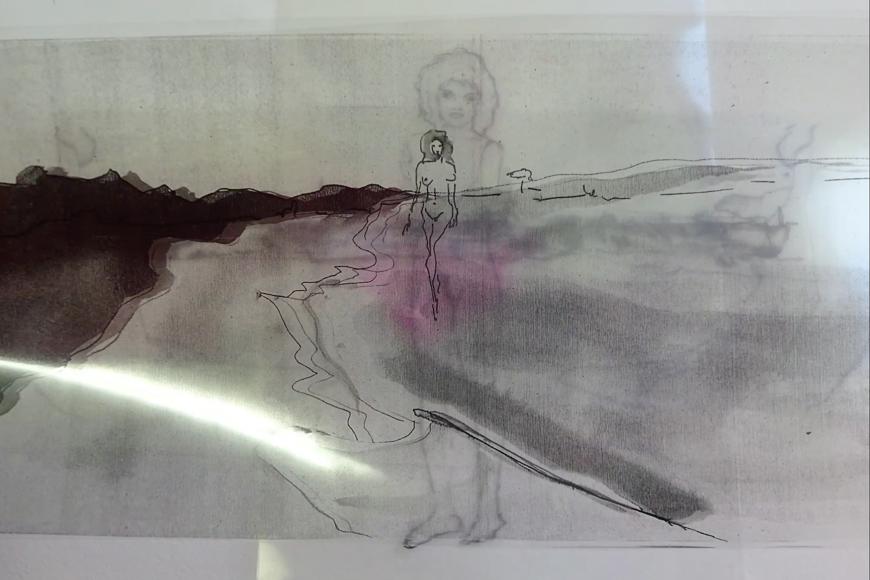
Siren-like singing and rhythmic light reflections segue into a lyrical text and sketched silhouettes of coastlines and waves. Delicate lines and soft shadings on superimposed transparent foils form many-layered networks of shapes and structures. What is offscreen creeps into the frame through reflections and blends in with the visual design of the film. Then and now meet and merge into a poetic narrative about a childhood in Stralsund, at a time when the city was still part of the GDR. A fenced-in, circumscribed childhood, framed by nocturnal floodlights, the bawling of drunk sailors and the crumbling plaster of facades and walls gone grey. The narrator manages to leave this oppressive fortress behind, but she can never escape completely. The memories that have settled like grey dust on her interior will stay with her forever.
An outcry, a free-roaming paper dog and enduring pain: This experimental stop motion animation takes us into the emotional depths of a personal story of loss.
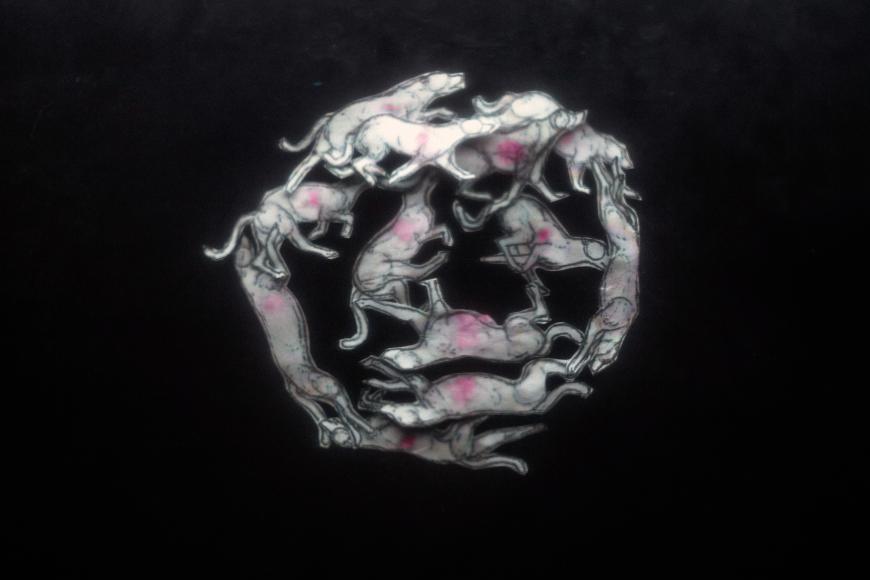
In only ninety seconds Marcus Grysczok tells a touching personal story of loss and takes us to great emotional depths. Tune in: an electronically distorted outcry. The protagonist talks to himself and to someone who no longer lives in this world, but all the more in his heart. He looks for a way out of this state of powerlessness, assuming a stranger’s role, a free-roaming paper dog that runs between real shelves and across tables, races past people on black-and-white photographs and everyday objects, chases himself on a plate rim. The images convey a feeling of home – a home for memory and for life. Tune out? As soon as the dog stops, reality puts an end to this restless racket and brings the awareness of enduring loss. Poetic in language and design, the film formulates a moving but clear-eyed farewell to a brother.