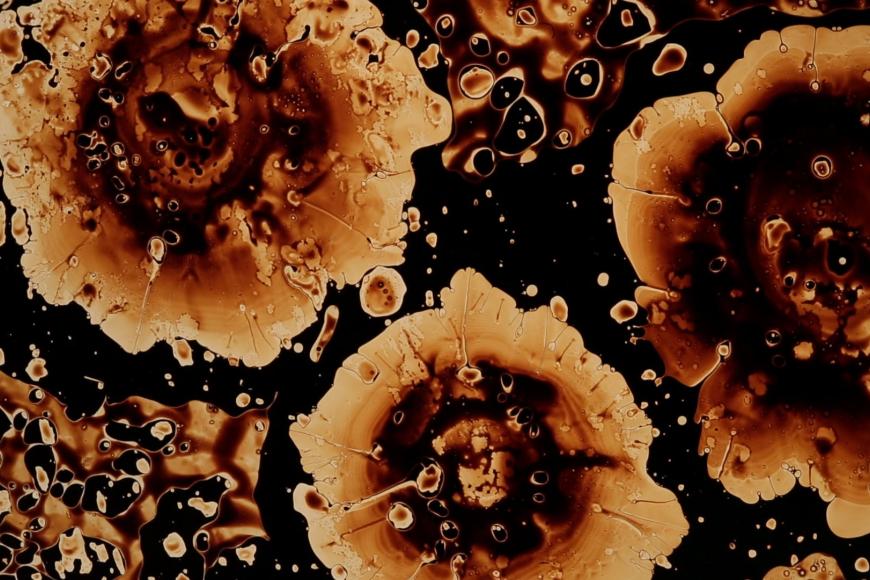
An oily liquid oozes across the frame. Wafting windows in the black mass draw the eye to the levels below. Everything is in motion. Hypnotic music enhances the viscosity of the soft body until we believe that we see a “Liquid Light Show” from the 1960s. But these are the dark revenants of psychedelic hippie visuals that put us into a black trance.
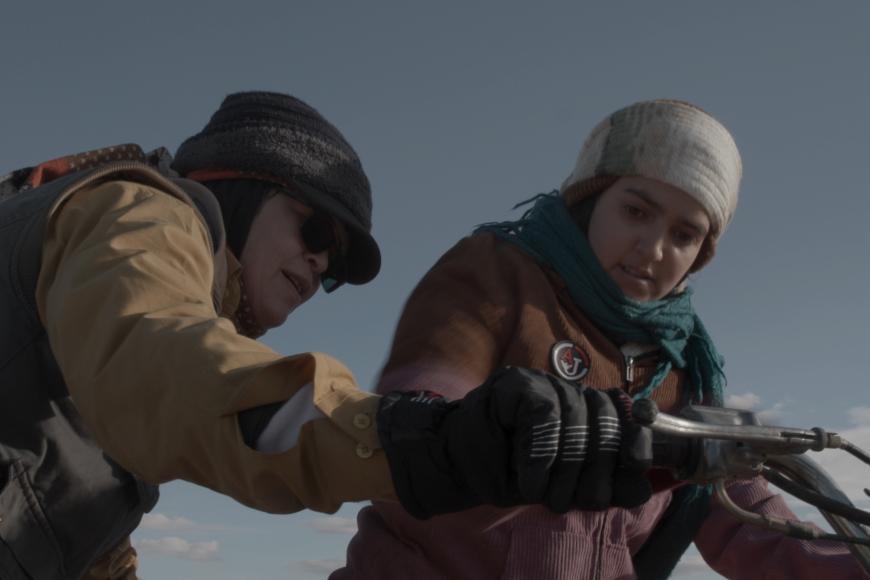
Fighting patriarchy on a motorcycle: A female local politician in rural north-western Iran is campaigning for the self-determination of the women and girls in her community.
The “Woman, Life, Freedom” protests in Tehran and other major cities seem far away from the place where Sara lives. But in her rural community in northwestern Iran, the protagonist of this film advocates the same feminist values in a practical, everyday way. Again and again, we are reminded by the images that her father once taught her to ride a motorbike – to the disapproval of the whole village. A small favour with big consequences: For Sara, it paved a way outside patriarchal marriage. Mobile on two wheels, she works as a midwife and has delivered many girls for whom she now wants to fight: At the start of the film and in middle age, Sara decides to be the first woman in the history of her community to run for the local council. A step which earns her enthusiastic support on the one hand; on the other, she must endure open hostilities and an interrogation by the moral enforcers of the Islamic Republic. In “Cutting Through Rocks”, Sara Khaki and Mohammadreza Eyni capture these power structures and their individual impact as precisely as the gestures of solidarity and self-determination.