A look back at a GDR childhood by the sea, where boundaries and freedoms were always close to each other: a poetic autobiography, condensed in hundreds of watercolours.
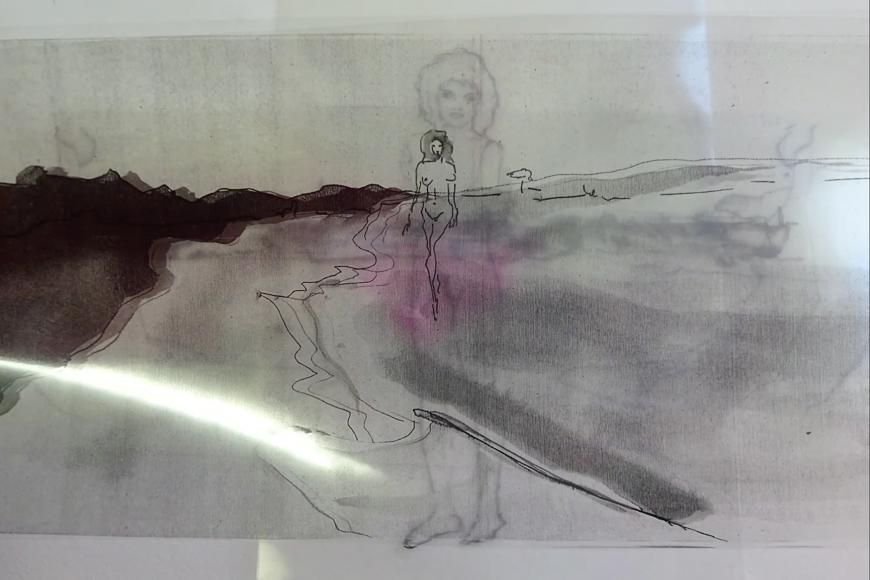
Siren-like singing and rhythmic light reflections segue into a lyrical text and sketched silhouettes of coastlines and waves. Delicate lines and soft shadings on superimposed transparent foils form many-layered networks of shapes and structures. What is offscreen creeps into the frame through reflections and blends in with the visual design of the film. Then and now meet and merge into a poetic narrative about a childhood in Stralsund, at a time when the city was still part of the GDR. A fenced-in, circumscribed childhood, framed by nocturnal floodlights, the bawling of drunk sailors and the crumbling plaster of facades and walls gone grey. The narrator manages to leave this oppressive fortress behind, but she can never escape completely. The memories that have settled like grey dust on her interior will stay with her forever.
An outcry, a free-roaming paper dog and enduring pain: This experimental stop motion animation takes us into the emotional depths of a personal story of loss.
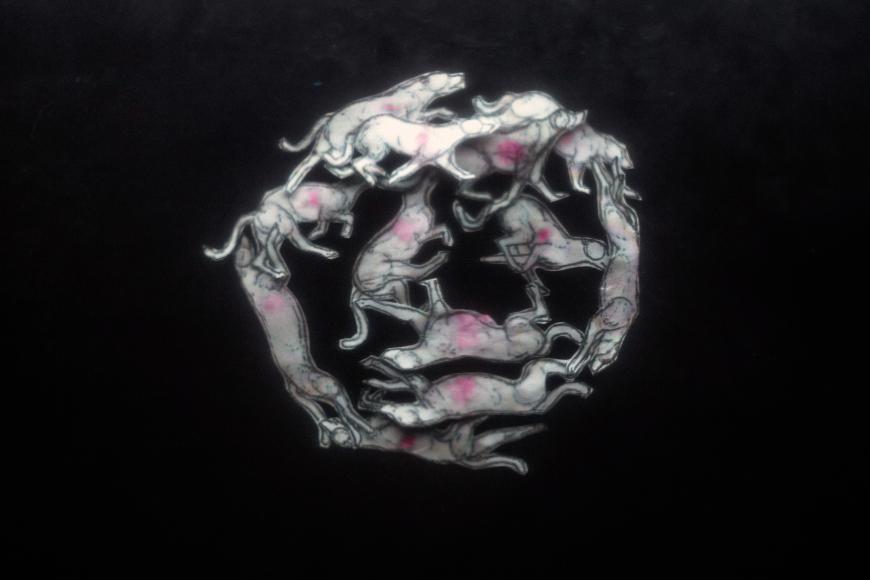
In only ninety seconds Marcus Grysczok tells a touching personal story of loss and takes us to great emotional depths. Tune in: an electronically distorted outcry. The protagonist talks to himself and to someone who no longer lives in this world, but all the more in his heart. He looks for a way out of this state of powerlessness, assuming a stranger’s role, a free-roaming paper dog that runs between real shelves and across tables, races past people on black-and-white photographs and everyday objects, chases himself on a plate rim. The images convey a feeling of home – a home for memory and for life. Tune out? As soon as the dog stops, reality puts an end to this restless racket and brings the awareness of enduring loss. Poetic in language and design, the film formulates a moving but clear-eyed farewell to a brother.
An unpleasant examination by a meticulous doctor leads to a supposedly inevitable medical intervention that leaves the young patient scarred in body and soul.
In a sterile white examination room, a young woman is asked by a doctor to undress completely. An exhaustive examination of the protagonist’s skin begins during which every centimetre, the palm of her hand, the sole of her foot, the back and also the genital area are closely scrutinised. The doctor meticulously probes every nook and cranny of the young woman’s outer shell until she is able to identify a suspicious birthmark. A timely appointment to remove the mole is made.
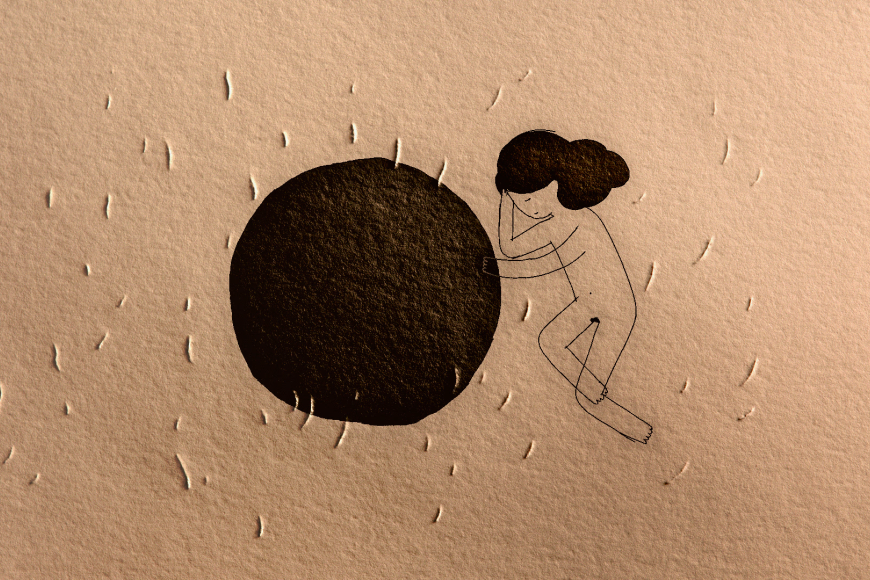
Exposed and irritated, the protagonist finds herself confronted with her fears about the surgery and the after-effects of the examination. A tiny birthmark triggers an inner process: an analysis of her own body and the control others are allowed over it. Fragile lines on scarred paper and a tonal design that gives us goosebumps make us participate intensely in her emotions.
Design as a political act? In this animated collage, a contemporary advertising graphic designer explores the uncompromising work of the photomontage pioneer and anti-fascist John Heartfield.
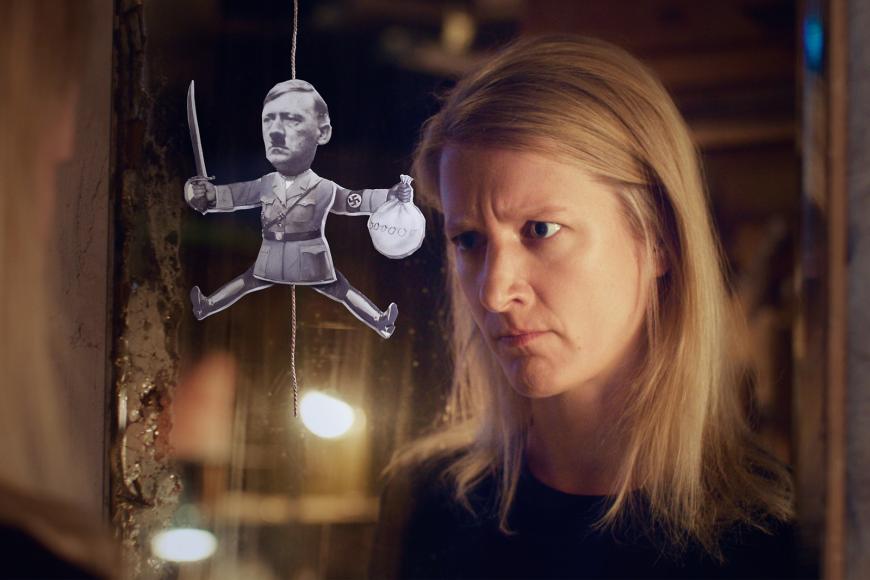
As she visits an exhibition, a graphic designer is mesmerised by the photocollages of the anti-fascist John Heartfield, who became known as the “montage dada.” Stefanie falls through a vortex of paper and photo snippets into an old-fashioned looking studio. A pair of scissors – an analogue tool she herself hardly uses – attracts her attention. She begins to cut a figure out of cardboard, a miniature version of the artist who at once addresses her and explores his life and works with her. The studio turns out to be a living archive that ceaselessly produces documents and information about Johnny. The research gives Stefanie, stressed and disappointed by her job, new motivation, and the courage to choose a different path as a designer.
Both protagonists have the same profession and find themselves facing the same questions about the significance and recognition of their work. Both are struggling in their own way with frustration and fears, caused by the different social and political circumstances of their generations. The different elements of this animated documentary come together in a dialogic collage that reflects on the mission of art, its educative and critical power, and its potential to bring about changes in our society.
Franka Sachse
Credits
Director
Katrin Rothe
Script
Katrin Rothe
Cinematographer
Thomas Eirich-Schneider, Richard Marx, Manon Pichón
Editor
Hannes Starz
Producer
Gunter Hanfgarn, Andrea Ufer, Ralph Wieser, Sereina Gabathuler, Werner Schweizer
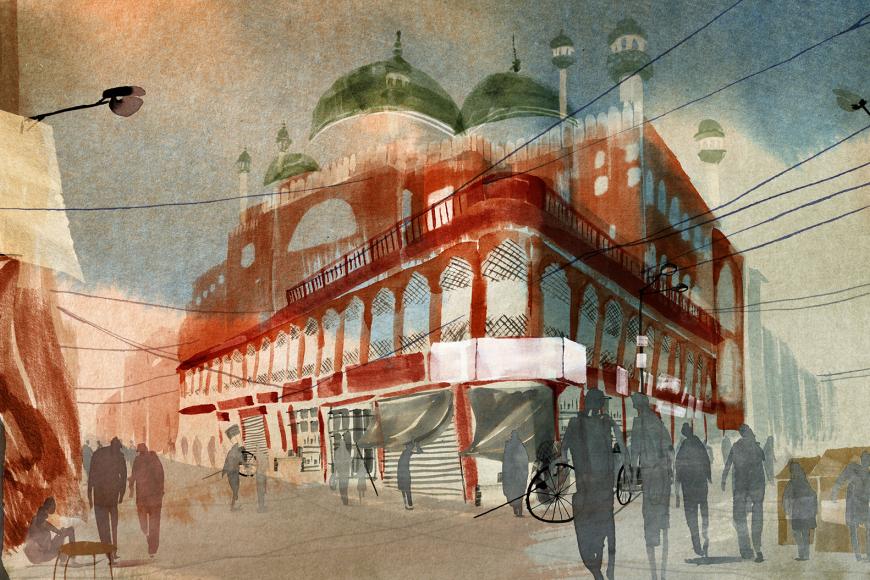
Inspired by a feminist science fiction story, the Spaniard Inés embarks on a journey of discovery through India. She is looking for Ladyland, the utopian land of women.
Dreamy animated images in detailed henna painting and atmospheric watercolours dominate a young Spanish artist’s moving journey of discovery. In a small bookshop in India, Inés comes across the feminist-utopian science fiction story “Sultana’s Dream.” It is about the terrible revenge on men, the bookseller explains. In the slim volume she wrote in 1905, Rokeya Hossain describes the fantasy realm of Ladyland – a land in which women are self-determined and live in peace, in which they run all government affairs and all forms of education are open to them. And the men? Their place in Ladyland, the bookseller continues, is where they belong: locked up at home.
Fascinated by the literary “painting” of this place and its inventor, Inés sets out in the footsteps of the writer and teacher Hossain, who championed education and equal rights for Indian girls and women as early as the beginning of the 20th century. The trip takes the Spaniard across contemporary India. Her companions are the dreams of Ladyland – and the utterly different realities of the lives of the women she meets on her journey.
Jana Kraft
Credits
Director
Isabel Herguera
Script
Gianmarco Serra, Isabel Herguera
Cinematographer
Eduardo Elosegi
Editor
Gianmarco Serra
Producer
Fabian Driehorst, Chelo Loureiro, Mariano Baratech, Diego Herguera, Iván Miñambres
Sound Design
Simon Bastian, Gianmarco Serra
Score
Gianmarco Serra, Tajdar Junaid
Animation
Izibene Oñederra Aramendi, Ana María Sabater Araújo, Paula Valiño Rivera, Sergio Pereira del Castillo, María José Alfonso Torrescusa
World Sales
Wouter Jansen
German Distributor
Vanessa Ciszewski
Artistic Design
Francisco Muñoz de Gregorio, María Manero Muro, Rajesh Thakare, Nelson Cabrera Curbelo, Upamanyu Bhattacharyya, Bhusan Katkar, Aravind Senan, Begoña Vicario, Troy Vasanth
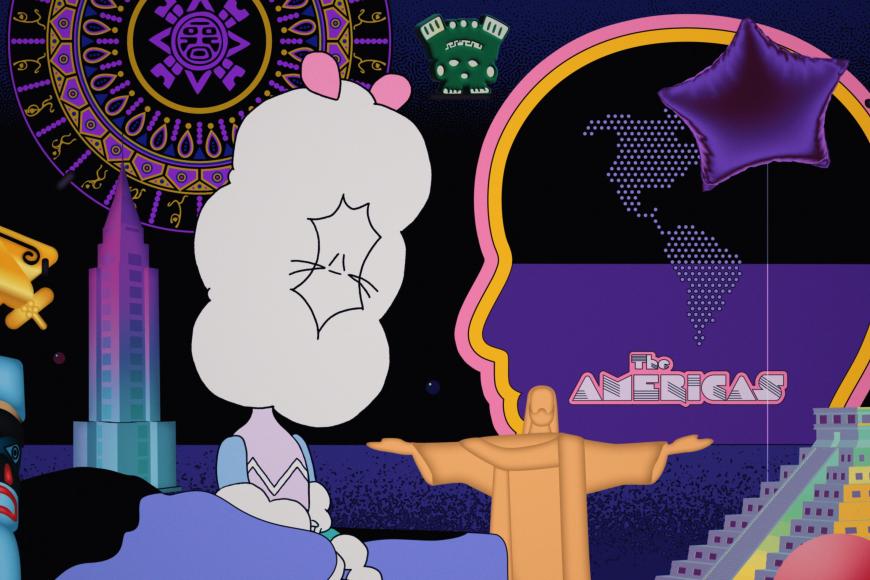
In 2043, humanity launches the spaceship Zoopticon to send a greeting to distant galaxies. An extraterrestrial opera with cheering colours and radiant pop charm in the darkness of space.
In 2043, humanity launches a spaceship called Zoopticon to send a greeting to distant galaxies. Lightyears later, the once proud – loaded with valuable cultural artefacts and lots of hope, after all – ambassador’s spirits sink in the infinite expanse. Loneliness leads to a blundering suicide attempt which jolts the spaceship’s body awake, whereupon the genetic material of five animals from five continents stored in petri dishes unexpectedly comes to life.
Jon Frickey, Sandra Trostel and Thies Mynther brush the science fiction classic “2001” against the grain. Their Zoopticon, a benevolent relative of Stanley Kubrick’s supercomputer HAL 9000, takes a surprising route on its odyssey through space. Their extraordinarily stylish animation starts with a moving monologue of the sensitive protagonist and finds its perfect orbit as a grandiose opera gradually begins to unfold – complete with soulful drama, brightly coloured radiant pop charm and tongue-in-cheek cathartic confidence.
André Eckardt
Credits
Director
Jon Frickey, Thies Mynther, Sandra Trostel
Script
Jon Frickey, Thies Mynther, Sandra Trostel, Christoph Mathieu