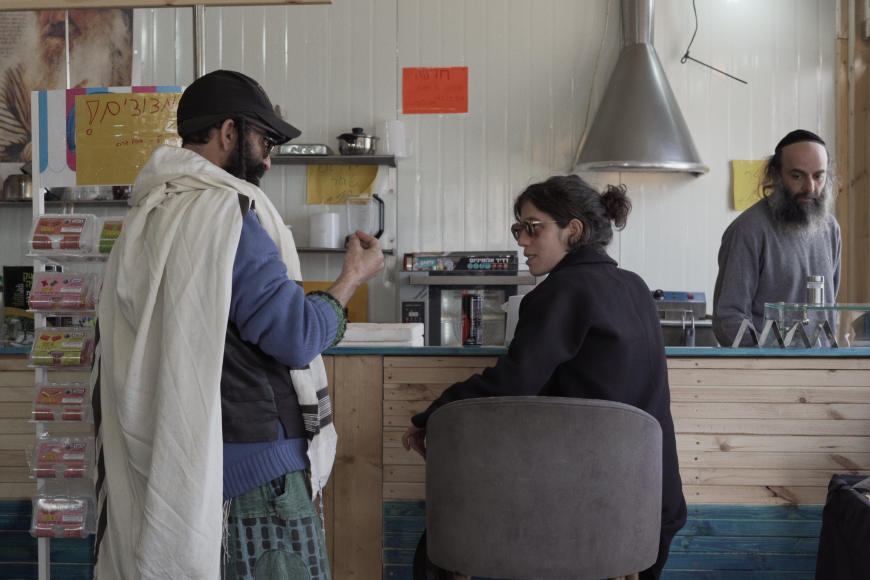
Maya Steinberg is a secular Israeli. Her father, however, had a late religious awakening. He will not appear in her film. Instead, the young director approaches his faith and her lack of understanding for it through a visit to the gravesite of rabbi Shimon bar Yochai in Galilee, where she spends a few weeks, observing believers, Orthodox and ultra-Orthodox, and wondering: Is there a place here for women? And can there be a place for queer women?
A tour of a computer-generated desert landscape and a story of failure: The first casino in Palestine opened in 1998, only to close down again very soon.
A virtual tour of a computer-generated desert landscape and a story of failure: In 1998, the “Oasis”, Palestine’s first casino, opened. The peace-making idea associated with this development project lost out against political reality. Game over – the oasis becomes a multifaceted fata morgana of interviews with employees, operators and guests.
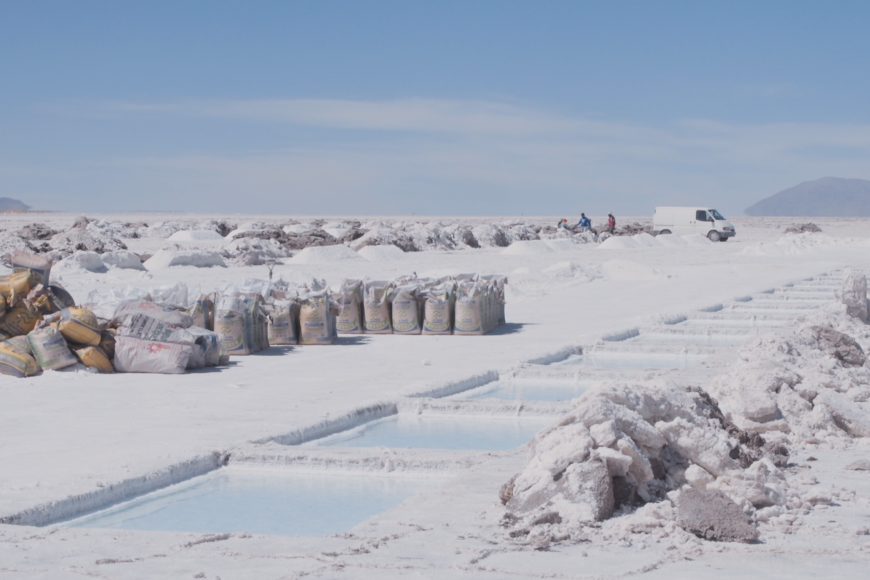
The downside of e-mobility: Because big corporations are mining lithium for batteries in the Argentinian salt deserts, the indigenous population have no water to live.
The vast expanses of the Argentinian salt deserts hold one of the greatest lithium deposits in the world. International corporations are mining the “white gold”, robbing the indigenous groups who, since time immemorial, have bred llamas and lived on traditional salt-mining in this area, of precious ground water. In magnificent images and with a narrative approach that combines poetry and agitprop, “Oro Blanco” shows how the indigenous population are fighting against the exploitation and destruction of “pacha mama”. Their resistance needs some heightened awareness on the other side of the world, where lithium batteries are all too often regarded as the cure-all against the use of fossil fuels.