Film Archive

Retrospective 2021

The Empty House

Miriam Pfeiffer
After reunification the Israelite Religious Community Leipzig grows – and needs room. But their new residence remains empty for the time being: neighbouring land owners sue.
Media Name: 706133db-2e7a-4e4b-b398-a68e39267834.jpg

The Empty House

Das leere Haus
Miriam Pfeiffer
Retrospective 2021
Documentary Film
Germany
2004
30 minutes
German
Subtitles: 
None
After reunification, immigration made the Israelite Religious Community of Leipzig grow to considerable size, too big for its old rooms. The Ariowitsch House, built in the 1920s as an Israelite old people’s home, is to become the home of a generously dimensioned cultural and community centre – and at the same time commemorate the residents of the home who were deported to Theresienstadt in 1942. But the start of the development is delayed: neighbouring land owners file a lawsuit. Miriam Pfeiffer intervenes in the ongoing public debate, asking citizens of the city about their suspicions concerning reasons of the refusal that the competent court may not be aware of.
Sylvia Görke

Credits DOK Leipzig Logo

Director
Miriam Pfeiffer
Cinematographer
Miriam Pfeiffer, Alexandra Czok
Editor
Maurice Hünsni
Producer
Schulmuseum Leipzig
Sound
Anja Hempel, Gert Blumhagen
Score
Chor der Israelitischen Religionsgemeinschaft zu Leipzig
Retrospective 2021

The Road We Don’t Walk Together

Dominik Graf
Dominik Graf contributed a reflection on West German post-1945 urban architecture to the anthology film “Germany 09”: improvisations decoratively arranged after 1990.
Media Name: d98e56f2-f695-4e68-b8c5-122c1e7807e9.png

The Road We Don’t Walk Together

Der Weg, den wir nicht zusammen gehen
Dominik Graf
Retrospective 2021
Documentary Film
Germany
2009
13 minutes
German
Subtitles: 
None
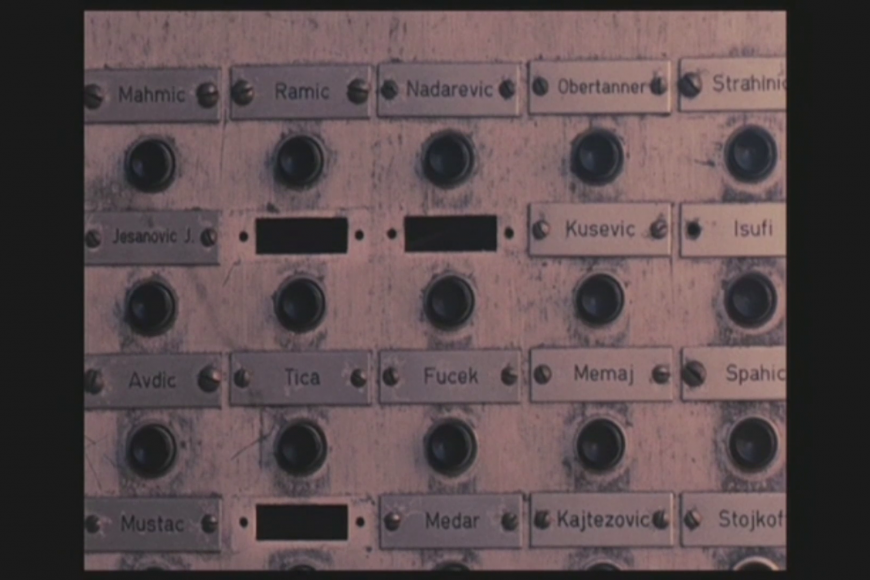
The project “Germany 09” brought the upper league of German auteur filmmakers together to take stock of the Berlin Republic in individual film contributions. Dominik Graf contributed to this collage of the German image a reflection about post-1945 urban architecture shot on old Super8 stock: provisional, slipshod ensembles of pretty-ugly public buildings, fenced-in urban wasteland, draughty storefronts and uninhabited housing blocks in Munich, Duisburg, Frankfurt am Main, West Berlin, all of them testimonies to an unplanned through traffic for social and migrant milieus. A thorn in the side of the reunited mania for cleaning up, renovating and decorating.
Sylvia Görke

Credits DOK Leipzig Logo

Director
Dominik Graf
Script
Dominik Graf
Cinematographer
Martin Gressmann
Editor
Katja Dringenberg
Producer
Dirk Wilutzky, Tom Tykwer
Sound
Andreas Mücke-Niesytka
Media Name: 5d71a81f-2675-4892-8137-18ed51cff031.jpg

The Crossing

Die Odyssee
Florence Miailhe
Competition for the Audience Award 2021
Animated Film
Czech Republic,
France,
Germany
2020
84 minutes
German
Subtitles: 
English
A country that could be anywhere, not precisely localized and yet everywhere. It’s a beautiful summer’s day when the life of siblings Kyona and Adriel changes forever. Their village is raided, destroyed and set on fire. The whole family is forced to flee and experiences many real and surreal situations on their tracks across a whole continent to finally arrive, perhaps, at a more peaceful place.
At the start of the film, Kyona leafs through a sketchbook, takes stock of her life and talks about the end of her childhood. It is only later that the siblings even realize that they are refugees, that like many others they are making their way to the border for a variety of reasons: natural disasters, the consequences of climate change, war, persecution. The two children come across dangerous and helpful people, are separated and find each other again. This feature-length animation, realized in oil on glass, relies on the rapid interplay between fantasy and reality, taking us, on the one hand, into a fictitious, non-real world. But on the other hand, the places, names, situations remind us of familiar things. They show fleeing, exile, setting out as a universal experience.
Lina Dinkla

Credits DOK Leipzig Logo

Director
Florence Miailhe
Script
Florence Miailhe, Marie Desplechin
Editor
Nassim Gordji Tehrani, Julie Dupré
Producer
Dora Benoussilio
Co-Producer
Luc Camilli, Ralf Kukula, Martin Vandas, Alena Vandasoá
Sound
Florian Marquardt
Score
Andreas Moisa, Philipp Kümpel
Animation
Marta Szymańska, Zuzana Studená, Anna Paděrová, Eva Skurská, Polina Kazak, Lucie Sunková, Urte Zintler, Paola de Sousa, Ewa Łuczków, Anita Brüvere, Aurore Peuffier, David Martin, Marie Juin, Valentine Delqueux, Aline Helmcke
Winner of: Gedanken Aufschluss Prize
Media Name: e7951b05-5dcd-41d3-9c21-336d753a9a59.jpg

Transience of Days

Die Vergänglichkeit der Tage
Thomas Köhling
German Competition Short Film 2021
Documentary Film
Germany
2020
34 minutes
German,
Japanese
Subtitles: 
English
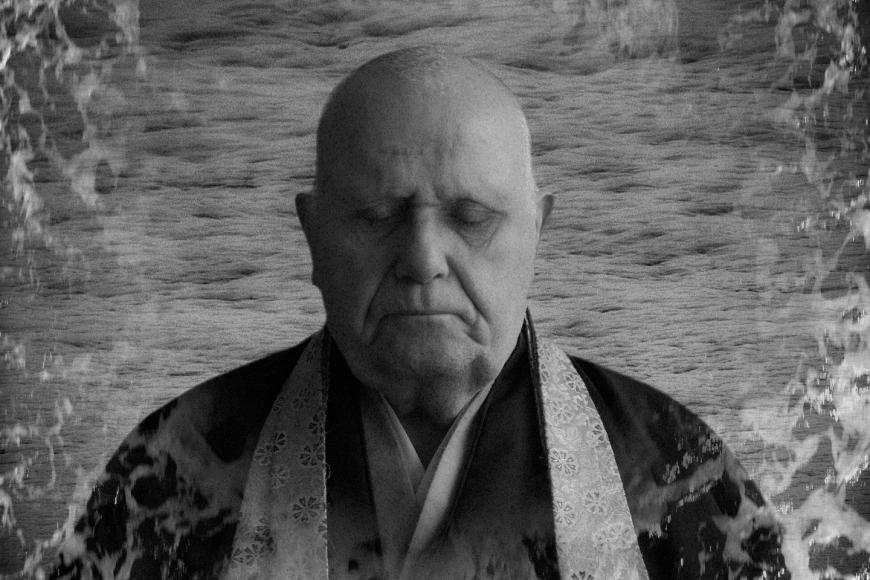
Eating together with chopsticks, forks, or cheese sandwiches: Heinz Toku-Zen Anneser and his students practice Buddhist rituals without pretension. In his study, which is as precisely measured as it is poetic, Thomas Köhling observes the daily routines of this small, quiet group in the German provinces and finds appealingly bizarre moments when Eastern religion and western culture overlap. The sky above the Velux window is the same as above Mount Fuji.
André Eckardt

Credits DOK Leipzig Logo

Director
Thomas Köhling
Cinematographer
Thomas Köhling
Editor
Thomas Köhling
Producer
Thomas Köhling
Sound
Rafael Vogel
Media Name: 9888c5f8-91d9-4a28-a6d0-3a6820d09d85.jpg

Thing

Ding
Malte Stein
German Competition Short Film 2021
Animated Film
Germany
2021
4 minutes
without dialogue
Subtitles: 
None
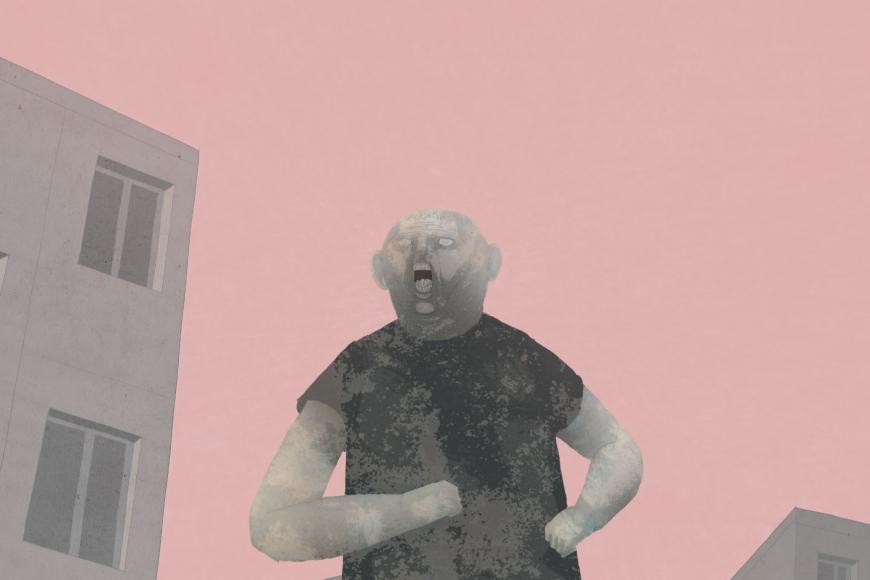
Small and cu… no, not cute. This knee-high creature seems somewhat affectionate and shy instead. Until it comes snarling around the corner, sprinting after you on short legs through the empty suburb. An uneasy lurking, a lurking unease starts to spread. With hand-drawn austerity, mean sounds and not-so-friendly characters, Malte Stein prepares the surgical instruments for some terrific mental cinema – for the protagonist and for all who watch him.
André Eckardt

Credits DOK Leipzig Logo

Director
Malte Stein
Producer
Malte Stein
Animation
Malte Stein
Media Name: 27ae30bc-388b-4639-9a0f-12cfd643ec94.jpg

The Cars We Drove into Capitalism

The Cars We Drove into Capitalism
Georgi Bogdanov, Boris Missirkov
Competition for the Audience Award 2021
Documentary Film
Bulgaria,
Croatia,
Czech Republic,
Denmark,
Germany
2021
93 minutes
Bulgarian,
Czech,
English,
German,
Norwegian,
Russian
Subtitles: 
English
A nostalgic trip into a past when buying a car constituted a lifetime’s work – especially for those Europeans who had a maximum of two handful of brands at their disposal. This cheerfully edited collection of auto biographies from socialist production evokes seemingly carefree times when the motorized vehicle was allowed to be simply a status symbol: free from ideological turf wars revolving around the climate crisis and mobility diets.
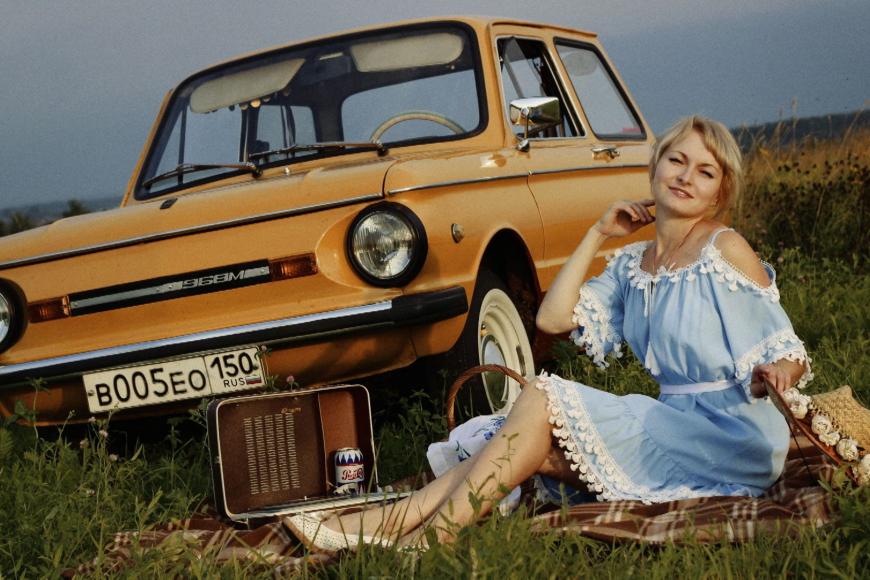
From Russia via Bulgaria and the Czech Republic to Germany and Norway, love stories between humans and Trabi, Moskvitch and Volga are captured on film. We meet protagonists who are fond of their beloved piece of tin, then or now, or have even amassed a considerable collection. There’s a couple who met and fell in love at a retro car exhibition and still drive the same model today. We meet a sexton who passes on his official car after 32 years of use. We make the acquaintance of a pin-up who always poses in front of vintage cars from the East. They all have a soft spot for these rickety rust buckets, because even though the products of the socialist car industry were usually slow, chunky, tedious to drive and to repair, they were all regarded as showpieces of a successful life. And there was one in almost every family: coveted, long longed-for, assiduously polished.
Lina Dinkla

Credits DOK Leipzig Logo

Director
Georgi Bogdanov, Boris Missirkov
Script
Boris Missirkov, Georgi Bogdanov
Cinematographer
Boris Missirkov, Georgi Bogdanov
Editor
Emil Granicharov, Jacob Thuessen, Georgi Tenev
Producer
Martichka Bozhilova
Co-Producer
Tina Leeb, Miljenka Čogelja, Dana Budisavljević, Jiří Konečný, Sigrid Jonsson Dyekjær, Sascha Beier, Simone Baumann
Sound
Veselin Zografov
Homage Avi Mograbi 2021

The First 54 Years – An Abbreviated Manual for Military Occupation

Avi Mograbi
Why and for what purpose does politics resort to the model of “military occupation”? Avi Mograbi uses the example of “Israel-Palestine” to explain its standard mechanisms and aporias.
Media Name: 0dfc297f-7581-4a38-a0b5-23eb1b3372c7.jpg

The First 54 Years – An Abbreviated Manual for Military Occupation

54 hashanim harishonot – madrikh mekutzar lekibush tzva’i
Avi Mograbi
Homage Avi Mograbi 2021
Documentary Film
France,
Finland,
Israel,
Germany
2021
110 minutes
Hebrew,
English
Subtitles: 
English
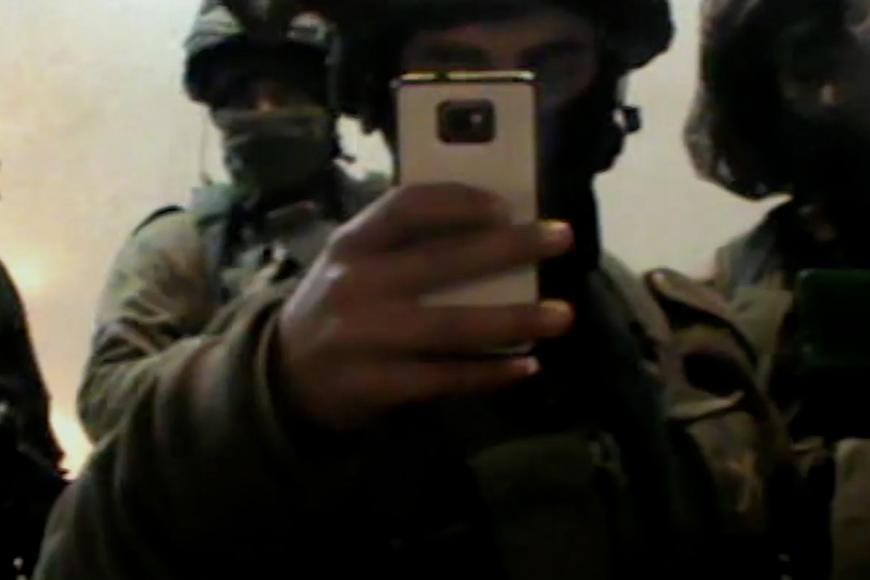
The archived testimonies of “Breaking the Silence”, an association of military veterans, are to be turned into a compilation of “service incidents” in the Israeli-occupied territories. But Avi Mograbi confesses: “My films tend to get complicated, even when my intention is to make a very simple film.” His reaction to a complex doom is artistically and intellectually commensurate: complex. Once again he uses a built-in commentary function in which he himself, white-bearded, explains the tricky situation to his audience: not as a special “Israel-Palestine” case, but as the bitter standard application of the globally familiar aporetic model of “military occupation”.
Sylvia Görke

Credits DOK Leipzig Logo

Director
Avi Mograbi
Script
Avi Mograbi
Cinematographer
Tulik Gallon, Philippe Bellaiche
Editor
Avi Mograbi
Producer
Camille Laemlé, Serge Lalou
Co-Producer
Annie Ohayon-Dekel, Fabrice Puchault, Heino Deckert, Leila Lyytikäinen, Elina Pohjola, Farid Rezkallah, Anne Grolleron, Avi Mograbi
Sound
Avi Mograbi
World Sales
The Party Film Sales
Media Name: 4a763a31-8e8b-4c56-8feb-e1a972af21df.jpg

The Good Soldier

Le bon soldat
Silvina Landsmann
Competition for the Audience Award 2021
Documentary Film
France,
Germany,
Israel
2021
88 minutes
English,
Hebrew
Subtitles: 
English, German Subtitles for deaf and hard-of-hearing
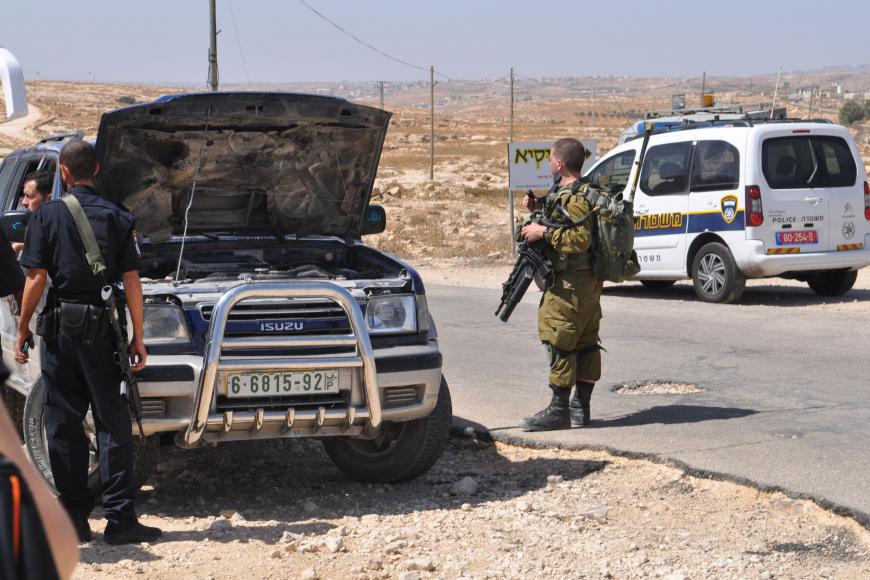
The NGO “Breaking the Silence” – BtS for short – consists of veteran Israeli soldiers who, by collecting personal accounts of their memories, want to raise awareness of everyday military life and the treatment of the population in the Occupied Territories. Director Silvina Landsmann’s film allows us a look behind the scenes of a contested group with a controversial approach in the midst of a conflict that’s been smouldering for more than 70 years.
What makes a good soldier? The ability to execute orders without scruples, or the consideration of higher moral goals when dealing with the enemy? For many members of BtS, the latter was only possible after active military service. In their work, they engage with operations and acts that in retrospect seem wrong to them. They address the Israeli population and foreign media with videos, lectures and city tours. The streets of Hebron are the site of frequent clashes between BtS, Israeli settlers and the army. On the political level, too, the organisation is harshly criticized. They are accused of fabricating stories, damaging Israel’s reputation and playing into the hands of anti-Semites. Landsmann observes with a cinematic, sober eye how the group struggles internally and externally to find its voice.
Kim Busch

Credits DOK Leipzig Logo

Director
Silvina Landsmann
Cinematographer
Silvina Landsmann
Editor
Tal Shefi
Producer
Silvina Landsmann, Pierre-Olivier Bardet
Co-Producer
Christoph Menardi
Sound
Ami Arad, Guy Barkay, Nadir Fleishman, Zohar Cheppa, Tully Chen
Retrospective 2021

Theresienstadt: A Documentary Film from the Jewish Settlement Area

Kurt Gerron, Karel Pečený
Nazi propaganda surviving in fragments, staging the camp as a retirement home for Jewish “resettlers”. The prisoner and conscripted co-director Kurt Gerron died in the gas chamber.
Media Name: c7b2bfa0-65e3-45c4-9e68-fedf6db3b968.jpg

Theresienstadt: A Documentary Film from the Jewish Settlement Area

Theresienstadt. Ein Dokumentarfilm aus dem jüdischen Siedlungsgebiet
Kurt Gerron, Karel Pečený
Retrospective 2021
Documentary Film
Germany
1944
17 minutes
German
Subtitles: 
None
A Nazi propaganda film that survived only in fragments and never got to “test” its effect. It took intensive research to identify the scattered remains, correct the title in circulation, “Der Führer schenkt den Juden eine Stadt” (The Führer Gives a City to the Jews), and clarify who was able to see the roughly 90-minute attempted defraud at all before it disappeared. The intended international audience was no longer within reach in 1944/1945. But would they have been convinced by the retirement home for “resettled” Jews staged here? Kurt Gerron, film and theatre celebrity, interned in the Ghetto and conscripted as co-director, was deported to Auschwitz and gassed as late as 1944.
Sylvia Görke

Credits DOK Leipzig Logo

Director
Kurt Gerron, Karel Pečený
Script
Kurt Gerron
Cinematographer
Ivan Fric, Čeněk Zahradníček, Josef Cepelak, Karel Pečený
Editor
Ivan Fric
Producer
Karel Pečený
Sound
Jaroslav Sechura, Josef Francek
German Competition 2021

Time Before Land

Juliane Henrich
The director – or more precisely, her alter ego – sets out in search of traces of her family history in Silesia. What she finds are dinosaurs. Including a few made of plastic.
Media Name: e4881cb9-0ea6-4d31-a8da-ef019fa67b45.jpg

Time Before Land

Vor Zeit
Juliane Henrich
German Competition 2021
Documentary Film
Germany
2021
80 minutes
German,
Polish
Subtitles: 
German Subtitles for deaf and hard-of-hearing, English
Silesia: a contested region marked by migrations. Animosities between the peoples have a long tradition here, not only since the Second World War. But the National Socialist tyranny left clear lesions behind. The director’s grandfather comes from this region, was the organist in a church in Krasiejów – a place which was once also called Krascheow and, for a while, Schönhorst.
The filmmaker Juliane Henrich – or more precisely, her alter ego, the writer Nannina Matz – sets out in search of her family history. What she finds are bizarre ways of representing the history of humanity – and the history of earth. She comes across all kinds of traces of dinosaurs. Some may only be made of plastic, but others are not: A certain species of this genus, whose fossils were found in Silesia, was christened “Silesaurus opolensis” by the Polish palaeontologist Jerzy Dzik. That’s why there is a Dinosaur Park in Krasiejów. And a local museum, of course. But also many people with different individual memories. They do not necessarily lead to ground-breaking discoveries regarding the looked-for family past, but they broaden the view: of the complex history of this region and the way it is thought together, represented and codified.
Borjana Gaković

Credits DOK Leipzig Logo

Director
Juliane Henrich
Script
Juliane Henrich
Cinematographer
Juliane Henrich
Editor
Juliane Henrich
Producer
Juliane Henrich, Thomas Kaske
Sound
Tom Schön, Kate Tessa Lee
Score
Benedikt Schiefer
World Sales
Angelika Ramlow
Funder
BKM
Performer
Nannina Matz