Impressions of an imaginary city, filmed on the background of the Chinese zeal for globalization: Contexts of meaning and geographical borders blur and reconstitute themselves.
The account of a journey through an imaginary city, filmed along China’s new trade routes. Like the fictionalized Marco Polo from Italo Calvino’s “Invisible Cities”, the traveller in this film talks of worlds that resemble familiar places but follow their own, sometimes seemingly incredible rules. The observations condense into a meditation about the nature of cities and the transformation of the concept of globalization.
The foreign visitor’s voice sounds muffled, as if it were coming out of the cave whose interior views open the film. Time and again, the eye returns there – but the fluorescent rock faces soon turn into the sparkle of distant galaxies, the narrow confines of the cave indistinguishable from the vastness of space. It is a symbol of the decoupling of sign and meaning, of “real” and “false”, of sensual impressions and their positive geographical allocation that pervades the film: Daft Punk perform in front of a Chinese shopping mall; the Eiffel Tower stands first in a housing estate, then, folded up to a fraction of its size, in view of Big Ben and Tower Bridge.
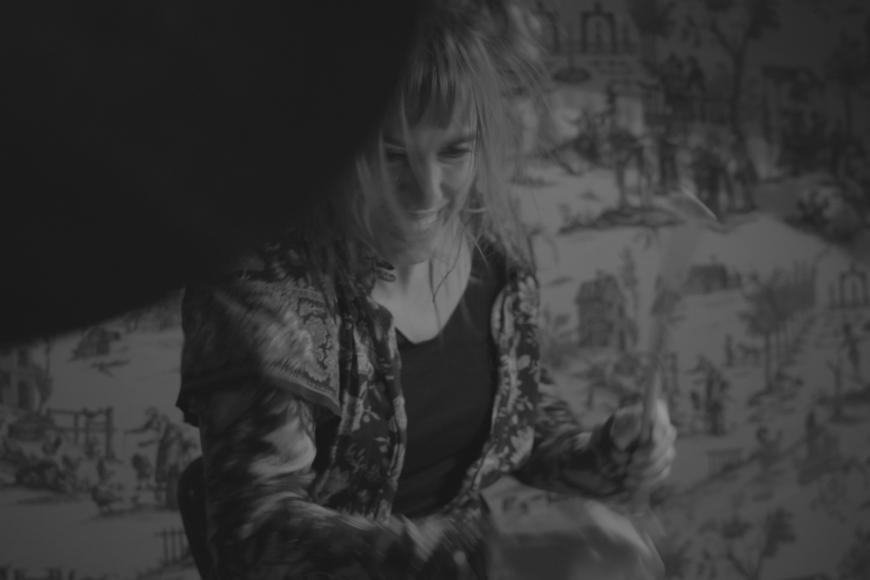
A visually and aurally outstanding film about the musician Marja Burchard, leader of the legendary band “Embryo”. An ode to hearing, experimentation and inspiration.
She first appeared on stage at the age of eleven with the legendary Krautrock band “Embryo”. Her father, Christian Burchard, founded the band in 1969 and led it until 2016. Today – in her mid-thirties – Marja Burchard is the bandleader in this project, which has become a kind of family for her. But what seems so simple and organic is far from self-evident in an extremely male-dominated sphere, as Rebecca Zehr shows in her precisely observed and designed film.
This strictly and yet lightly composed melange mixes archival footage, psychedelic animation sequences and everyday observations of the normal life of a female musician between organisation and inspiration. With the visual level restricted to black and white and thus deliberately restrained, all the more attention is focused at the sound. The – who wonders? – outstanding score never takes the music for granted but works robustly with our perception. It’s the lucid, calm images and the narrative that is always anchored in the here and now that let this film stay incredibly haptic despite its concentration on our sense of hearing. Rebecca Zehr is not interested in portraying a musical legend, but in showing us what it could look and feel like to not only make music but live in it.
Luc-Carolin Ziemann
Credits
Director
Rebecca Zehr
Cinematographer
Felix Press
Editor
Melanie Jilg
Producer
Rebecca Zehr, Katharina Rabl, University of Television and Film Munich (HFF)
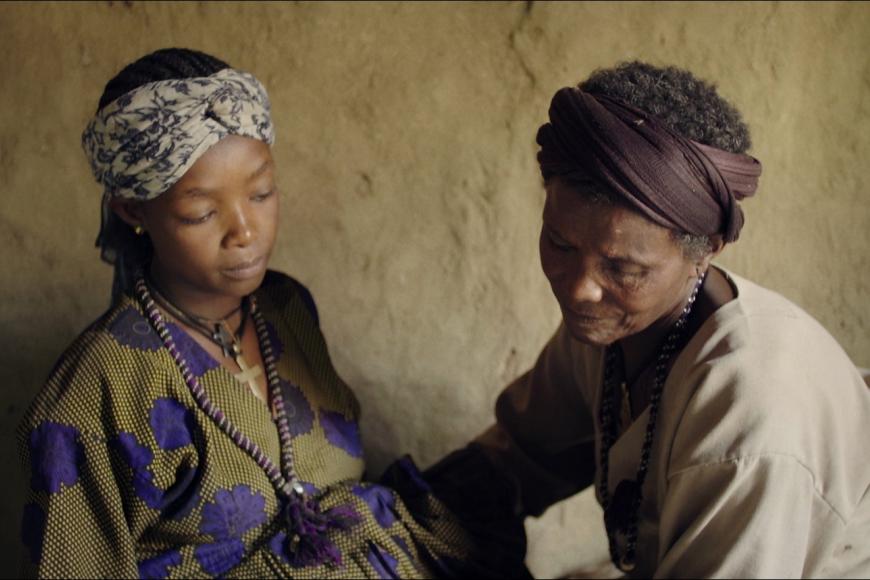
Home birth or clinic? In the field of tension between traditional and modern midwifery, the conflicts of women in Ethiopia’s changing society come to light.
In rural Ethiopia the staff of a health centre are fighting maternal mortality. They tirelessly appeal to women to give birth in the clinic. But reservations are strong, and so are the practical obstacles. How are heavily pregnant women supposed to arrive in time when the ambulance comes hours later or not at all? Against medical advice, Hulu Ager decides to give birth at home, assisted by a traditional midwife.
With palpable familiarity, the film crew captures moments of intimate communion between Hulu Ager, the midwives and other women. On the margins of the central conflict, the many challenges they face in a patriarchal society emerge. The debates are most lively under the hood dryer at the hairdresser’s: She doesn’t enjoy sex because of her circumcision, the medical professional Welela reports. “Sometimes you have to prepare yourself for sex,” another customer advises. Sometimes it helps to get drunk. But the perky hairdresser is sure: Bad sex is grounds for divorce. The women share their desires and woes with each other, experience solidarity and gather courage for small and great acts of departure and resistance. Men are relegated to the role of extras, if at all.
Sarina Lacaf
Credits
Director
Sarah Noa Bozenhardt, Daniel Abate Tilahun
Script
Sarah Noa Bozenhardt
Cinematographer
Bernarda Cornejo Pinto
Editor
Andrea Munoz
Producer
Sonja Kilbertus
Co-Producer
Hiwot Admasu, Beza Hailu Lemma
Sound
Alex Praet
Score
Anna-Marlene Bicking
Winner of:
Honourable Mendtion (International Competition)
Patterns, profiles, letters – the photocell of the film projector translates Moholy-Nagy’s “handwriting in sound” on the optical soundtrack of the film into electronic sounds.
No sooner had optical sound been invented than it was used in other than the intended way. Geometric patterns, intertwined lines, facial profiles and letters instead of voice recordings and music – Moholy-Nagy imaginatively designs the optical soundtrack of the film. The photocell of the film projector then translates his “handwriting in sound” into electronic buzzes and beeps, along and beside the musical scale.