The Tunisian censors used “Error 404” to block unwanted websites. The situation changed only after Mohamed Bouazizi burned himself in public on 17 December 2010.
What’s growing in that empty space there? On 17 December 2010, the Tunisian grocer Mohamed Bouazizi burns himself to death in public – the Arab Spring begins, the fire spreads through the Internet. A fast-forward trip through the interior architecture of a modern revolution, right into the dispersed character of the event: from the planet’s surfaces to digital de-spatialization.
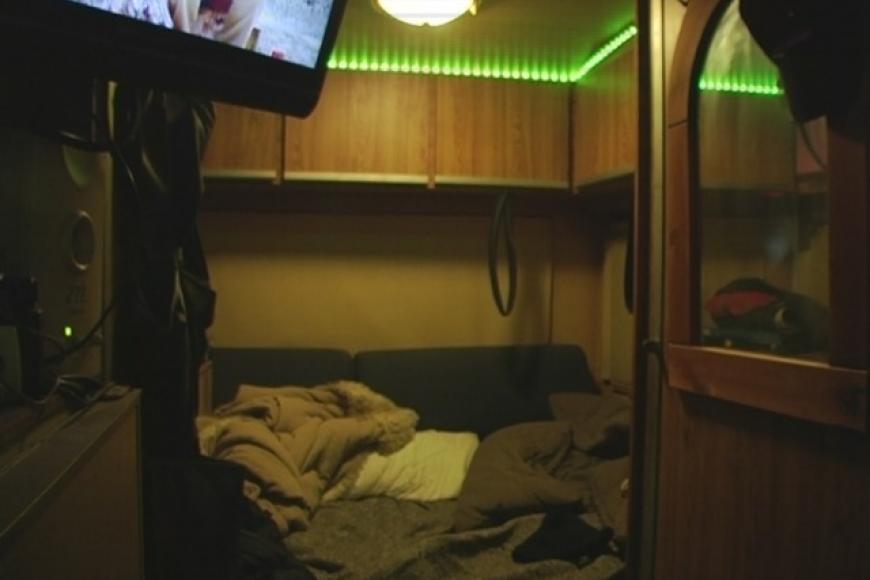
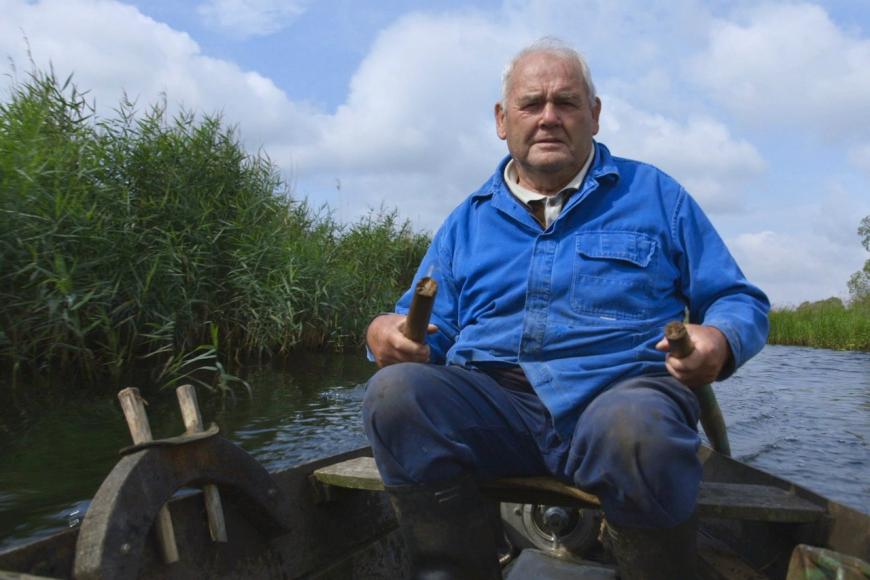
A mobile home in his front garden is Erwin’s refuge. Here he drinks his coffee and writes applications, here he satisfies his desire for men. Jan Soldat comes to visit.
58-year-old Erwin introduces himself as “old but horny”. He has declared the mobile home in his front garden his favourite refuge, where he has everything he needs: a computer, a bed, a coffee machine. Two webcams link Erwin to other men who satisfy his carnal desires. In this tiny space, Jan Soldat comes close to him, of course. He learns of love affairs, as great as extinguished, of a complicated family web and worries about the future.
Carolin Weidner
Credits
Director
Jan Soldat
Cinematographer
Jan Soldat
Editor
Jan Soldat
Producer
Jan Soldat
Winner of:
Silver Dove (German Competition Short Film)
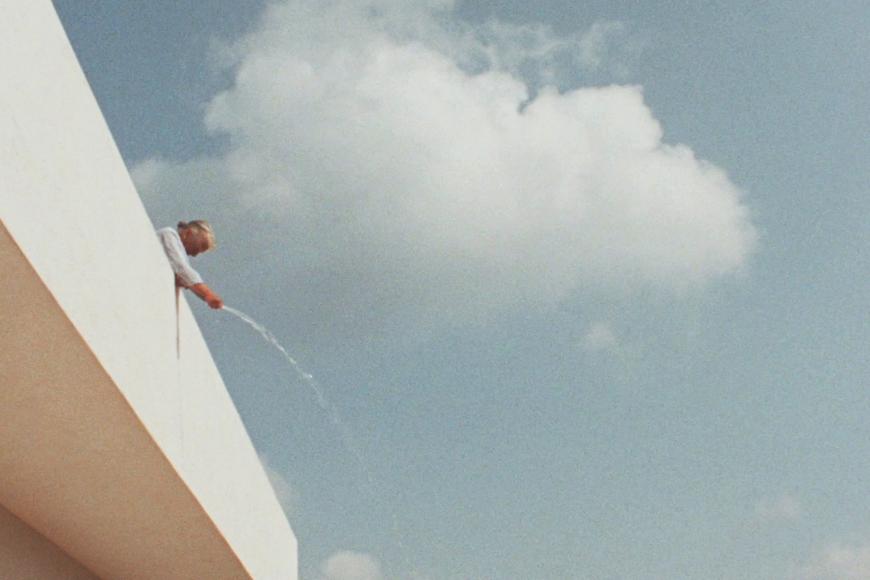
A virtuoso filmic reflection on automatisms in art and an encounter with Margaret Raspé on a Greek island, where the artist and filmmaker spends part of the year. Considered to be a pioneer of feminist German film, “I know where I am” is how she sums up her feeling on the island. Orientation in space, control and letting go are all central categories in her artistic practice.
Competition for the Audience Award Short Film 2020
Animated Film
Germany
2019
4 minutes
English,
German
Subtitles:
English
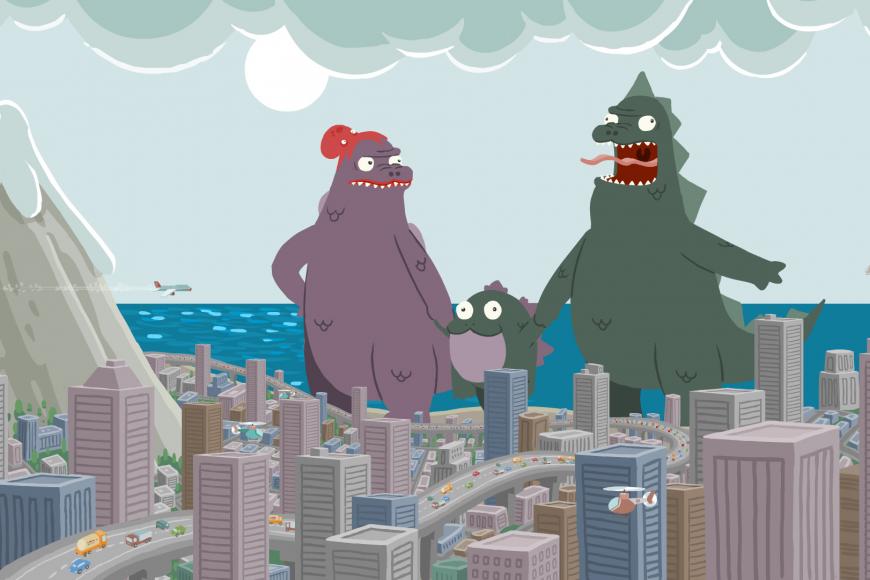
A cosy family picnic at the place they have been visiting since the Cretaceous period is what Mom, Dad and Go Zilla want. But first the big city that has annoyingly sprung up there must be flattened. In the father’s opinion, the performance of his offspring unfortunately leaves a lot to be desired: Too dreamy and still sucking on a pacifier, the little one just doesn’t wreak enough havoc. It’s an entertaining story in the almost normal everyday life of a family.
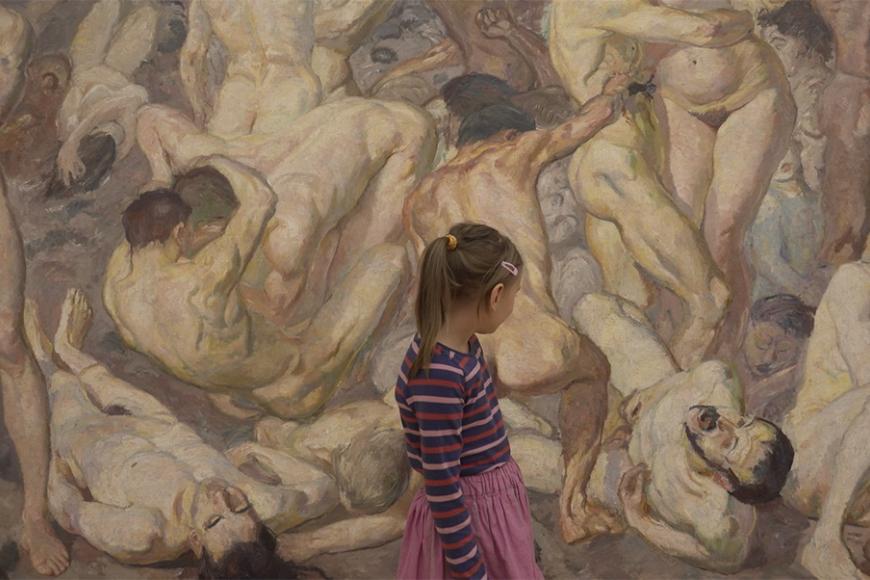
Girls in an exhibition: visitors aged between seven and nineteen contemplate individual works in the Leipzig Museum of Fine Arts and offer spontaneous interpretations.
Art is in the eye of the beholder, they say. Shelly Silver’s beholders range in age from seven to nineteen years. They focus their attention on artworks in the Leipzig Museum of Fine Arts. Their spontaneous interpretations of the works allow for resonances: both, the paintings as well as their young reviewers, reveal different things about themselves, depending on the point of view.
“Shit that I’m not a boy”, a teenager exclaims as she stands in front of the painting of a rich young man who lived centuries before her, perhaps in the Netherlands. Because boys are allowed much more, she says. Playing basketball outside, for example. Shelly Silver’s hypothesis is as simple as it is fruitful: The outside perspective will always lead back to one’s own perspective. The director’s questions and suggestions are not revealed. But she picks out details of the paintings to substantiate and illustrate statements – or put them up for discussion again. Silver’s finesse lies in the montage. Meanwhile, the timeline of the exploration runs from the past to the present, from the pierced feet of Jesus Christ via a reclining naked nymph by Lucas Cranach the Elder to the more recent photography of the Swedish artist Arvida Byström.
Along the river Oder: Virulent questions about homeland and community, everyday life and politics, asked with confident casualness, provide an account of the present.
The river Oder: A historical and cultural landscape churned again and again by the tide of events of the past century. A tale told in concentric circles about a region which was and still is the scene of the beginning, end and open middle of voluntary and involuntary migrations. Virulent issues of daily life and politics that, asked with confident casualness, provide a robust account of the present.
Movements and stories in the border region between Poland and Germany – Andreas Voigt’s new film takes up the themes of his 1992 work “Borderland – A Journey”. The charged term “homeland” stirs up (trouble in) the minds and hearts of the people: What it once was and what has become of it! Sure, that’s not the top priority in their daily agenda. But how people appropriate this term and how that in turn structures their attitudes also determines how they figure out the taste of life in the here and now of Europe. The search for closeness is confronted with the insistence on distance. Communication about belonging becomes flimsy because the body language says something different than the spoken word. As a film that’s not about administering a politically correct separation diet, “Borderland” provokes experiences and enables encounters.
A portrait of a happy cynic and lateral thinker who has persevered for years in a legal dispute over his dilapidated house with authorities in the luxury spa town of St. Moritz.
Is he crazy or a genius? An impoverished compulsive hoarder or a millionaire? Many legends surround octogenarian Adolf Haeberli, who lives in a cramped and dilapidated house in the luxury spa town of St. Moritz. For some residents his home is an eyesore, while for others it’s a creative place of resistance. Haeberli himself thinks he was born under a lucky star. In this humorous but never exposing portrait of a lateral thinker, every voice is heard.
Annina Wettstein
Credits
Director
Moritz Mueller-Preisser
Script
Moritz Mueller-Preisser
Cinematographer
Holger Jungnickel
Editor
Hauke von Stietencron
Producer
Elena Erbenich, Hochschule für Fernsehen und Film München
What’s it like to live as a schoolkid in Germany? Especially when you had to flee here from another country? Three children talk about this, animated drawings provide the images.
Three children and their families have fled from crisis areas and found a new home in Germany. What are their wishes for the future, their dreams? The conversations with the three were turned into animated children’s drawings. We see a schoolkid’s life from their perspective.
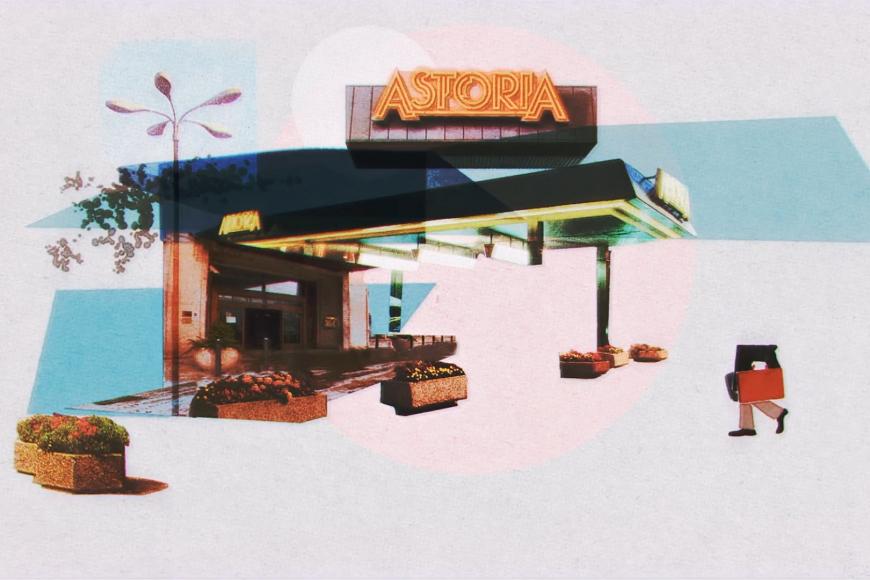
At Hotel Astoria, the former hotspot of Leipzig, guests were served champagne and turtle soup while the Stasi listened in. Animated memories from times gone by.
Competition for the Audience Award Short Film 2020
Animated Film
Germany
2020
28 minutes
German
Subtitles:
English
Everyone in Leipzig is familiar with the Hotel Astoria, which has stood vacant since 1996. This film takes a look back to the time when the hotel was the hotspot of the trade fair city, where professionals, politicians and guests from all over the world were entertained with the greatest possible GDR pomp. But the Stasi also came and went in the hotel. The story of an exciting chapter in the city’s history is told with archive material, staff reports, and the distinctive animations by Falk Schuster.
Kim Busch
Credits
Director
Falk Schuster, Alina Cyranek
Script
Alina Cyranek
Editor
Alina Cyranek, Falk Schuster
Producer
Alina Cyranek, Falk Schuster
Co-Producer
MDR Mitteldeutscher Rundfunk
Sound
Florian Marquardt
Score
Florian Marquardt
Animation
Falk Schuster, Tim Romanowsky, Alexander Schmidt, Julian Quitsch
When the artist duo Karnapke and Johnson are separated by Covid-19 in the middle of a project, the result is a correspondence about the constant change we live in.
When the artist duo Karnapke and Johnson are separated by Covid-19 in the middle of a project, the result is a correspondence about the constant change we live in. The VR experience based on this is a walk-in meditation: about reality, about normality and about the signs that distinguish the rule from the exception, visualized in a space made of countless particles.
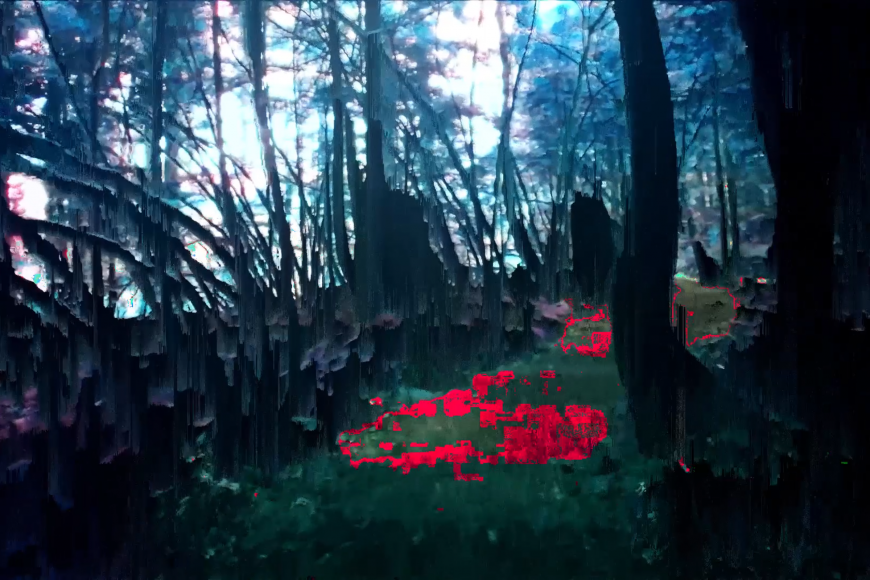
During a ramble through the forest we see video colour fringes break through the canopy. Hallucinogenic data errors drag like scrapers across a discarded layer of paint.
During a ramble through the forest we see video colour fringes break through the shadows of the canopy. Rolls of thunder and birdsong spread as a deep red pixel moss carpet. Ambient sounds creep up from the distance to filter the visual world. Hallucinogenic data errors drag like scrapers across a discarded layer of paint. The forest becomes a cathedral for the eyes and ears.
The fascinating virtual sculptures of a deep scan are moulded and pulverized to electronic beats: waves of millions of luminescent coloured microbodies.
An infrared dot pattern scans body shapes to supply system information for fascinating volume images. The space casts are virtual sculptures, mouldable, with unstable aggregate states. DJ Dixon’s “Transmoderna” performance is pulverized to the beats of Mëhill’s track “Through Withdrawals”: waves of millions of luminescent coloured microbodies against a black infinity.
A concentrated analysis of human strengths and weaknesses using the example of the strange relationship between an Egyptian sports coach and his weightlifting student.
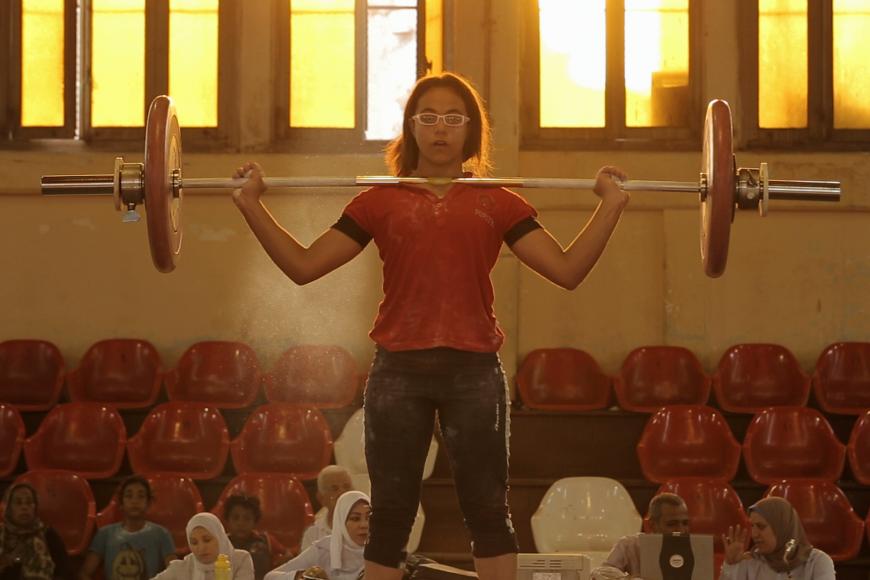
Captain Ramadan’s “gym” is located in a dusty residential area near the port of Alexandria. This is where the former professional athlete has coached young women in weightlifting for over twenty years – including his daughter Nahla, the first Egyptian world champion. An extraordinarily intimate portrait of this lone and fighter who raised Egypt’s young athletes to world class level with self-funding, which also puts the focus on a second protagonist: young Asmaa.
Mayye Zayed has followed the Captain’s student, who was fourteen at the start, for four years. Wearing a red Popeye t-shirt and backed by her coach, she fights her way to the global top league matches. The story of the inner highs and lows of the introverted young woman unfolds gently as the camera captures her emotional states precisely without many words. The dramaturgy of the chronological narrative follows the events in the best direct cinema manner, impressively adapting to the rhythm of life – and death. The result is the portrait of an unusual relationship and of a harsh environment that demands more than physical strength from the participants.
Borjana Gaković
Credits
Director
Mayye Zayed
Script
Mayye Zayed
Cinematographer
Mohamad Elhadidi
Editor
Sara Abdallah
Producer
Mayye Zayed
Co-Producer
Anke Petersen, Anna Bolster
Sound
Samir Nabil, Kristoffer Salting, Brian Dyrby
Score
Marian Mentrup
Broadcaster
Eva Klöcker, Claudia Tronnier
Funder
The Getty Images ARRAY Grant, Arab Fund For Arts & Culture (AFAC), HotDocs - Blue Ice Group Documentary Fund, International Media Support (IMS) , The Danish-Arab Partnership Programme The Danish Egyptian Dialogue Initiative (DEDI)
Charlie explores the history of music with Grandpa Günter, the circus elephant. Today he meets Grandpa’s brother Karl-Heinz, who makes the strangest noises for the sound film.
Grandpa Günter is a retired circus elephant who takes his grandson Charlie on musical excursions. In this episode they are rudely woken because the usually quiet forest is suddenly full of noise. It’s Grandpa’s brother Karl-Heinz merrily setting up his forest cinema. Singing, Grandpa complains about the disturbance and explains what his brother is actually doing there.
When a small dog is forgotten in the midst of the arctic desert, four snow hares take heart-warming care of him. But they don’t know very much about what a dog really needs.
Somewhere in the eternal ice. All around nothing but snow and pleasant silence. Until a helicopter lands to drop off a group of tourists. A few quick photos are taken and off they go. The uninvited guests leave behind a pile of rubbish – and a small dog who is suddenly quite lost. Four snow hares take heart-warming care of him.
A gloomy filmic contribution to sea rescue and a concentrated revelation of the mechanisms of systematic flight prevention in the Mediterranean and the people responsible for it.
A person swims for their life in the open sea. A European merchant vessel starts its engines and sails away from them. The pilot of a civilian aerial reconnaissance plane admonishes the captain and appeals to his conscience. The Libyan coast guard and the swimming person reach the decks of the European merchant vessel at the same time. Outcome unknown. The world turns in circles. This is not a film about the alleged refugee problem but one about the problem called Europe.