Surrounded by high-rises, Natalia has created her own, not-so-small paradise: Goats roam free, shrubs and fruit trees bloom, the chickens busily lay eggs. Natalia meets repeated attempts to buy the plot with brusque derision. Even when the city and country are attacked by Russia in the wintry February of 2022, she retains her apparent carefree resistance: While all the lights around go out at night, there is a warm and cozy glow from Natalia’s house. Only Kitty, with whom she lives, expresses concern, organises his flight from Ukraine and prophylactically shows the spots that would be safest in an air raid. Adelina Borets’ portrait of an incorruptible woman finds its own unique tone, shows a simple everyday life throughout the seasons that presents itself as self-determined and buoyant despite the worsening situation. Borets adopts Natalia’s manner as natural, gives her space. The dimensions of the war unfold step by step, at Natalia’s own pace and by skilful cuts and pans. “Flowers of Ukraine” is a film about a disaster. But it is also a love song to life – and pickled tomatoes.
Following the traces of grandfather Leonid Burlaka, once a celebrated cinematographer, contemporary and family history unfold: fifty years of Soviet cinema and a life in the USSR.
In the 1960s, the Soviet cinematographer Leonid Burlaka worked on films that went around the world for the Odesskaya kinostudiya in his native city of Odesa in the former Ukrainian Soviet Socialist Republic. Today he is eighty years old and diagnosed with Alzheimer’s; his memory is visibly fading. Filmmaker Igor Ivanko follows the traces left by his grandfather and discovers an archive of immense value in the garage.
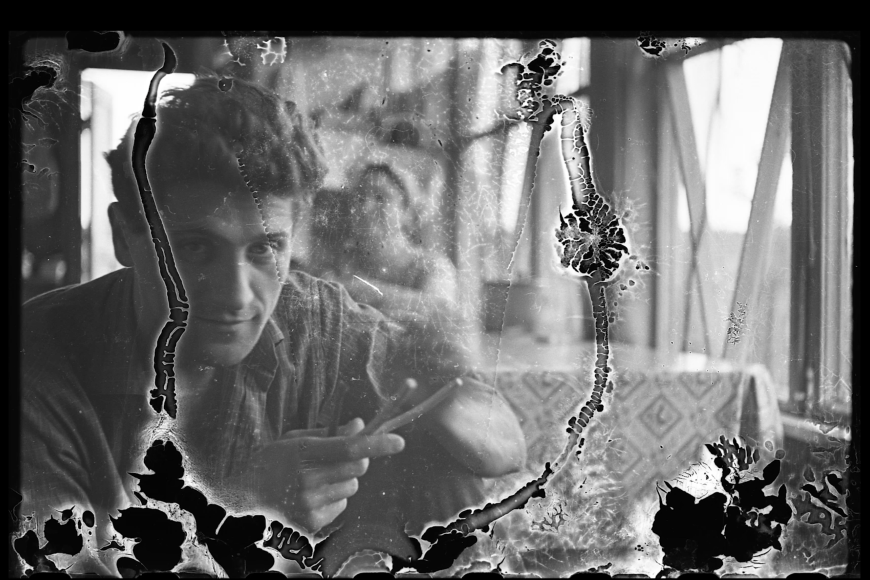
Dozens of rolls of photo film, albeit almost decayed, are found between gardening and other tools. The grandson scans the material and shows it to his grandparents. Burlaka’s face brightens when he recognises familiar faces, but he can’t remember much. Ivanko realises that he has a treasure of historical dimensions in his hands. Leonid Burlaka began his career when many Soviet creative artists were struggling with censorship. When state repression eased in the mid-1960s, he had long established himself in his profession. The political change, however, was reflected in his works. Ivanko’s attempt to record his grandfather’s memories before they disappear forever comes too late. But he succeeds at making a film that looks back on fifty years of cinema and life in the USSR: a stirring portrait of the times and the family between emotion and information.
Lina Dinkla
Credits
Director
Igor Ivanko
Cinematographer
Igor Ivanko, Illia Yehorov
Editor
Igor Kosenko
Producer
Mariia Ponomarova, Alexandra Bratyshchenko, Igor Ivanko, Peter Kerekes