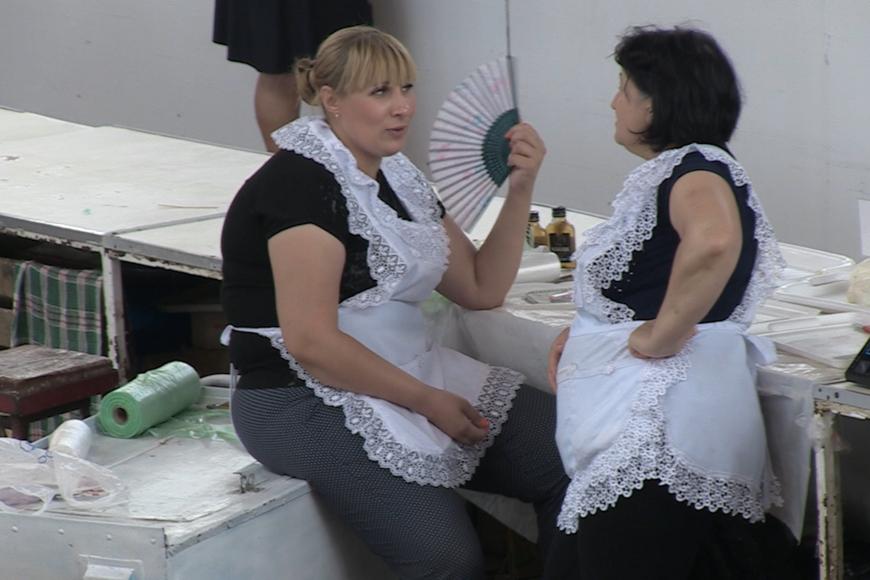
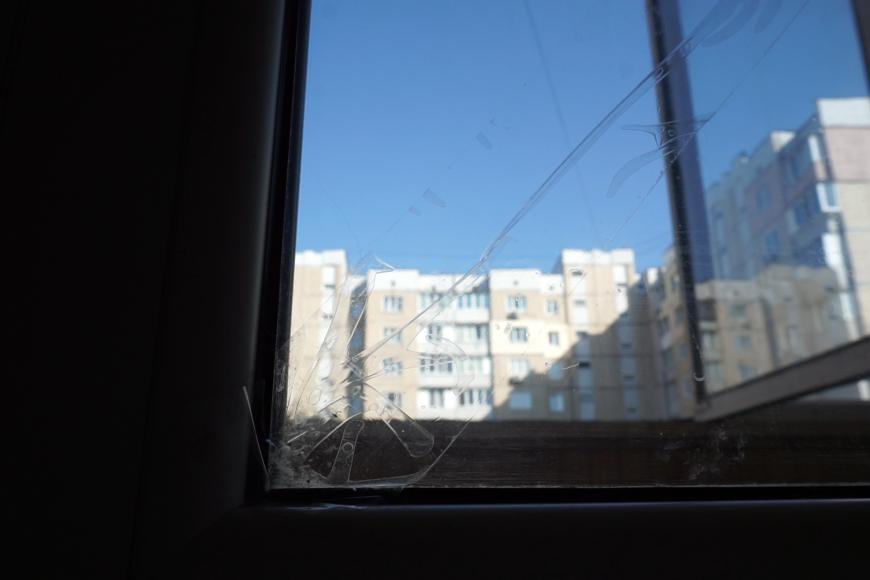
In 2014, Russian separatists destroyed homes and families in Toretsk in eastern Ukraine. War followed coal in leaving deep marks on the landscape – and became normality.
Toretsk in eastern Ukraine is marked by the decline of the coal industry: wasteland, rubble, scrap metal. In 2014, Russian separatists brought war into the region, destroying homes and families, including Nastya’s. The girl and her friends, all on the brink of adulthood, accept the decaying outskirts, gone to seed in the face of threat and depression, as normal. Taras Tomenko observes their small danced or sung escapes, their moments of obliviousness, sometimes their tears.
Sylvia Görke
Credits
Director
Taras Tomenko
Cinematographer
Misha Lubarskyi
Editor
Viktor Malyarenko
Producer
Volodymyr Filippov, Andriy Suyarko, Alla Ovsyannikova
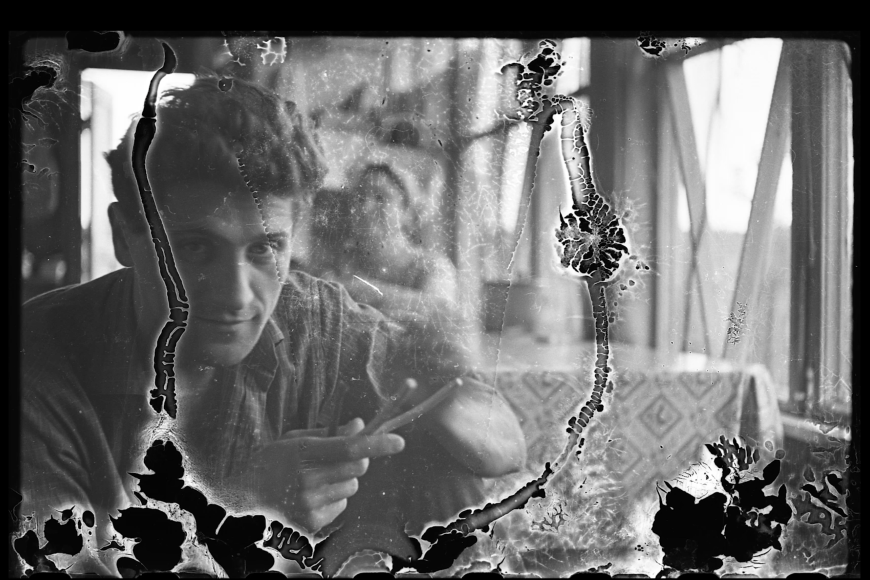
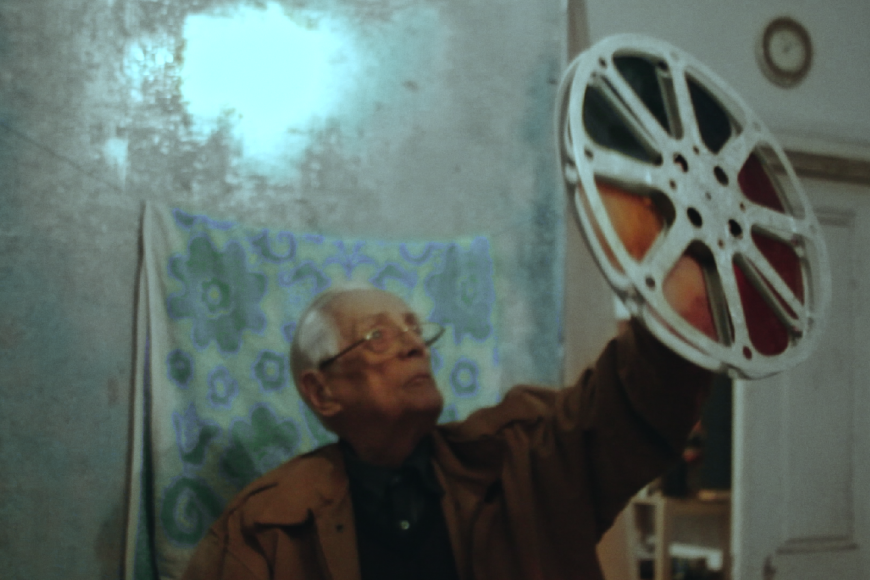
Following the traces of grandfather Leonid Burlaka, once a celebrated cinematographer, contemporary and family history unfold: fifty years of Soviet cinema and a life in the USSR.
In the 1960s, the Soviet cinematographer Leonid Burlaka worked on films that went around the world for the Odesskaya kinostudiya in his native city of Odesa in the former Ukrainian Soviet Socialist Republic. Today he is eighty years old and diagnosed with Alzheimer’s; his memory is visibly fading. Filmmaker Igor Ivanko follows the traces left by his grandfather and discovers an archive of immense value in the garage.
Dozens of rolls of photo film, albeit almost decayed, are found between gardening and other tools. The grandson scans the material and shows it to his grandparents. Burlaka’s face brightens when he recognises familiar faces, but he can’t remember much. Ivanko realises that he has a treasure of historical dimensions in his hands. Leonid Burlaka began his career when many Soviet creative artists were struggling with censorship. When state repression eased in the mid-1960s, he had long established himself in his profession. The political change, however, was reflected in his works. Ivanko’s attempt to record his grandfather’s memories before they disappear forever comes too late. But he succeeds at making a film that looks back on fifty years of cinema and life in the USSR: a stirring portrait of the times and the family between emotion and information.
Lina Dinkla
Credits
Director
Igor Ivanko
Cinematographer
Igor Ivanko, Illia Yehorov
Editor
Igor Kosenko
Producer
Mariia Ponomarova, Alexandra Bratyshchenko, Igor Ivanko, Peter Kerekes
The hot button issue of pre-war Kyiv: the power of developers. Florian Yuryev’s architectural visions contrasts with the stubbornness of a businessman inspired by Donald Trump.
The hot button issue of pre-war Kyiv: the power of developers. Oleksiy Radynski explores the opposition of an architect who designed one of the most significant buildings in Kyiv and the capitalistic cynicism that ruins the city’s uniqueness. Florian Yuryev’s philosophy of a galaxy’s mortality, of a “beautiful zero” we all are going to return to, contrasts with the ridiculous and dangerous stubbornness of a businessman inspired by Donald Trump.
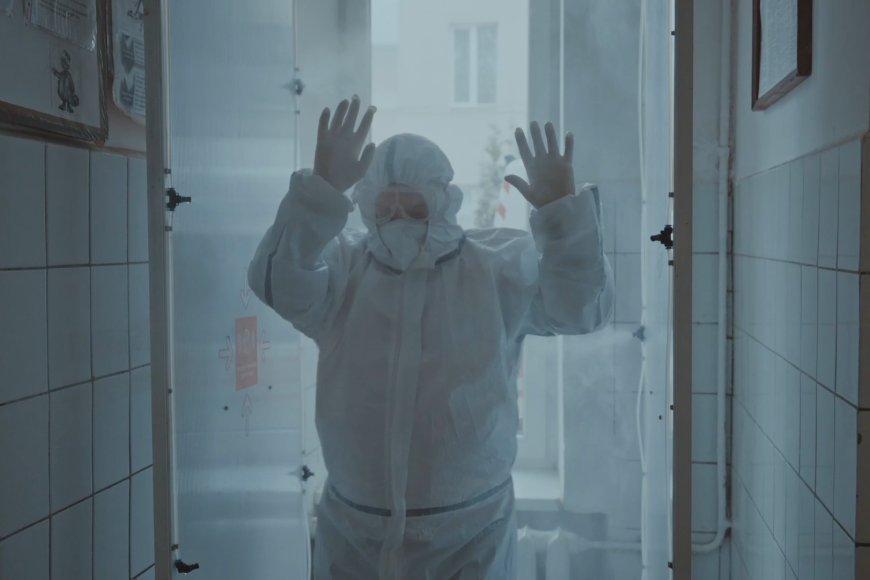
Four paramedics in a mountain village at the beginning of the Covid pandemic go from house to house. They form the emotional core of this kaleidoscopic look at stories and tragedies.
Four paramedics in a distant mountain village at the beginning of the Covid pandemic go from one house to another, from measurements to diagnoses, from tired older women to drunk middle-aged men. Hreshko watches them closely: They get baptised, married and buried. Yet the ambulance team stays the same, does its job, and ultimately provides the emotional core of this kaleidoscopic view of people’s stories and tragedies.
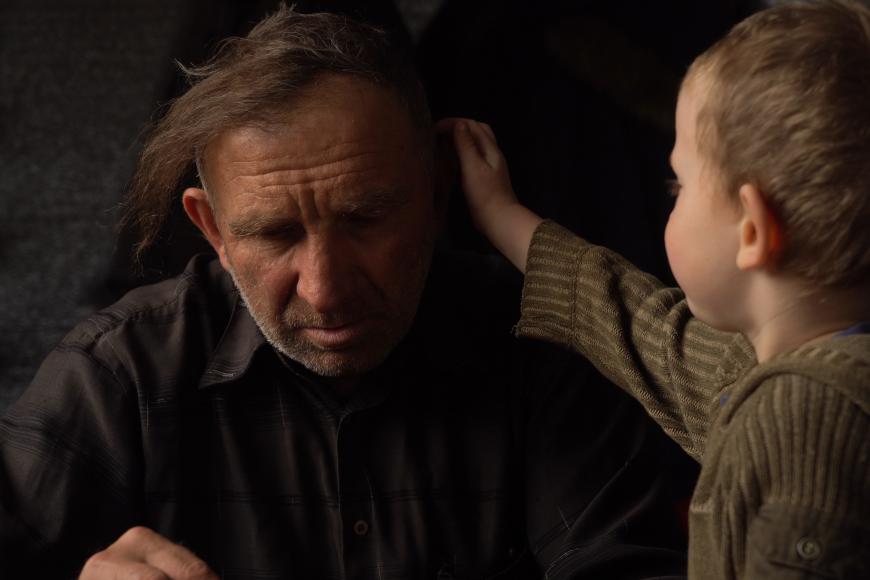
A family in the mountains, following their daily rituals, unmolested by the outside world. But even this supposedly quiet life is determined by the war in eastern Ukraine.
Eva Dzhyshyashvili shows us a family that lives in the mountains following their daily rituals. At first glance, it’s a simple, quiet life unbothered by the outer world. However, as the picture is revealed, we see that the grandfather was wounded in the east of Ukraine and listen to countless conversations about this war. The feeling that there is nowhere to hide from military aggression is starkly evident. But the ending provides a sliver of hope.
A sentimental journey through Odesa’s main market. Pryvoz is the heart of this historically complicated city, which has been under Russian shelling since February 2022.
A sentimental journey through the main market in Odesa. Pryvoz is a place of recurring myth. It is mentioned in songs and books and is truly the heart of this disorienting city with a complicated history. Neymann looks at the inhabitants with empathy: lost souls in the bodies of humans, dogs or cats. The opera soundtrack adds a sense of fatality to the old vivid market that will become reality. The city of Odesa has been under Russian fire since February 2022.
The video diary of a Kyiv artist fluctuating between fear, agony and activism in the face of life in wartimes, for which she finds touching words and images.
With this personal video diary from Kyiv, artist Hanna Trofimova manages to make us comprehend something of how the war infiltrates and destroys life and everyday routines, even if one’s own apartment has not been hit by a bomb yet. Images of an oppressive “normality” between alarm sirens and explosions are combined with the touching words of a young woman who tries not to lose herself and her life to the new reality.